
Quit Vaping with Hypnosis (e-cigarettes, vapes, disposables)
Quitting vaping is often harder than people expect. A vape never goes out, it goes everywhere with you, and nicotine keeps a very real dependence going.
Hypnosis can support quitting by working on the gesture, the moments that trigger it and the way you get through a craving. It usually takes two to three sessions, as it does for tobacco.
If you vape to stay off cigarettes, the priority is not to start smoking again: choose the right time with your doctor, your pharmacist or a smoking cessation specialist.
Why a vape is so hard to put down
Before you decide to quit, three situations call for medical advice first.
If you vape to stay off cigarettes: don't rush. Going back to tobacco would be a step backwards, and the right time is something to decide with your doctor, your pharmacist or a smoking cessation specialist.
If you are pregnant, if you have a heart or breathing condition, or if the person quitting is a teenager: talk to a doctor first.
If your vape contains cannabis (THC): this article does not cover that situation, and your doctor is the right person to talk to.
Nicotine replacement therapy and quit-smoking medication are a matter for medical advice. Hypnosis supports them; it never replaces them.
The vape is in your pocket, in your hand, on your desk. A puff while answering an email, another at the wheel, another in front of a show. You've stopped counting, and that is exactly the problem: there is never a "last one".
Many of our clients came to vaping to quit smoking, and they managed it. Then the vape stayed. Others had never smoked: a disposable passed around at a party, then another, and nicotine settled in before they saw it coming.
If this sounds like you, you haven't lacked willpower. Vaping blends into the day until you no longer notice it, and that is precisely what makes it hard to stop.
Understanding Vaping dependence

As with cigarettes, two dependences sit on top of each other, and they are not worked on in the same way. The first is about nicotine, which the body asks for when it runs short. The second is about the gesture and the habits: where, when and why the vape ends up in your hand. Telling them apart helps you understand what is going on when you try to quit, and what each kind of help can bring: the doctor and nicotine replacement on the nicotine side, hypnosis on the gesture side.
- Dependence on nicotine. Health Canada points out that vaping can lead to physical dependence or addiction. When you stop, the craving makes itself felt, and the body needs time to do without it.
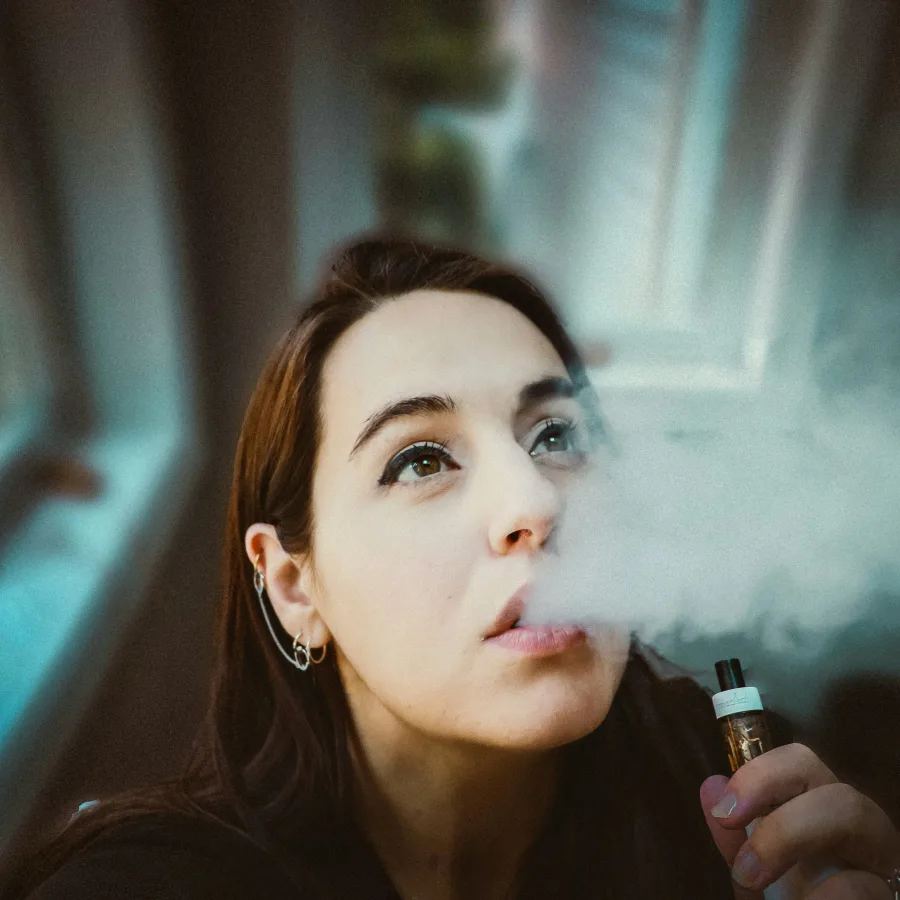
- Dependence on the gesture. This is the one hypnosis works on. A cigarette had a beginning and an end; a vape doesn't. You use it indoors, without a break, with no smell to bother anyone. The hand-to-mouth gesture, the deep inhale, the little cloud: all of it has latched onto dozens of moments in the day, the morning coffee, the computer, the car, frustration, boredom.
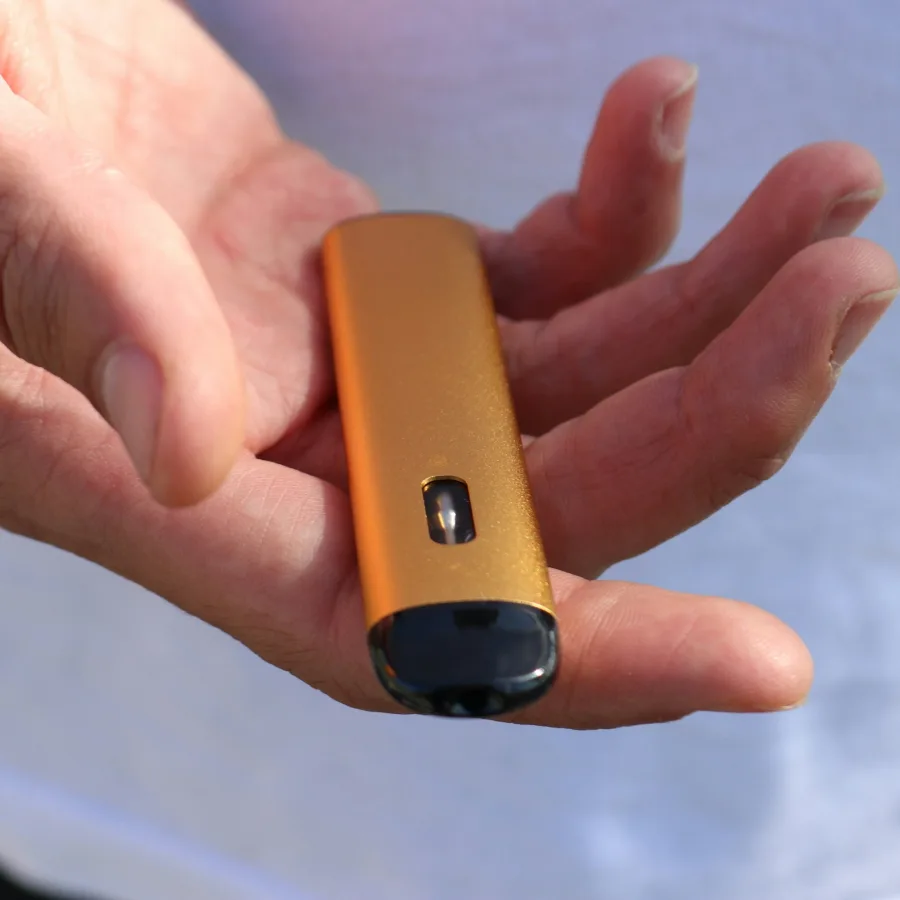
The case of disposables. These single-use e-cigarettes, with their sweet flavours and bright colours, have been banned from sale in France since February 26, 2025. The product leaves the shelves, but the gesture stays: people often switch to a refillable vape, and the habit carries on in another form.
This article is about quitting vaping. If you still smoke cigarettes, or if you both smoke and vape, our page Hypnosis to Quit Smoking covers everything about tobacco.
Teens and young adults
Young people are more vulnerable to nicotine. Health Canada notes that it can harm healthy teen brain development, and that it affects memory and concentration.
At this age, the group carries a lot of weight. Vaping often happens with others: after class, at parties, in a friend's car. The vape gets passed around; it helps you join the conversation, gives your hands something to do, keeps you from feeling left out. Quitting then also means risking standing out, and the way others look at you can weigh more than the craving itself. Hypnosis work takes this into account: preparing for the moments when someone holds out a vape, finding your own way to say no without having to explain yourself, and keeping your place in the group without the product.
A teenager who wants to quit can be supported with hypnosis, with their parents' consent if they are a minor. The decision has to come from them: a session imposed on them is unlikely to help, and pressure often has the opposite effect. Our page Hypnosis for Teens and Young Adults explains how these sessions work.
If quitting comes with significant anxiety, lasting distress or dark thoughts, see a doctor first. Hypnosis comes in addition, never instead.
Recognized help to quit Vaping
Research on quitting vaping is recent. A Cochrane review, updated continuously, brought together about fifteen studies at the end of 2025. Text-message programs may help young people quit, and varenicline, a quit-smoking medication prescribed by a doctor, may help adults. For other approaches, the authors say it is not yet known whether they help people quit for good.
No study has assessed hypnosis for quitting vaping. For cigarettes, a Cochrane review of hypnotherapy does not show that it works better than other forms of support. We would rather tell you plainly: here, hypnosis is a support, not a proven method.
What exists, and what we encourage you to use:
- Your doctor or your pharmacist, for nicotine replacement therapy or quit-smoking medication, if they are right for you.
- In Quebec, the J'Arrête line: 1 866 527-7383, free and confidential, also helps people quit vaping, by phone, by text or at jarrete.qc.ca.
- In France, Tabac info service: 39 89 gives access to free sessions with a smoking cessation specialist (only the call itself is charged), and tabac-info-service.fr offers a support app.
- In Morocco, your doctor remains the first point of contact.
Hypnosis sits alongside these aids, on the side of the gesture, the triggers and motivation.
How Hypnosis supports quitting Vaping

Let's start with what hypnosis doesn't do. It doesn't make nicotine cravings vanish with a wave of a wand, and it doesn't put you off vaping: we use no aversion suggestions. Nor does it make you do anything against your will. You stay aware throughout the session, you hear everything and you can stop it at any time. What it offers lies elsewhere: in the automatic habits vaping has set up, and in how you live through the moments when the craving comes back.
The work usually focuses on four areas:
- Undoing the triggers. Together we identify the moments when the vape ends up in your hand without you having decided it. Under hypnosis, you go through these scenes again in your imagination, without the vape, until they feel ordinary again.
- Giving the gesture an end. A vape never has a last puff. An anchor, a simple gesture linked to a state of calm, gives you a stopping point you can find again on your own when the craving rises.
- Replacing what vaping gives you. A break, some calm, a way to focus or to get through boredom: these needs are legitimate, and the work is about finding other ways to meet them.
- Getting through the craving. A craving rises, peaks, then comes back down. Self-hypnosis gives you a tool to let that moment pass without giving in.
How many sessions? Usually two to three, as for quitting tobacco: a first session to stop, then one or two to consolidate in the weeks that follow. The number is set at the first conversation.
Cut down on nicotine first, or stop all at once? Some people prefer to lower their nicotine level gradually, others to stop in one go. That is a decision to make with your doctor or your pharmacist, and the session adapts to your choice.
Where would you like to consult?

The first conversation takes stock of how much you vape, your history with tobacco, what you have already tried and what vaping gives you today. If your situation calls for medical advice first, we will tell you before we start. The goal is set together, along with the number of sessions. Sessions work just as well in person as by video, and many of our clients choose video for this kind of support.
A question before you decide? Write to us, or book an appointment directly.
Our practitioners who work in English see people in Montreal, Sherbrooke, Gatineau, Paris and Lille, and by video wherever you are in the world. Book now to create the life you want with hypnosis!
All areas
 Annie Mayrand
Gatineau - Cumberland (ON)
👤
🧑🎓
🚭
❤️
💻
 Christian Rocher
Beloeil
👤
🧑🎓
👶
🚭
❤️
💻
 David Veilleux
Montréal - Anjou
👤
🧑🎓
🚭
❤️
🤰
💻
 Florence Aton
Sutton
👤
🚭
❤️
💻
 Jessica Reid
Sherbrooke
👤
🚭
💻
 Julie Rocque
Montréal - Jean-Talon
👤
🧑🎓
👶
🚭
❤️
🤰
💻
 Nuria Pérez de León
Montréal - Rosemont - Saint-Lambert
👤
🧑🎓
💻
 Romain Rastoin
Bromont
👤
🧑🎓
🚭
❤️
💻
 Réjeanne LeBlanc
La Prairie
👤
🧑🎓
👶
💻

Frequently asked questions about quitting vaping
It can support quitting by working on the gesture, the moments that trigger it and the way you get through a craving. No study has yet assessed hypnosis for quitting vaping, and it does not replace medical advice about nicotine. It comes in addition to recognized aids, such as nicotine replacement therapy or quit lines.
Usually two to three: a first session to stop, then one or two to consolidate in the weeks that follow. The number is set at the first conversation, depending on how much you vape and your history with tobacco.
No, there is no rush. The priority is not to go back to cigarettes, which contain more harmful chemicals than vaping products, according to Health Canada. Choose the time with your doctor, your pharmacist or a smoking cessation specialist, once you feel safe from going back to tobacco.
Sources and references
Help to quit
- Quebec: J'Arrête line, 1 866 527-7383, free and confidential, and jarrete.qc.ca.
- France: Tabac info service, 39 89, and tabac-info-service.fr (in French).
For more information
Hypnosis as practised by the members of Solutions Hypnose is a complementary support approach. It is neither a medical act, nor a diagnosis, nor psychotherapy in the regulatory sense, and it in no way replaces a consultation, follow-up or treatment prescribed by a health professional.
Our practitioners do not assess and do not treat mental disorders or illnesses. They never ask for an ongoing treatment to be stopped or changed: that decision rests exclusively with your doctor.
No result can be guaranteed. The testimonials and examples presented on this page describe individual experiences and do not predict what you will experience.
In case of significant distress, unexplained physical symptoms or suicidal thoughts, contact a doctor, emergency services or a helpline without delay.

Page written by Jimmy Gaudreault
hypnotherapist and NLP coach
partner at Solutions Hypnose.
English version reviewed by David Veilleux
Published .