
Hypnosis for Musicians (stage fright, performing, orchestra)
Written with Daby Touré, professional musician and hypnotherapist.
It is not always the night of the concert.
It is Tuesday morning, in rehearsal, when the exposed passage arrives and you feel the desk beside you stop turning its page. It is the conductor looking at you two bars too long. It is the passage taken again for your sake, without anyone saying so.
Or it is the corridor before an audition, with the other candidates warming up, the screen behind which a jury you will never see will grant you five minutes for ten years of work.
Or it is the studio, the red light, the twenty-third take of a passage you have been playing perfectly at home for six months.
A musician's stage fright has a feature other performers do not quite know: it is not confined to performance nights. An actor plays to an audience that leaves. An orchestral musician is assessed every day, by people who stay, and who know exactly what they are hearing.


What is a Musician's Stage Fright?
This is a specialised page. The mechanics of stage fright itself — why the brain confuses the stage with danger, the activation zone, the audience experienced as a tribunal, mental rehearsal, recovering after a mistake — are explained in detail on our page Hypnosis for Artistic Performance. Read that first if you are trying to understand what is happening to you. Here we deal with what is specific to a musician's life: the orchestra, the audition, the studio, touring, and the body facing the instrument.
The starting point is the same as for any artist: stage fright is normal and useful, and the aim is never to remove it. A musician with no activation at all plays flat. What can be worked on is the moment when activation goes beyond the zone where it still serves you.
Three things make musicians' situation particular
The judgement is daily and it comes from peers. Your colleagues have exactly the same ear as you. They hear the missed attack the audience never noticed. That constant assessment, by competent people, does not stop at the end of the concert.
The instrument comes between. Unlike an actor or a dancer, you depend on an object, on its condition, on the hall, on the temperature. Stage fright often attaches itself to very precise technical details: an entry, an interval leap, a high note, a change of position.
The training is long and the culture is demanding. Many musicians spent their childhood and adolescence in a conservatoire, in a system where mistakes are paid for and where one sentence from a teacher can lodge itself for twenty years.
The musician's body: a point not to skip. Playing is a physical profession, and the figures speak for themselves. A study of 377 professional orchestral musicians reports that 84% of them had experienced pain that interfered with their playing, and that half were suffering from it at the time of the survey. Another, among 342 Danish symphony orchestra musicians, finds that over one year 97% of the women and 83% of the men had symptoms in at least one region of the body. This work also finds a clear link between the intensity of playing-related pain and the level of performance anxiety. The two feed each other, and it is very hard to tell from outside which one started. What that implies: pain, numbness or loss of strength while playing are first a matter for a doctor, ideally a consultation specialising in performing arts medicine — hypnosis only comes in on the pain management side, and never alone. Loss of control of certain fingers or of the embouchure only while playing: see a neurologist; the subject is covered on our page on inner hearing. Tinnitus, blocked ear, hearing loss: an ENT without delay. A voice that tightens or tires lastingly: ENT or phoniatrician. Our practitioners make no diagnosis and assess no disorder.
The impact on a Musician's daily life
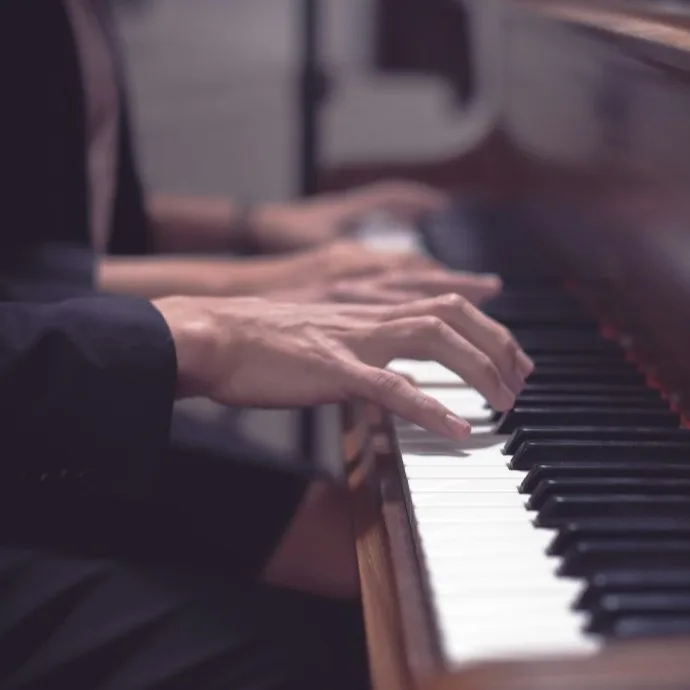
On the career. A failed audition closes a door for a year, sometimes for good. Some musicians end up not putting themselves forward at all, and the giving up costs more than the failure. On the body. Tension settles in the shoulders, the neck, the jaw, the wrist. And a contracted body plays less well, which raises the tension. The stress and anxiety that build on top finish locking the gesture, and you end up working against yourself for hours without understanding why the passage no longer comes out.
On the collective. Dreading the eyes of your own desk damages working relationships you sometimes keep for twenty years. Some musicians avoid solos, turn down stand-ins, keep their heads down until they disappear.
On sleep, during concert or recording periods, with shifted hours that do not help — the subject of our page on sleep disorders.
On meaning. It is the least discussed and the most often decisive in bringing someone in. A profession chosen out of love becomes a permanent assessment. Many musicians arrive saying they no longer know why they play, and their self-confidence comes apart at the same time.
What exists outside Hypnosis
- A doctor, in case of any physical symptom, ideally in performing arts medicine.
- Targeted technical work with a teacher or an instrument coach. When a passage resists, it is not always mental.
- Mental preparation, sophrology, meditation.
- Psychological care, when the anxiety goes beyond the stage or a depressive state sets in.
- The ergonomics of playing: posture, setup, breaks, warming up. Unspectacular, very effective.
- Hearing protection, custom made, which too many musicians put off until it is too late.
- What the institutions provide. Some orchestras and conservatoires offer support; it is often under-used for fear that word gets out.
Hypnosis adds itself to that list. It replaces neither the doctor nor the teacher.
Video available in French
Video transcript
Bonjour, je suis Daby Touré artiste musicien. J'ai eu la chance de jouer sur les plus grandes scènes un peu partout dans le monde et je suis aussi hypnothérapeute. Alors oui, ça peut surprendre, mais finalement la musique et l'hypnose ont beaucoup en commun. Toutes deux, nous emmènent dans un état de transe, un état de présence intense où tout devient plus fluide, plus vivant. Monter sur scène, que ce soit pour une audition, un concert intimiste ou devant une grande foule, c'est toujours un moment unique.
C'est le moment où la technique, l'émotion et la présence se rencontrent. Mais derrière les projecteurs, il y a souvent des défis mentaux : le trac, la peur de se tromper, le doute, ou encore la difficulté de rester concentré. Et c'est là que l'hypnose peut devenir un allié précieux. L'hypnose, c'est une pratique qui agit directement sur le subconscient. Elle aide à gérer le stress, renforcer la concentration et surtout retrouver la confiance.
Chez les musiciens elle permet de gérer le trac, avant et pendant les performances, rester concentré malgré les distractions, se libérer de croyances limitantes comme “je vais oublier mes paroles” ou “je ne suis pas à la hauteur., développer une présence scénique plus libre, plus authentique. Le mental, c'est 50 % de la musique. Un musicien peut avoir une technique parfaite mais si le mental est parasité par le stress ou le doute, la performance sera bloquée.
Parfois, il y a des blocages inconscients par exemple, un musicien de formation classique qui n'ose pas improviser ou quelqu'un qui se crispe sur certains passages, certaines notes. Et plus on y pense, plus ça empire. L'hypnose permet de déprogrammer ces automatismes pour retrouver le plaisir de jouer, la liberté, la connexion. Mon approche ? En parallèle de mes concerts, j'accompagne des musiciens, chanteurs et instrumentistes en cabinet à Montréal et aussi en ligne.
L'objectif : Vous aider à vous sentir libre sur scène, à transformer le trac en énergie, à retrouver confiance et plaisir. L'hypnose, combinée à des techniques de PNL et de préparation mentale, permet de transformer les blocages en ressources. Et surtout, de reconnecter le musicien à ce qui l’a fait commencer : le plaisir de partager. Et pour les auditions ? Les auditions ou les castings, ce sont souvent des moments de très forte pression.
On veut tout donner, tout montrer... en quelques minutes. Et parfois, la peur de l'échec ou du jugement prend le dessus. L'hypnose aide à aborder ces moments avec plus de calme et de confiance. À retrouver cette joie simple de jouer. L'hypnose n'est pas une baguette magique. C'est une pratique sérieuse, structurée, qui aide les musiciens à explorer leurs ressources intérieures, à apaiser les tensions, à ancrer une posture mentale durable de performance et de plaisir.
Que vous soyez amateur ou musicien de scène, l'hypnose vous aidera à jouer plus librement, plus sereinement, plus pleinement. Si vous souhaitez travailler votre concentration, votre confiance ou simplement retrouver le plaisir de monter sur scène, je vous invite à me contacter. Je consulte à mon cabinet à Montréal ainsi qu'en vidéoconférence, une modalité qui s'avère elle aussi remarquablement efficace pour ce travail.
A bientôt.
Hypnotherapy is a complementary form of support and does not replace medical advice, diagnosis, or treatment. If you have any concerns about your health, please consult a physician first.
Hypnosis for Musicians: aims and benefits
It does not play for you, does not replace the hours on the instrument, and guarantees no result. It does not put you to sleep and does not make you lose control. And it does not make stage fright disappear, which would be counterproductive.
Beyond the levers described on the Artistic Performance page, here is what is worked on specifically with musicians.
- The exposed passage, bar by bar. A musician's stage fright is rarely diffuse: it lodges itself in a few precise seconds. That passage is what is worked on, prepared mentally until approaching it stops setting off the cascade.
- The audition, in its real format. The corridor, the competitors warming up, the screen, the silence of the jury, the "thank you" that cuts you off. Rehearsed in imagination under those conditions, the audition loses part of its power.
- The eyes of colleagues. The desk beside you, the conductor, the music director. It is a frequent request and rarely the first one voiced.
- The studio. Another world from the stage: no audience, but the red light, the click, the take that is never good enough, and a perfectionism the technology encourages since you can always do it again.
- Consistency over a tour. Holding twenty dates at the same level asks something other than succeeding one night.
- The return after a break. Injury, parental leave, burnout, a long period without playing. Coming back wakes fears that the working period kept at a distance.
- Finding the pleasure of playing again, which is not incidental: it is often what makes the rest possible.
And what belongs to the other page. If your difficulties concern intonation, rhythm, improvisation or hearing music mentally, that is not stage fright. See our page Hypnosis for Musicians' Inner Hearing.
What the research says
There is no controlled trial demonstrating that hypnosis works on music performance anxiety. We will not claim otherwise.
Two things inform the reasoning. Hypnosis has a documented effect on anxiety in general: a 2019 meta-analysis bringing together fifteen studies reports a large average effect, better alongside other approaches than used alone. And the work on orchestral musicians shows a close link between playing-related pain and performance anxiety, which explains why working on tension sometimes produces results where technical work alone had plateaued.
It is coherent, it is observed in practice, and it is not a demonstration.
An example of support
*An illustrative example, built from situations frequently encountered. It is not the testimony of a real person.*
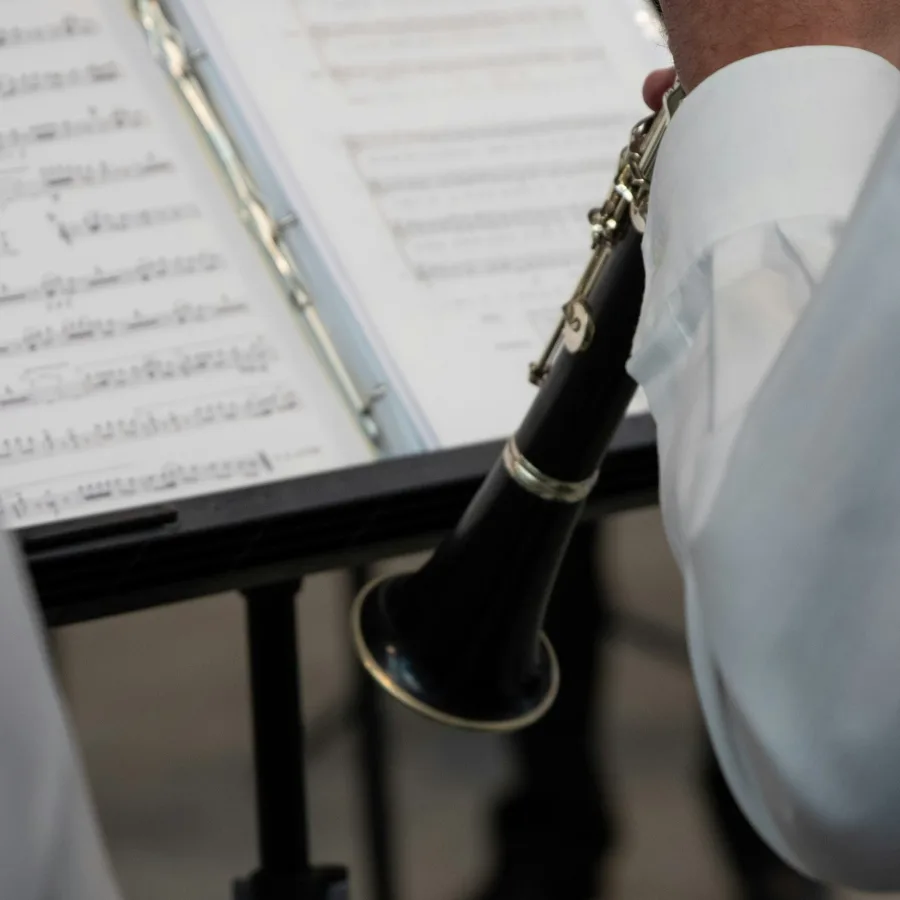
Hélène, 29, an oboist, was preparing her fourth orchestral audition. The previous three had gone the same way: impeccable preparation beforehand, and from the corridor onwards, hands that no longer answered as they usually did. She had ended up describing herself as someone who does not pass auditions, which is a sentence you do not come back from easily: it arranges the next one in advance. The preparation itself had never been in question, and her teachers kept telling her so without it changing anything at all.
The work was not about her playing. It was about the corridor, about the twenty minutes of waiting with the other candidates, and about the first bars behind the screen. She built an anchor she could use sitting down, without her instrument and without anyone seeing it. The rehearsals in session reproduced the real conditions, including the silence of the jury and the "thank you" that interrupts.
This example describes one possible course of support. It predicts nobody's. Pace and results vary from one person to another, and no support can guarantee a result.
How a Hypnosis session for Musicians unfolds
The conversation. Your instrument, your context — orchestra, band, teaching, session work, amateur — what is jamming and since when. The practitioner will try to distinguish what is stage fright, what is a skill to work on with a teacher, and what calls for a medical opinion.
They may ask you to play, if you want to. Seeing someone at the moment it tightens teaches more than a description.
A concrete aim is set. Not "stop having stage fright", but: get through the March audition without losing my hands in the corridor, play the solo in the second movement without dreading it all week, finish a studio session without grinding.
The induction, then the work itself: an anchor you can use in the wings or in the hall, mental rehearsal of the passage or the audition under real conditions, defusing a specific memory if there is one. The general shape of a session is described on the page what to expect in a hypnosis session.
Carrying it home. Many practitioners record part of the session, to listen to again before a rehearsal, a concert or an audition. That is often what serves most, because it makes you self-sufficient.
How many sessions? That is discussed at the first conversation, once your situation and your deadline are known. Nobody can know before meeting you.
Book an appointment

Wherever you are in the world, video consultation is the format that suits a profession permanently on the road. It asks for nothing more than a quiet place — plus a decent microphone if you want to play during the session. We see musicians this way from Europe, North America, Africa and well beyond, between two tour dates, sometimes from a dressing room or a hotel room. It is also what lets support carry on instead of stopping when the touring starts again. Here is how it works.
A practitioner who is also a professional musician
Consulting someone who has been on stage changes one very concrete thing: you will not have to explain what it feels like. The corridor before the audition, the red light in the studio, the passage you have been dreading since Monday — these are things he has lived, not things that were described to him.
David Veilleux is a professional musician and a hypnotherapist, and he is the practitioner in the network who covers this subject in English. He sees clients in Montreal East and by video, wherever you are.
Tell us your situation and your deadline. Ask us your question: if what you are going through is first a matter for a doctor or for work with your teacher, we will say so.
Where would you like to consult?
All areas
 Annie Mayrand
Gatineau - Cumberland (ON)
👤
🧑🎓
🚭
❤️
💻
Annie Mayrand
Gatineau - Cumberland (ON)
👤
🧑🎓
🚭
❤️
💻
 Christian Rocher
Beloeil
👤
🧑🎓
👶
🚭
❤️
💻
Christian Rocher
Beloeil
👤
🧑🎓
👶
🚭
❤️
💻
 David Veilleux
Montréal - Anjou
👤
🧑🎓
🚭
❤️
🤰
💻
David Veilleux
Montréal - Anjou
👤
🧑🎓
🚭
❤️
🤰
💻
 Florence Aton
Sutton
👤
🚭
❤️
💻
Florence Aton
Sutton
👤
🚭
❤️
💻
 Jessica Reid
Sherbrooke
👤
🚭
💻
Jessica Reid
Sherbrooke
👤
🚭
💻
 Julie Rocque
Montréal - Jean-Talon
👤
🧑🎓
👶
🚭
❤️
🤰
💻
Julie Rocque
Montréal - Jean-Talon
👤
🧑🎓
👶
🚭
❤️
🤰
💻
 Nuria Pérez de León
Montréal - Rosemont - Saint-Lambert
👤
🧑🎓
💻
Nuria Pérez de León
Montréal - Rosemont - Saint-Lambert
👤
🧑🎓
💻
 Romain Rastoin
Bromont
👤
🧑🎓
🚭
❤️
💻
Romain Rastoin
Bromont
👤
🧑🎓
🚭
❤️
💻
 Réjeanne LeBlanc
La Prairie
👤
🧑🎓
👶
💻
Réjeanne LeBlanc
La Prairie
👤
🧑🎓
👶
💻


Frequently asked questions about Hypnosis for Musicians (Stage Fright, Orchestra)
No, and that is not the aim. A musician with no activation at all plays flat. The work brings the activation back down into the zone where it still serves you.
It is a frequent reason for coming, and six weeks allow serious work. Earlier is still better. The number of sessions is set at the first conversation, according to your deadline.
It is a reality of the profession. Those medicines fall exclusively under prescription and medical supervision, and we will never give an opinion on them: talk to your doctor. What hypnosis offers is something else, an approach without any substance that works upstream. The two do not exclude each other.
Your stage fright does not know your status. The end-of-year concert of an amateur choir or orchestra can be a considerable ordeal, precisely because it is exceptional. The support is often shorter, without the career stakes.
That is not stage fright, and it is covered elsewhere: see our page on musicians' inner hearing.
See a doctor before anything else, ideally one specialising in performing arts medicine. Playing-related pain is very common among professional musicians and is closely linked to performance anxiety. Hypnosis can accompany, never replace.
It is a classic reason for coming and it can be worked on. The method is described on our Artistic Performance page, in the section on the performance that haunts you.
The root yes, the triggers no. The voice is an instrument lodged in the body, which makes tension immediately audible. And any persistent vocal discomfort warrants an ENT or phoniatric opinion before working on the mental side.
Yes, and it is often the most practical option for a profession permanently on the road.
Sources and references
On Musicians' health
- Stage fright and performance anxiety — Médecine des Arts, the French-language reference on performers' health (in French)
- Kenny, D., & Ackermann, B. (2015). Performance-related musculoskeletal pain, depression and music performance anxiety in professional orchestral musicians: a population study. Psychology of Music, 43(1), 43-60.
- Paarup, H. M. et al. (2011). Prevalence and consequences of musculoskeletal symptoms in symphony orchestra musicians vary by gender. BMC Musculoskeletal Disorders, 12, 223. pmc.ncbi.nlm.nih.gov/articles/PMC3221643
The study cited on Hypnosis
- Valentine, K. E., Milling, L. S., Clark, L. J., & Moriarty, C. L. (2019). The Efficacy of Hypnosis as a Treatment for Anxiety: A Meta-Analysis. International Journal of Clinical and Experimental Hypnosis, 67(3), 336-363. doi.org/10.1080/00207144.2019.1613863 — it covers anxiety in general.
Hypnosis as practised by the members of Solutions Hypnose is a complementary support approach. It is neither a medical act, nor a diagnosis, nor psychotherapy in the regulatory sense, and it in no way replaces a consultation, follow-up or treatment prescribed by a health professional.
Our practitioners do not assess and do not treat mental disorders or illnesses. They never ask for an ongoing treatment to be stopped or changed: that decision rests exclusively with your doctor.
No result can be guaranteed. The testimonials and examples presented on this page describe individual experiences and do not predict what you will experience.
In case of significant distress, unexplained physical symptoms or suicidal thoughts, contact a doctor, emergency services or a helpline without delay.

Page written by Daby Touré
hypnotherapist
partner at Solutions Hypnose.
English version reviewed by David Veilleux
Updated .