
How Hypnosis can help after Alcohol withdrawal
Alcohol withdrawal is a medical process, and hypnosis has no place in it.
What this page is about is what comes afterwards: the months when the hardest part is behind you and yet nothing is settled.
The wedding you have to go to, the bottle a colleague opens at the office, the end of the day that no longer looks like anything, and the sentence that keeps coming back: just one, it does not count.
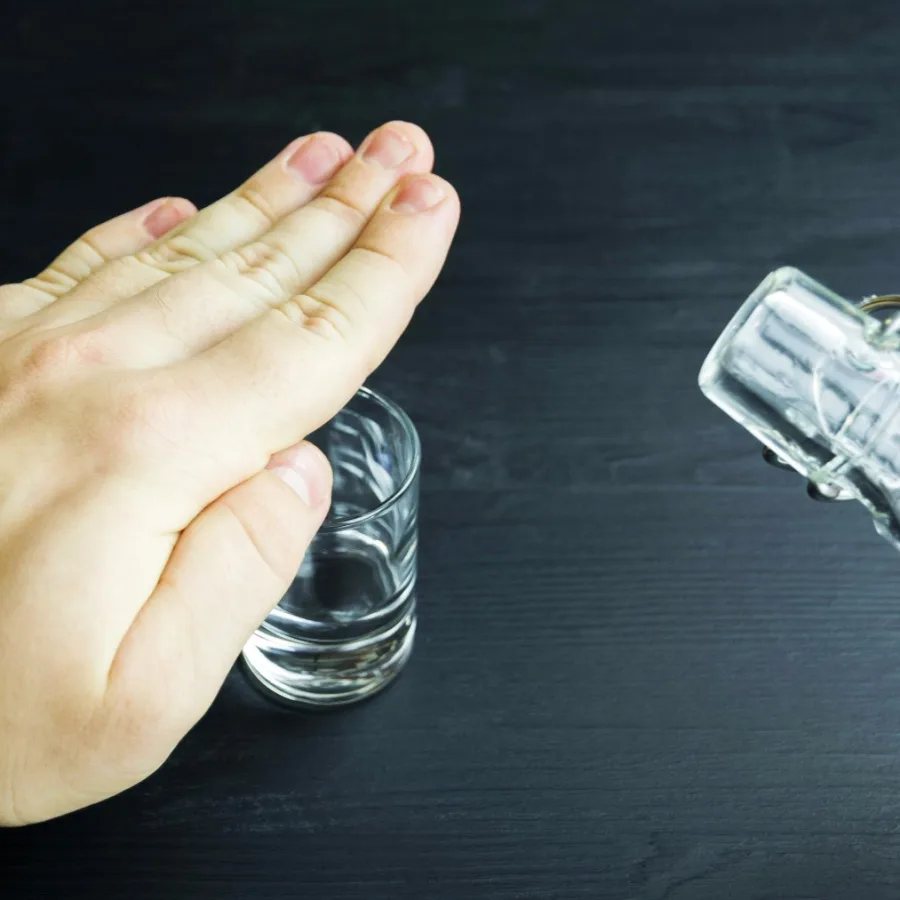

What it feels like after alcohol withdrawal
Alcohol withdrawal is a medical process.
Never stop abruptly on your own if you drink every day. In someone who is dependent, stopping without supervision, or cutting down quickly, can trigger a withdrawal syndrome which, in severe forms, goes as far as seizures and delirium tremens, both life-threatening emergencies.
Stopping is possible, and it can be organised: your doctor, an addiction medicine service or a dependency rehabilitation centre will decide on the right setting, outpatient or in hospital, and on any treatment needed.
Hypnosis has no place in withdrawal itself. It can support what comes afterwards, alongside medical follow-up. That is what this page is about.
Emergencies: 911 in Quebec, 15 or 112 in France. Helplines at the foot of this page.
You got through the first days, supervised. You held on through the first weeks. And now you are discovering the other part of the work, the part nobody described to you in this much detail.
There is also what other people send back at you. The ones who watch. The ones who insist. The ones who look disappointed when you say no, as if it were aimed at them.
If you are here, you have already done the part many people cannot do. What remains is not a question of strength of character: it is rebuilding daily life, and it is done with people around you.
What is alcohol withdrawal?
Withdrawal means stopping alcohol in someone who is dependent, and the syndrome that stopping triggers in the body.
Three things need separating, which everyday language runs together.
- The withdrawal syndrome is the physical reaction to stopping: tremors, sweating, nausea, a racing heart, anxiety, sleep disturbance. In severe forms it can go as far as seizures and delirium tremens, which are medical emergencies. That is why stopping is supervised.
- Medically managed withdrawal is the care given during that phase: medical assessment, an outpatient or hospital setting depending on the situation, treatment, monitoring. It lasts as long as it needs to and it is not decided alone.
- Life after withdrawal, the maintenance phase, is everything else: the months and years that follow, the triggers, the social life to rebuild, the question of relapse. This is where hypnosis can have a place, alongside follow-up in addiction medicine.
If you are not dependent and your goal is to drink less, the useful page is Hypnosis to Drink Less.
Follow-up after withdrawal is not an optional precaution.
It is the part of the journey that decides what comes next. Medication to help maintain abstinence, where indicated, requires a prescription and medical monitoring. Any decision about your treatment belongs to the doctor who prescribed it, and we will never ask you to stop it or change it.
What life after withdrawal costs day to day

The difficulties after withdrawal are not the difficulties of withdrawal. There is sleep, which takes a long time to reorganise. There is mood, often unstable for weeks. There are emotions coming back unfiltered, because alcohol had cushioned part of them for years, and anger, sadness or boredom now turn up all at once with their faces uncovered. There is social life, which sometimes shrinks abruptly when part of your relationships were organised around drinking. There is work, with its office drinks and lunches. There are the people close to you, whose watchfulness is kind and heavy. And there is free time, which appears in large quantities and has to be filled.
Each of these is a possible trigger. Naming them in advance is better than discovering them on a Saturday night.
Recognised approaches other than hypnosis
The starting point and the mainstay is medical and addiction follow-up. It does not stop when withdrawal ends; that is in fact when it becomes most useful.
- Addiction medicine consultations and dependency rehabilitation centres, which provide long-term follow-up. In Quebec, every region has a dependency rehabilitation centre reachable through the CLSC or 811.
- Medication to help maintain abstinence, prescribed and monitored by a doctor.
- Psychotherapy, cognitive and behavioural therapies in particular, where relapse prevention is a well-established field.
- Peer support groups, Alcoholics Anonymous and others, which are among the best-supported approaches for maintaining abstinence, and whose main contribution is breaking isolation.
- Support from those around you, and sometimes support for them too, since they are going through something as well.
- Free and anonymous helplines, listed at the foot of this page, including for the moments when calling someone you know is impossible.
Hypnosis sits alongside this framework, on the side of automatic habits, emotions and confidence.
What a hypnosis session can aim at
Let us start with what hypnosis does not do, and this list matters more than the next one.
It does not replace medical withdrawal and plays no part during it. It replaces neither addiction follow-up, nor treatment, nor a peer support group. It does not protect you from relapse and can guarantee nothing on that score. It will not make you feel disgusted by alcohol: we use no aversion suggestions. And it does not put you to sleep or make you do anything against your will.
What the work does aim at, with the agreement of the team following you:
- Spotting and defusing triggers: a place, an hour, a person, an emotion, a smell. Naming them in advance and preparing what happens when they turn up.
- Getting through an emotion without a substance. That is the heart of the work: alcohol did that job for a long time, and other resources have to take it over.
- Easing the anxiety and sleep difficulties that often go with the first months.
- Rebuilding a view of yourself that is not organised around shame, because shame is fuel for relapse, not a brake on it.
- Preparing the risky situations you have identified: a wedding, a holiday, retirement, a bereavement, a change of rhythm.
About relapse
A relapse is not a moral collapse nor proof that none of it was worth anything. On journeys with dependence it is common, often gone through several times, and it is part of what care teams explicitly anticipate.
What distinguishes one trajectory from another is not the absence of relapse: it is what happens in the hours and days that follow. A drink taken again can stay an episode, or become a habit again, and what tips it one way or the other is almost always the same thing: silence. Telling someone quickly, getting back in touch with the team following you, calling a helpline that same night: those are the things that change what comes next.
If it has just happened to you, this is not the moment to disappear. The numbers are at the foot of this page.
What the research says
We may as well be blunt: research on hypnosis and alcohol is scarce and does not allow any conclusion.
A Norwegian randomised trial published in 2019 compared Ericksonian hypnosis sessions with motivational interviewing in people hospitalised for alcohol use disorder, inside an otherwise intensive treatment programme. Thirty-one people took part, far too few to settle anything. Both groups reduced their drinking, and the gap in favour of hypnosis at one year did not reach statistical significance. The authors note that only two randomised controlled trials existed at the time on this question, and they consider several readings of their result themselves, including the one where neither hypnosis nor motivational interviewing adds much to the treatment programme itself.
A Cochrane review of hypnotherapy for smoking cessation reaches a comparable conclusion: the evidence does not establish superiority over other behavioural approaches, and if a benefit exists, it is small at most.
Our position follows directly. What is documented in alcohol dependence is addiction medicine. We offer hypnosis as possible support inside that framework, and we would rather write that than quote work which does not say what it is made to say.
An example: Gérard

Gérard came to see us after many years of abstinence, with no relapse. It was not the past that brought him: it was his retirement, three months away. His whole daily structure, hours, journeys, landmarks, was about to disappear at once, and he knew that his drinking, in the past, had settled into periods without structure. The work was about that change of rhythm: what he actually wanted to do with those days, and what would replace the landmarks that were falling away. His medical follow-up was not interrupted; we worked alongside it, not instead of it.
> "I did not come because things were going badly. I came because I could see something coming and I preferred to prepare for it." > Gérard, name changed
*Every situation is different. Gérard's path is his own and says nothing about what you will experience.*
How a session on this subject unfolds
The conversation. Where you are in your journey, who is following you, what treatment is under way, and since when. If you have not yet entered a course of care, or if your drinking is still daily, we will refer you to a doctor or an addiction medicine service before anything else: hypnosis does not substitute for that step, and we will not start in its place.
The objective. Worked out together, and always modest and concrete. For example: getting through a family wedding, finding less broken sleep, or preparing for a period you know will be hard.
The induction. A natural state of focused attention that you already know. You stay conscious, you hear everything, you can speak and you can stop whenever you want.
The work. On this subject, it is mostly about the triggers you have identified, the resources that let you get through an emotion without a substance, easing anxiety, and preparing specific situations. No aversion suggestion is used.
The debrief and the exercise. A conversation about what you experienced, and a self-hypnosis exercise to take away, often designed for the moments when the craving rises and nobody can be reached.
The number of sessions is worked out at the first conversation. Sessions work in person and by video alike.
Book an appointment
Alongside your follow-up, never instead of it. A question before you decide? Write to us: a clear answer, including "this is not the right time for us", is part of the work. You can also book an appointment directly. Our practitioners who work in English see people in Montreal, Sherbrooke, Gatineau, Paris and Lille, and by video wherever you are in the world. The number of sessions is worked out at the first conversation.
For the common ground behind all these questions, our page Hypnosis for Alcohol and Drinking Less brings together what hypnosis can and cannot do, and the situations where the first step is a doctor.
Where would you like to consult?
All areas
 Annie Mayrand
Gatineau - Cumberland (ON)
👤
🧑🎓
🚭
❤️
💻
Annie Mayrand
Gatineau - Cumberland (ON)
👤
🧑🎓
🚭
❤️
💻
 Christian Rocher
Beloeil
👤
🧑🎓
👶
🚭
❤️
💻
Christian Rocher
Beloeil
👤
🧑🎓
👶
🚭
❤️
💻
 David Veilleux
Montréal - Anjou
👤
🧑🎓
🚭
❤️
🤰
💻
David Veilleux
Montréal - Anjou
👤
🧑🎓
🚭
❤️
🤰
💻
 Florence Aton
Sutton
👤
🚭
❤️
💻
Florence Aton
Sutton
👤
🚭
❤️
💻
 Jessica Reid
Sherbrooke
👤
🚭
💻
Jessica Reid
Sherbrooke
👤
🚭
💻
 Julie Rocque
Montréal - Jean-Talon
👤
🧑🎓
👶
🚭
❤️
🤰
💻
Julie Rocque
Montréal - Jean-Talon
👤
🧑🎓
👶
🚭
❤️
🤰
💻
 Nuria Pérez de León
Montréal - Rosemont - Saint-Lambert
👤
🧑🎓
💻
Nuria Pérez de León
Montréal - Rosemont - Saint-Lambert
👤
🧑🎓
💻
 Romain Rastoin
Bromont
👤
🧑🎓
🚭
❤️
💻
Romain Rastoin
Bromont
👤
🧑🎓
🚭
❤️
💻
 Réjeanne LeBlanc
La Prairie
👤
🧑🎓
👶
💻
Réjeanne LeBlanc
La Prairie
👤
🧑🎓
👶
💻


Frequently asked questions about Hypnosis After Alcohol Withdrawal
No, under no circumstances. In someone who is dependent, stopping alcohol can cause serious complications and must be medically supervised. No practitioner should offer to have you stop under hypnosis without medical follow-up. Hypnosis comes afterwards, as a complement.
No. The hypnotic state is a state of focused attention, not sleep and not being under anyone's influence: the available research shows no loss of control over your own actions, and people told they can resist a suggestion do resist it. You stay conscious, you hear everything, and you keep at all times the ability to refuse a suggestion, to speak or to stop the session.
Yes. Hypnosis is a non-medicinal approach that adds to your follow-up without interfering with it. Tell us what you are taking at the first conversation. Any decision about your treatment belongs to the doctor who prescribed it: we will never ask you to stop it or change it, even if everything is going well.
Psychotherapy is a regulated framework, practised by professionals whose title is protected, and it can address psychological functioning as a whole and diagnosed disorders. Hypnosis as we practise it is a narrower form of support, centred on a specific objective and on the automatic habits attached to it. In alcohol dependence, addiction medicine remains the reference.
No, and we do not try to. Aversion suggestions are not part of our practice: the idea was tried as early as the 1950s and tested in controlled trials that showed no advantage over usual care. It sets up a power struggle that does not hold over time.
Relapse is common on these journeys and it does not undo what has been built. The useful step is immediate: tell someone, get back in touch with the team following you, or call a helpline that same evening. If daily drinking has resumed, medical advice is needed before any new attempt to stop.
Probably not. See our page on hypnosis to drink less instead, or, for a trial pause, the one on Dry January.
The number of sessions is worked out at the first conversation, alongside the rest of your care. Nobody can tell you beforehand without having met you.
Sources and references
Helplines
- Quebec: Drogue : aide et référence, 1 800 265-2626 (or 514 527-2626 in the Montreal area), free, confidential, 24 hours a day, 7 days a week.
- Quebec: Info-Social: 811, option 2; the dependency rehabilitation centre for your region, through your CLSC.
- Quebec: Alcoholics Anonymous, peer support across the province.
- France: Alcool info service (in French), 0 980 980 930, anonymous and charged at a local rate, from 8 a.m. to 2 a.m., 7 days a week.
- Emergencies: 911 in Quebec, 15 or 112 in France.
- If you are in distress or having suicidal thoughts: 1 866 APPELLE (1 866 277-3553) in Quebec, 24 hours a day; 3114 in France, free and confidential, 24 hours a day.
Sources
- Gouvernement du Québec, *Alcohol and other drug use* (in French): official information on effects, dependence and resources.
- Alcool info service (Santé publique France, in French): information, referral and conversations with professionals.
- Barnes J., McRobbie H., Dong C. Y., Walker N., Hartmann-Boyce J., *Hypnotherapy for smoking cessation*, Cochrane Database of Systematic Reviews, 2019, CD001008.
- Shestopal I., Bramness J. G., *Effect of Hypnotherapy in Alcohol Use Disorder Compared with Motivational Interviewing: A Randomized Controlled Trial*, Addictive Disorders & Their Treatment, 2019, 18(3), 169-175 (doi 10.1097/ADT.0000000000000170). A trial on thirty-one people, with a non-significant result.
Hypnosis as practised by the members of Solutions Hypnose is a complementary support approach. It is neither a medical act, nor a diagnosis, nor psychotherapy in the regulatory sense, and it in no way replaces a consultation, follow-up or treatment prescribed by a health professional.
Our practitioners do not assess and do not treat mental disorders or illnesses. They never ask for an ongoing treatment to be stopped or changed: that decision rests exclusively with your doctor.
No result can be guaranteed. The testimonials and examples presented on this page describe individual experiences and do not predict what you will experience.
In case of significant distress, unexplained physical symptoms or suicidal thoughts, contact a doctor, emergency services or a helpline without delay.

Page written by Jean-Marie Balestrat
hypnotherapist and NLP coach
partner at Solutions Hypnose.
English version reviewed by David Veilleux
Published .