
Video Hypnosis with Children
You've found a practitioner who feels right, and they're a three-hour drive away. Or your schedule no longer stretches. Or your child is precisely the sort who won't walk into an unfamiliar office.
And one objection comes straight away: how could my child focus on a screen when they can't sit still for five minutes? It's the most common question, and the answer often surprises: on screen there are fewer objects to fiddle with and fewer ways to steer the conversation elsewhere than there are in an office.
This page is about the video format only: how to prepare the session, what frame to set at home, from what age, and when video isn't the right fit. What hypnosis offers children, and the reasons families come to us, are covered on our Hypnosis for Children page.

Why it works, sometimes better than an office
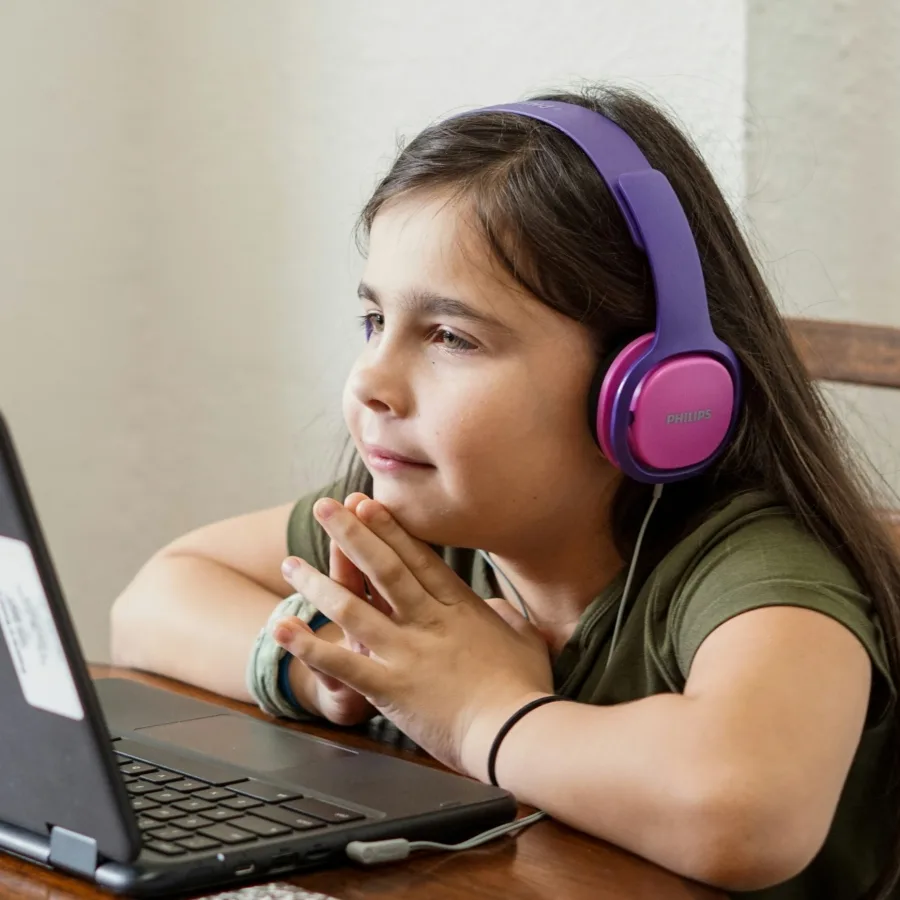
The child is at home. They know the room, the sounds, the smells. They haven't had to walk into an unfamiliar place or sit in a waiting room. For an anxious child, that's one obstacle gone before anything starts.
The screen is their territory. Children today talk to their grandparents, their friends and sometimes their class through a screen. It isn't a strange device to them, it's an ordinary one.
And, against expectation, they're often more focused. That's what the practitioners on our team report: in an office there are objects to handle, a window, a plant, a thousand ways to steer the conversation elsewhere. On screen the frame is tighter, and so is the attention.
For the family, there's everything else. No journey, more flexible times, follow-up that holds through an illness, a holiday or the unexpected. And access to a practitioner trained to work with children, even one who practises a long way from you.
What we know, and what we don't. On video hypnosis with children specifically, the research is silent: no published trial, no case series. What is documented sits one step to the side, with psychological follow-up by videoconference for young people: a 2025 meta-analysis covering twelve trials finds no difference from in-person work, though its authors stress that the data remain preliminary and concern anxiety and low mood above all. So we rely on our practitioners' experience, not on studies about this exact setting.
The frame to set at home
This is the most important part of this page, and the part that is missing almost everywhere. In an office the frame exists on its own: a professional place, a parent in the waiting room, a door that is never quite closed. At home that frame has to be rebuilt, and it's on us to tell you how. The points below are the ones the Ordre des psychologues du Québec sets out for remote practice with a minor, and we apply them.
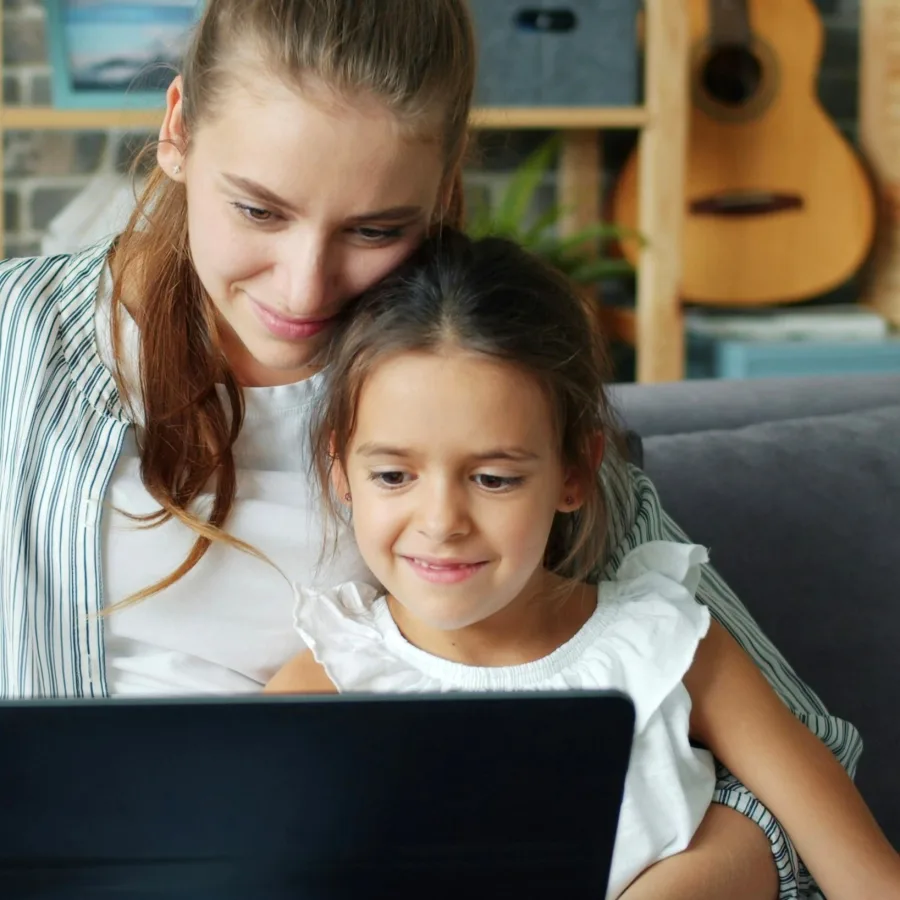
An adult is in the home for the whole session. Awake, reachable, and your child knows it. This isn't an administrative formality: a child who knows a parent is nearby settles more easily.
The session happens in a living space rather than a bedroom, or in a bedroom with the door ajar. The living room outside busy hours, the dining room, a study: the aim is somewhere quiet, not somewhere closed off.
You can come in at any moment, and your child needs to know that too. It won't disrupt the session.
You're there at the start, for the conversation, and at the end for the debrief. In between, many children prefer to talk on their own, and that's fair enough: you can stay within reach without being in the frame.
No recording of the session will be made without your explicit agreement, and never by the child alone.
No contact between the practitioner and your child outside sessions. No messages, no social media. Everything goes through you.
On the technical side, check with the practitioner which platform is used and what becomes of the data. You have every right to ask, and a clear answer is part of doing this properly.
In Quebec, Law 25 requires clear consent given for specific purposes, and personal information about a child under 14 cannot be collected from the child without the parent's agreement. In France, health data must be held by a certified host.
Video available in French
Video transcript
Est ce que tu te demandes si l'hypnose en ligne est aussi efficace pour les enfants que l'hypnose en présence ? Est ce que tu te questionnes à savoir si l'absence de contact direct rend les effets moins nombreux ? Ou bien peut être même que tu te questionnes à savoir si l'hypnose en ligne fonctionne avec tous les enfants ? Alors je réponds à toutes ces questions dans cette vidéo. Alors oui, l'hypnose en ligne est efficace avec les enfants aussi bien que l'hypnose en présence et même parfois plus, je t'explique pourquoi.
J'aimerais d'abord te partager comment se déroule une séance d'hypnose en ligne avec les enfants à travers ma couleur singulière d'hypnothérapeute. C'est à dire que ce n'est pas tous les hypnothérapeutes qui formulent leurs séances d’accompagnement de la même manière. Mais je t'explique ma façon à moi de faire. Alors tout d'abord en général avec l'enfant, je passe un 40 à 45 minutes, selon l'âge de l'enfant. Lorsqu'ils sont très jeunes, ça peut être un petit peu moins.
A la première rencontre, dans les 10 - 15 premières minutes, on parle de tout, de ce qui l'intéresse, je lui pose des questions, le but est de créer le lien. Parce qu'en thérapie, en accompagnement thérapeutique, c'est le lien qui est clé pour permettre le changement et tout particulièrement avec les enfants, pour créer, ouvrir leur réceptivité. Ensuite dans les quinze minutes qui suivent à peu près de la séance, on s'en va utiliser des outils symboliques.
Alors avec les enfants, je ne fais pas comme avec les adultes, puisqu'une séance d'hypnose pour adultes, on demande à la personne d'avoir les yeux fermés pendant au moins 30 à 40 minutes et de se concentrer sur des choses qu'on lui propose, des questions qu'on lui pose. Alors tu comprends que ce n'est pas tout à fait adapté pour les enfants pour qui ce serait un très gros effort si ils y arrivaient. Et qui ne permettrait pas leur ouverture dans cet accompagnement.
Alors avec les enfants, la séance d'hypnose prend la forme d'un jeu, d'une discussion. Nous allons nous inventer une histoire. Peu importe le sujet, c’est l’enfant qui choisit selon son imaginaire. Et dans cette histoire, nous allons développer des symboles clés, par exemple un astronaute s'il a envie d'aller visiter l'espace ou une sirène si c'est le monde sous marin, qui va représenter des ressources que l'on a envie de voir se développer chez l'enfant.
Donc par exemple, la confiance en soi, la sécurité, comme quand on fait un câlin à maman. Moi mon travail d’hypnothérapeute, c'est d'affilier au symbole qu'on va avoir développé avec l'enfant, par exemple la sirène, la ressource intérieure que l'enfant vit. Donc la sécurité et référer à une émotion connue pour l'enfant. Donc la sécurité, c'est quand ? Quand est ce que je rencontre la sécurité ? C'est quand je fais un câlin à maman.
Donc mon travail d'hypnothérapeute c'est d'affilier ces trois éléments ensemble. Le symbole que l'enfant a développé, la ressource, la sécurité, et pour qu'on sache, que l'enfant sache de quoi on parle quand on parle de cette ressource là, affilier un souvenir positif de cette ressource. Donc j'installe ça au fur et à mesure à travers le jeu, à travers la discussion, l'échange. Et je propose en général que l'enfant ait papier crayon à côté de lui et à la fin de la séance, on dessine ce symbole clé pour qu'il s'intègre.
Le temps de rencontre dure à peu près une heure, une fois que j'ai fini la séance avec l'enfant, je vous fais revenir derrière l'écran, vous parents. On vous raconte avec l'enfant qu'est ce qu'on a fait pendant la séance et ensuite je prends un temps de conclusion avec vous pour vous expliquer comment utiliser les outils et comment permettre le suivi de ces outils là avec l'enfant d'ici notre prochaine rencontre. Souvent je propose quinze jours de délai, sans nouvelle séance pour permettre à l'enfant de s'expérimenter avec ses nouvelles ressources, de rencontrer des situations de la vie quotidienne dont il a besoin pour s'expérimenter.
Et au bout de deux semaines on s'écrit, je vous envoie un courriel pour prendre des nouvelles de l'avancée de l'objectif et on voit à partir de là si on a envie de réserver une nouvelle séance selon l'efficacité de la première. Ce qui est vraiment clé dans l'efficacité de l'hypnose avec les enfants, c'est le niveau de réceptivité de l'enfant. Cela m'arrive parfois quand les enfants sont très jeunes, qu'ils ont du mal à écouter ou à être en lien avec moi, et c'est vraiment ce niveau de réceptivité là qui fait la différence.
Je suis évidemment très passionnée par l'accompagnement avec les enfants et je suis expérimentée à créer le lien avec eux, quel que soit le type d'enfants. Et ce qui est très intéressant, je vous disais au début que l'hypnose en ligne est parfois plus efficace. En fait, j'ai ce recul là parce que j'ai accompagné, habitant dans les Laurentides pendant de nombreuses années, les enfants en présence et maintenant je les accompagne majoritairement en ligne parce que j'habite en Gaspésie et donc j'ai remarqué que les séances sont plus efficaces avec les enfants car ils sont plus concentrés à travers l'écran.
Parce que lorsqu'on est en présence si l'enfant n'a pas très envie de me parler de son enjeu, il va me parler de ce qui se passe par la fenêtre, il va aller trouver un nouveau jeu dans le coffre à jeux. En tout cas, vous voyez ce que je veux dire, hein ? Ce genre de distractions là, alors qu'en ligne, il est obligé de rester en lien avec moi parce que c'est juste l'écran qui nous relie et souvent ça leur permet d'être plus efficace et plus axé sur l'objectif.
J'ai aussi des questions régulièrement qui reviennent est ce qu'en tant que parent, je peux assister à la séance ? Alors il n'y a aucun problème pour écouter la séance. Ce que je propose souvent, c'est que le parent, dès que l'enfant est à l'aise, peut être au bout de quelques minutes parce que souvent je mets à l'aise les enfants très rapidement, laisse l'enfant seul derrière l'écran et le parent peut aller vaquer à ses occupations à côté, laisser la porte ouverte de la pièce où l'enfant se trouve si il a envie d'écouter la séance, mais simplement pour que l'enfant ne s'appuie pas constamment sur son parent et qu'il puisse trouver ses propres ressources intérieures pour discuter avec moi, j'aime qu'il soit seul derrière l'écran et je trouve que c'est beaucoup plus efficace.
Les enfants, je les accompagne à partir de quatre ans, donc il se peut, quand les enfants sont très jeunes, à quatre ans, cinq ans que parfois les parents restent avec nous, derrière l'écran pour accompagner au mieux l'enfant. Et on fait une séance tous ensemble, je demande aussi des choses aux parents d'imaginer avec l'enfant pour l'impliquer dans la séance. Donc voilà, seulement avec les jeunes enfants, parfois le parent reste derrière l'écran, mais très souvent les enfants sont très autonomes et sont très heureux de me parler, de discuter, de jouer, s'amusent beaucoup.
Alors c'est très facile pour le parent de laisser l'enfant être dans sa dynamique intérieure. Selon l'âge de l'enfant, ce qui est important, c'est qu'il soit volontaire. Alors lorsqu'on est en train d'accompagner des adolescents ou des enfants à partir de dix ans c'est vraiment important qu'ils soient d'accord pour cet accompagnement là et ouverts, parce que ça va permettre leur réceptivité En dessous de 8 - 10 ans, selon le niveau de maturité, on n'est pas obligé de leur demander parce que tout ça passe par le jeu, puis c'est comme un grand jeu.
C'est ainsi que j'accompagne les enfants sur des problématiques telles que accompagner les symptômes de l'anxiété, les symptômes des tics du toc, lorsqu'il y a eu une vérification et un suivi médical, les troubles du comportement aussi, tels l'énurésie, l’encoprésie, encore une fois s'il y a eu une vérification médicale auparavant. Alors au plaisir d'accompagner votre enfant et d'être en lien avec vous à travers cette démarche là, en hypnose.
Je les porte chers dans mon cœur et c'est toujours avec une grande joie et beaucoup d'amusement que ces séances se déroulent. Au plaisir de vous rencontrer.
Hypnotherapy is a complementary form of support and does not replace medical advice, diagnosis, or treatment. If you have any concerns about your health, please consult a physician first.
Preparing the session
The essential point: your child has to agree. Show them the photo or the introduction video of the practitioner, or of several, and let them choose the person they feel like meeting. If they're not ready, don't push: it may be for later.
Explain what's going to happen, simply. That they'll be talking with someone, that they won't fall asleep, that they can stop if they want to, and that you'll be nearby.
On the practical side:
- somewhere quiet, where nobody will wander in;
- a good connection, and the device plugged in so it doesn't cut out mid-session;
- a working camera and microphone, tested beforehand, not at appointment time;
- headphones or earbuds if the house is busy;
- the screen at eye level, the child sitting comfortably;
- notifications turned off on the device being used.
And if the connection drops mid-session? It happens, and it's no great matter. The practitioner calls back and the session picks up again. Agree on a backup phone number in advance: it saves worry on both sides.
How a session unfolds
It follows the same steps as an office session.
The conversation, with you and the child, to understand the situation and set a goal.
The work with the child. Unlike with adults, there often won't be a formal induction of the "close your eyes and relax" kind, especially with a restless or simply curious child. The first aim is to build the connection and discover their world: their characters, their animals, their stories. The work is then done with that material.
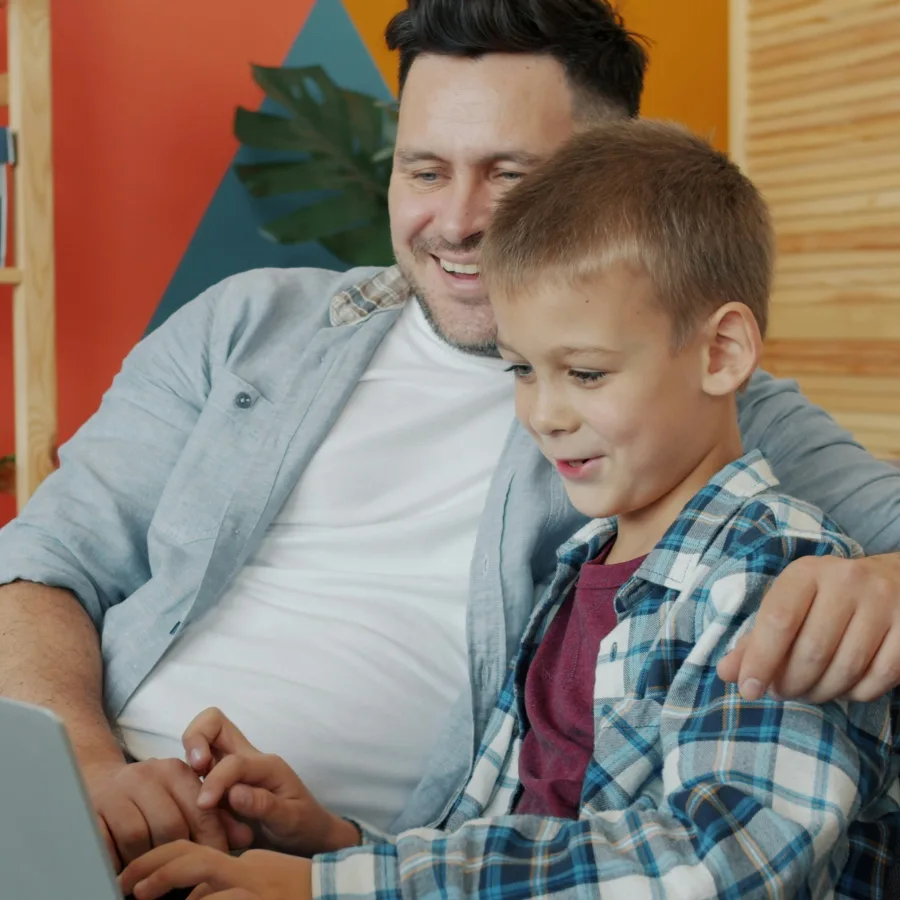
The debrief is usually with you, to hand you the keys to the images used so the work can carry on at home. Some children, and teenagers above all, prefer their parents not to be too involved: in that case the debrief stays short, and that's to be respected. Sessions are shorter than with an adult: count on 30 to 45 minutes depending on age, and a child who drifts off after twenty minutes hasn't wasted their session.
When video isn't the right fit
Below six, we suggest meeting in person. Play, drawing and meeting someone carry poorly over a screen at that age. That's our own marker, not an official standard: no professional body publishes a minimum age for remote consultation. Some of our practitioners see children younger, from four, and the setting changes then: the parent stays on screen with the child and takes part in the session, which becomes a game for three.
Some children simply don't take to it, and that's perfectly fine. If the connection hasn't formed after a session or two, an office will suit them better.
And some situations call for something else first. We replace neither the paediatrician, nor the family doctor, nor a child psychologist. School refusal, repeated physical symptoms, marked withdrawal, established sleep problems, or the aftermath of a serious event: start with a doctor. Our hypnotherapists make no diagnosis.
Book an appointment
Tell us your child's age and what brings you. If video doesn't seem the right fit, or if your situation calls for a doctor first, we'll say so. Ask us a question or book an appointment. Then show the practitioner's introduction to your child: they're the one who decides. Our guide to video consultations covers the practical questions on the adult side, and the session can be held wherever you are in the world: that is precisely what this format makes possible.
If anxiety is what dominates, see our page on anxiety in children; if it's school, the one on school stress. Our practitioners who work with children in English see families in Montreal, La Prairie and Beloeil, as well as in Paris and Lille.
Where would you like to consult?
All areas
 Annie Mayrand
Gatineau - Cumberland (ON)
👤
🧑🎓
🚭
❤️
💻
Annie Mayrand
Gatineau - Cumberland (ON)
👤
🧑🎓
🚭
❤️
💻
 Christian Rocher
Beloeil
👤
🧑🎓
👶
🚭
❤️
💻
Christian Rocher
Beloeil
👤
🧑🎓
👶
🚭
❤️
💻
 David Veilleux
Montréal - Anjou
👤
🧑🎓
🚭
❤️
🤰
💻
David Veilleux
Montréal - Anjou
👤
🧑🎓
🚭
❤️
🤰
💻
 Florence Aton
Sutton
👤
🚭
❤️
💻
Florence Aton
Sutton
👤
🚭
❤️
💻
 Jessica Reid
Sherbrooke
👤
🚭
💻
Jessica Reid
Sherbrooke
👤
🚭
💻
 Julie Rocque
Montréal - Jean-Talon
👤
🧑🎓
👶
🚭
❤️
🤰
💻
Julie Rocque
Montréal - Jean-Talon
👤
🧑🎓
👶
🚭
❤️
🤰
💻
 Nuria Pérez de León
Montréal - Rosemont - Saint-Lambert
👤
🧑🎓
💻
Nuria Pérez de León
Montréal - Rosemont - Saint-Lambert
👤
🧑🎓
💻
 Romain Rastoin
Bromont
👤
🧑🎓
🚭
❤️
💻
Romain Rastoin
Bromont
👤
🧑🎓
🚭
❤️
💻
 Réjeanne LeBlanc
La Prairie
👤
🧑🎓
👶
💻
Réjeanne LeBlanc
La Prairie
👤
🧑🎓
👶
💻


Frequently asked questions about Video Hypnosis with Children
Six, as a rule. Below that we suggest meeting in person: at that age, play, drawing and meeting someone carry poorly over a screen. Some of our practitioners see children from four, with the parent staying on screen alongside the child.
Often yes, and sometimes better than in person. There are fewer objects to fiddle with and fewer ways to steer the conversation elsewhere. The practitioner adapts the format, and there won't necessarily be an eyes-closed moment at all.
You're there at the start and at the end. In between, many children prefer to talk on their own. But you must stay in the home, awake and reachable, and your child needs to know it.
Yes, at any moment. It causes no problem at all, and your child needs to know that too.
A quiet living space rather than a bedroom, or a bedroom with the door ajar. The aim is somewhere without through traffic, not somewhere closed off.
Not without your explicit agreement. Ask the practitioner which platform they use and what becomes of the data: it's a fair question, and a clear answer is part of doing this properly.
The practitioner calls back and you pick up where you left off. Agree on a backup phone number beforehand: it saves worry on both sides.
Don't push. Show them several practitioners' introductions and let time pass. A child brought along against their will won't engage.
That's discussed at first contact. We don't give a number in advance.
Video suits teenagers very well, and many prefer it. See our page on hypnosis and coaching for teenagers.
Sources and references
On the frame for a remote session with a minor
- Points de repère en télépsychologie — Ordre des psychologues du Québec (in French). "Dans le cas de personnes mineures, déterminez où sera l'adulte lors de la session." The same page asks that the person have a private, confidential space, that everyone confirm no one is recording without prior consent, and that an emergency plan be agreed.
- Consentement aux services — Ordre des psychologues du Québec (in French), citing the Civil Code: a minor of 14 or over may consent alone to such care. Below that age it's the person with parental authority. We ask for the parent's agreement and the child's in any case.
On data protection
- Principaux changements aux lois sur la protection des renseignements personnels — Commission d'accès à l'information du Québec (in French). Personal information about a minor under 14 may no longer be collected from the child without the consent of the holder of parental authority.
- Télémédecine : comment protéger les données des patients ? — CNIL, France (in French). Health data hosting must meet the conditions of article L. 1111-8 of the public health code, meaning a certified host.
On supporting young people by videoconference
- von Wirth, E., Willems, L., Döpfner, M., & Kohl, L. T. (2025). *Effectiveness of videoconference-delivered psychotherapy for children, adolescents, and their parents: A meta-analysis of randomized controlled trials*. Journal of Telemedicine and Telecare, 31(4), 463-474. doi.org/10.1177/1357633X231199784 — no difference from in-person work across twelve trials, but an effect concentrated on internalizing disorders and data the authors call preliminary.
- Child & Adolescent Telepsychiatry — American Psychiatric Association. "Satisfaction has been rated as very high by parents, teens, and referring providers", alongside an evidence base described as *developing*.
- Ådnanes, M., Kaasbøll, J., Kaspersen, S. L., & Krane, V. (2024). *Videoconferencing in mental health services for children and adolescents receiving child welfare services: a scoping review*. BMC Health Services Research. pmc.ncbi.nlm.nih.gov/articles/PMC11177372 — screen fatigue, shorter attention and more distraction are among the difficulties clinicians report.
On hypnosis at a distance
- *The Emerging New Reality of Hypnosis Teletherapy* (2023). International Journal of Clinical and Experimental Hypnosis. pubmed.ncbi.nlm.nih.gov/37040191 — the state of the question in adults; children aren't covered, which says enough about how thin the research is on this point.
Hypnosis as practised by the members of Solutions Hypnose is a complementary support approach. It is neither a medical act, nor a diagnosis, nor psychotherapy in the regulatory sense, and it in no way replaces a consultation, follow-up or treatment prescribed by a health professional.
Our practitioners do not assess and do not treat mental disorders or illnesses. They never ask for an ongoing treatment to be stopped or changed: that decision rests exclusively with your doctor.
No result can be guaranteed. The testimonials and examples presented on this page describe individual experiences and do not predict what you will experience.
In case of significant distress, unexplained physical symptoms or suicidal thoughts, contact a doctor, emergency services or a helpline without delay.

Page written by Sandra Djina Ravalia
hypnotherapist and art therapist
partner at Solutions Hypnose.
English version reviewed by David Veilleux
Updated .