
Hypnosis to Stop Pulling Out Your Hair (Trichotillomania)
You are absorbed in a book, or in front of your screen, and your fingers go looking for a hair that feels different from the others, coarser, thicker. You find it, you pull, and for a second everything lets go.
Then you look at the little pile on the desk, or the thinner patch in the mirror, and shame takes the place of relief.
Trichotillomania means repeatedly pulling out your hair or body hair (eyelashes, eyebrows, elsewhere on the body), to the point of thinning it, despite wanting to stop. It is neither a whim nor a lack of willpower: it is a body-focused repetitive behaviour, often linked to tension, boredom or concentration. The first step is to talk to your doctor. Hypnosis support can then come alongside, to help you notice the urge earlier and set up other responses.

What it is like when you pull out your hair
Before you read.
Trichotillomania is a recognised disorder: the first step is to talk to your doctor, who can rule out another cause of hair loss and refer you on.
If you swallow the hair you pull out, even now and then, tell them without delay: it can form a mass in the stomach.
If the gesture comes with great distress, a feeling of hopelessness or dark thoughts, free helplines are listed at the bottom of the page.
We are neither psychologists nor psychotherapists: hypnosis comes alongside, never instead.
There are the moments you know by heart: the class, the meeting that drags on, the evening in bed before falling asleep. The hand rises on its own towards the temple, the nape of the neck or the eyebrow, and searches.
There is also everything you organise around it. Hair styled to cover a patch, the cap, the eyebrow make-up, the swimming pool you avoid, the hairdresser you keep putting off. And the fear that someone close will notice, or ask.
If you recognise yourself, you are not alone, and it is not a lack of willpower. The gesture has learned to relieve you, quickly and effortlessly. That is why it resists the promises you make to yourself.
What is trichotillomania?

Trichotillomania means repeatedly pulling out hair or body hair, for reasons that are not cosmetic, to the point of visible loss. It most often affects the scalp, but also eyelashes, eyebrows or other areas of the body. It usually appears around puberty and affects about 1 to 2% of the population, according to the MSD Manual (in French).
Two ways of pulling often coexist. There is automatic pulling, done without thinking, during an activity. And there is focused pulling, more conscious, which answers a tension, a precise urge or the search for a hair that "doesn't feel right". Telling them apart helps choose what will help.
It is not OCD. Trichotillomania is classed among the disorders related to obsessive-compulsive disorder, but the gesture does not usually answer an obsessive thought that has to be neutralised. It relieves a sensation or a tension. We go into this distinction in our article on hypnosis for OCD and repetitive behaviours.
It has cousins. Nail biting or skin picking belong to the same family of body-focused repetitive behaviours, and they sometimes go together. If that is your case, also read hypnosis to stop nail biting.
In children
In young children the habit is sometimes temporary, but it is worth showing to the doctor or paediatrician, especially if it lasts, leaves bare patches or if the child swallows their hair. Reproaches, punishments and watching every gesture tend to keep it going: they add tension at the very moment the gesture is there to release it. If the habit is part of a wider worry, our article on hypnosis for anxiety in children may help you see more clearly.
The day-to-day impact of trichotillomania
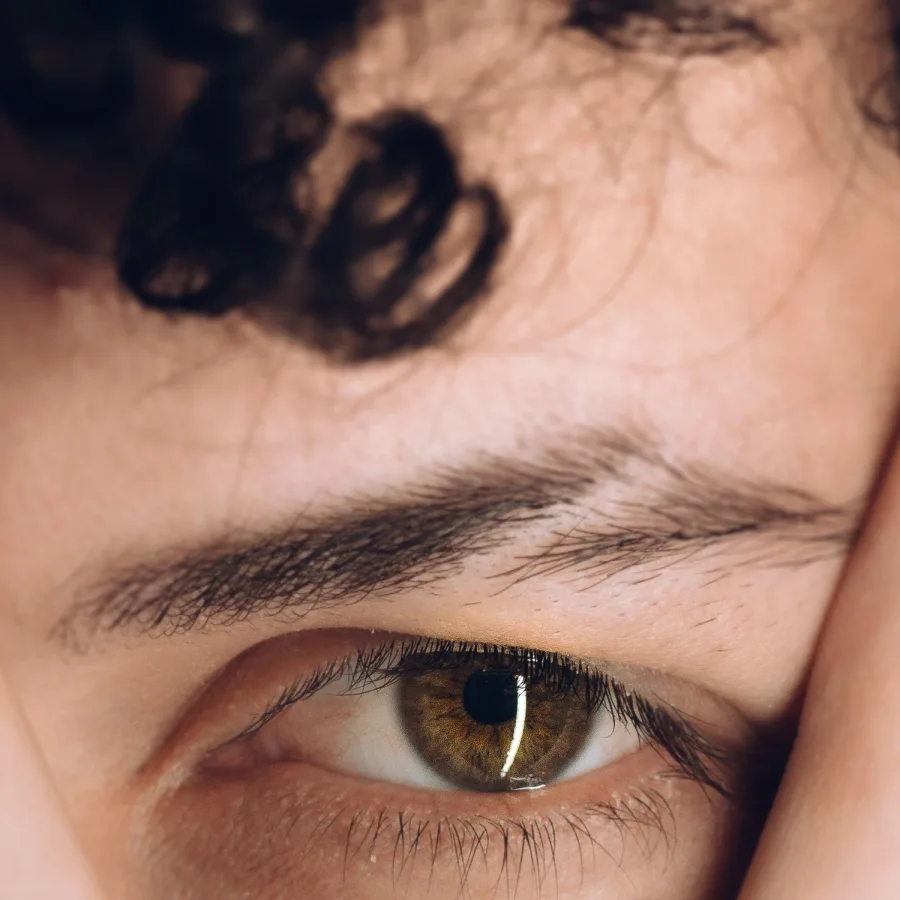
The most visible part is the thinned areas, sometimes real bald patches, sparse eyelashes or eyebrows. Follicles can be damaged when pulling goes on for a long time, and regrowth is not always the same as before. Some people chew or swallow the hair they pull out: that is something to tell your doctor.
The heaviest part is often invisible. It is the shame, the secret sometimes kept for years, including from those closest to you. It is the time lost pulling, then hiding. It is the avoidance: wind, rain, the pool, a short haircut, an intimate relationship. Many people have never told anyone, and believe they are the only ones.
The recognised approaches, apart from hypnosis
The first port of call is your doctor. They rule out another cause of hair loss, refer you on, and can offer treatment when they think it useful. Decisions about any medication are theirs to make.
- Cognitive behavioural therapy focused on this disorder, with habit reversal training: spotting the gesture and its triggers, then replacing it with an incompatible response, such as clenching your fist or laying your hands down. It is the best-studied approach and the one medical references put first.
- A dermatologist, for the state of the scalp, eyelashes and eyebrows, and to rule out another cause.
- A psychologist or psychiatrist, when pulling comes with anxiety, low mood or other difficulties.
- Practical adjustments: keeping your hands busy (a ball, an object to handle), wearing thin gloves or a hat at risky times, keeping a notebook of the situations where the urge appears.
- Associations for people affected, such as the TLC Foundation for Body-Focused Repetitive Behaviors, which inform and break the isolation.
Hypnosis sits alongside these approaches, on the side of the automatic pattern and the tension it relieves.
Hypnosis for trichotillomania: aims and benefits
Let's start with what hypnosis does not do.
It does not make the disorder disappear, and it does not "program" you never to raise your hand to your hair again. It does not replace your doctor's advice, cognitive behavioural therapy, or prescribed treatment. It does not put you to sleep and does not make you do anything against your will. And it guarantees no result.
What support aims at:
- Feeling the urge earlier. The hand often rises before you notice. The work is to perceive sooner the signs that come before the gesture (a tension, an itch, the hand brushing the hair) so that a choice becomes possible again.
- Understanding what the gesture is doing. Releasing tension, staying focused, filling boredom, calming down before sleep: depending on the moment, the gesture does not do the same job, and the response is not the same.
- Rehearsing another response. In hypnosis, you can live through the risky situations in your imagination and set up a replacement response there: the hand coming to rest, the fist closing, a breath. What you have rehearsed inwardly comes more easily when the moment arrives.
- Easing the underlying tension. When pulling follows stress, work on relaxation and on the situations that create tension provides a relay. Our page on stress management says more.
- Lightening the shame. The self-blame that follows an episode is often the tension that prepares the next one. A kinder look at yourself is not self-indulgence: it is what helps you step out of the loop.
What the research says
The broadest meta-analysis to date, published in 2020 in Depression and Anxiety, brought together 24 trials and 857 participants. It concludes that behavioural therapies that include habit reversal have the strongest evidence for reducing symptoms. Several medications showed promise, but often in a single trial, which the authors consider needs repeating. Most of these trials involve small samples.
On the hypnosis side, there is currently no rigorous trial that allows a conclusion. What we offer rests on the principles of these recognised approaches (awareness of the gesture, a replacement response, work on tension), with the hypnotic state as a way of rehearsing and anchoring them. We would rather tell you so plainly.
How a hypnosis session on this subject unfolds

The conversation. How long the gesture has been there, at what moments, in which places, on which areas, what you feel just before and just after, what you have already tried. We will ask whether a doctor is following you, whether you swallow the hair, and whether other difficulties come with this one: that is how we know whether we are the right resource, or whether another door should open first.
The goal. Worked out together, concrete and suited to you. It might be getting through the evening in front of the screen with your hands busy, letting one particular area grow back, or simply noticing the urge before your hand rises.
The induction. A natural state of focused attention, which you already know without naming it. You stay aware, you hear everything, you can speak and stop whenever you wish.
The work. On this subject, it usually focuses on the signs that come before the gesture, on rehearsing a replacement response in your own situations, and on the tension the pulling was relieving.
Feedback and an exercise. A conversation about what you experienced, and a self-hypnosis exercise to take home, short, designed for the moments when your hand goes looking for your hair. Most of it happens between sessions, in real life.
Book an appointment
The first conversation is there precisely to work out whether hypnosis is the right resource for your situation, and a clear answer (including "this isn't for you") is part of the work. Ask us a question or book an appointment. Our practitioners who work in English see people in Montreal, Sherbrooke, Gatineau, Paris and Lille, and by video wherever you are in the world. The number of sessions is worked out at the first conversation.
Where would you like to consult?
All areas
 Annie Mayrand
Gatineau - Cumberland (ON)
👤
🧑🎓
🚭
❤️
💻
 Christian Rocher
Beloeil
👤
🧑🎓
👶
🚭
❤️
💻
 David Veilleux
Montréal - Anjou
👤
🧑🎓
🚭
❤️
🤰
💻
 Florence Aton
Sutton
👤
🚭
❤️
💻
 Jessica Reid
Sherbrooke
👤
🚭
💻
 Julie Rocque
Montréal - Jean-Talon
👤
🧑🎓
👶
🚭
❤️
🤰
💻
 Nuria Pérez de León
Montréal - Rosemont - Saint-Lambert
👤
🧑🎓
💻
 Romain Rastoin
Bromont
👤
🧑🎓
🚭
❤️
💻
 Réjeanne LeBlanc
La Prairie
👤
🧑🎓
👶
💻


Frequently asked questions about hypnosis to stop pulling out your hair (trichotillomania)
The gesture often relieves a tension, nervousness or boredom that builds just before it. It can also happen without thinking, while reading, in front of a screen or as you fall asleep. That immediate relief is what keeps it going. It is neither a character flaw nor a lack of willpower.
No. It is classed among the disorders related to obsessive-compulsive disorder, but the gesture does not usually answer an obsessive thought: it relieves a tension or a sensation. The distinction matters, because what helps is not the same.
Your doctor. They can rule out another cause of hair loss, refer you to a dermatologist, a psychologist or a psychiatrist, and offer treatment if needed. If you swallow the hair you pull out, mention it without delay: it can have digestive consequences.
In young children the habit is sometimes temporary. It is still worth showing to the doctor or paediatrician, especially if it lasts, leaves bare patches or if the child swallows their hair. Reproaches and punishments tend to keep it going.
No. The hypnotic state is a state of focused attention, not sleep and not being under someone's influence. You stay aware, you hear everything, and at any moment you can refuse a suggestion, speak or stop the session.
Yes, hypnosis is a drug-free approach that is added to your care rather than replacing it. Tell us what you are taking at the first conversation. Any decision about your treatment belongs exclusively to the doctor who prescribed it.
Psychotherapy is a regulated framework, practised by professionals with a protected title, and it can address the whole of psychological functioning and established disorders. Hypnosis as we practise it is more focused support, centred on a specific goal and on the automatic patterns linked to it. The two often combine well.
Sources and references
Helplines
- Quebec: In distress or having suicidal thoughts: 1 866 APPELLE (1 866 277-3553), text 535353, or chat at suicide.ca, 24/7.
- France: In distress or having suicidal thoughts: 3114, free and confidential, 24/7.
On trichotillomania
- Trichotillomanie (arrachage des cheveux), MSD Manual, consumer version (in French).
- TLC Foundation for Body-Focused Repetitive Behaviors, American information and support association.
On recognised approaches
- Farhat, L. C., Olfson, E., Nasir, M., Levine, J. L. S., Li, F., Miguel, E. C., & Bloch, M. H. (2020). Pharmacological and behavioral treatment for trichotillomania: an updated systematic review with meta-analysis. Depression and Anxiety, 37(8), 715-727. doi.org
Hypnosis as practised by the members of Solutions Hypnose is a complementary support approach. It is neither a medical act, nor a diagnosis, nor psychotherapy in the regulatory sense, and it in no way replaces a consultation, follow-up or treatment prescribed by a health professional.
Our practitioners do not assess and do not treat mental disorders or illnesses. They never ask for an ongoing treatment to be stopped or changed: that decision rests exclusively with your doctor.
No result can be guaranteed. The testimonials and examples presented on this page describe individual experiences and do not predict what you will experience.
In case of significant distress, unexplained physical symptoms or suicidal thoughts, contact a doctor, emergency services or a helpline without delay.

Page written by Jean-Marie Balestrat
hypnotherapist and NLP coach
partner at Solutions Hypnose.
English version reviewed by David Veilleux
Published .