
Hypnosis for the Gag Reflex (Gagging at the Dentist)
The dentist's mirror comes closer, and your throat tightens before it has touched anything. An impression, an X-ray, sometimes just a toothbrush placed a little too far back is enough.
You open your mouth, the instrument goes in, and your body decides for you. Your throat contracts, your eyes water, you push the dentist's hand away without meaning to. You apologise, a little ashamed, when none of it is your doing.
Over time, it is often the waiting that becomes the hardest part. The appointment is three days away and you are already thinking about it. Some people put off dental care for years, and it is rarely out of neglect.
What you are going through is common, and it is neither a lack of willpower nor a lack of courage: it is a protective reflex that fires too early and too hard. And a reflex is something you can work on.
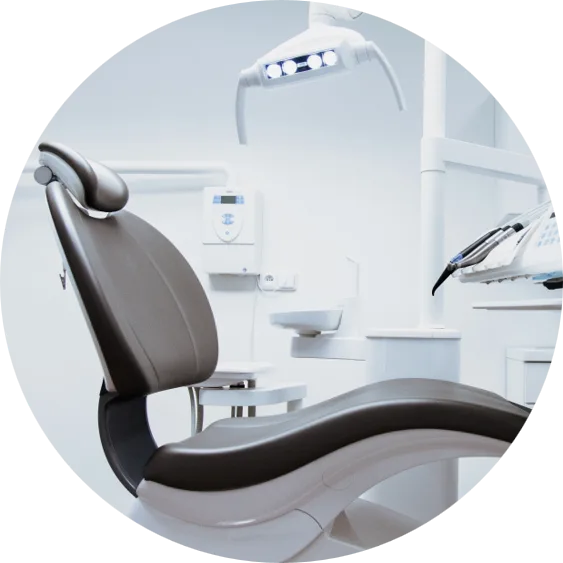

Talk to your dentist or doctor first.
If your gagging started recently or is getting worse, it should be checked: a throat irritation, post-nasal drip, acid reflux or an ill-fitting denture can make it worse.
If you have trouble swallowing, choke when you eat or are losing weight, see a doctor without delay: these are not matters for hypnosis.
And if a medicine seems impossible to swallow, do not stop taking it on your own: your pharmacist can often suggest another form. Any decision about a treatment belongs exclusively to the doctor who prescribed it.
What is the Gag Reflex?
The gag reflex is an involuntary defence mechanism that protects the throat and airway from foreign objects and prevents choking. That is how the Cochrane review on managing it at the dentist defines it. The problem is not having this reflex, but having it fire too readily.
It has two components, and they intertwine. The first is physical: contact at the back of the mouth, on the tongue or the palate triggers the contraction. The second is psychological: the thought of contact, the smell of the surgery, the sight of an instrument or the memory of a bad experience can be enough to set it off, before anything has touched you. For many people, the second weighs more than the first.
It is far from rare. In a Dutch survey of 11,771 people, about 8% said they gagged during dental treatment. In an American study of 478 people, more than half had gagged at least once at the dentist, and 7.5% almost always or always did.
Both studies point to the same link: the more often people gag, the higher their fear of dental care. The American study cannot say which comes first, which probably means each feeds the other.
It is not the same as a fear of vomiting
The gag reflex is a reaction of the throat to contact or to the anticipation of it. Emetophobia is a fear of vomiting itself, which often shapes life well beyond the dentist's chair. If the second sounds more like you, our page Hypnosis for Emetophobia (Fear of Vomiting) is devoted to it.
Nor is it a phobia of the dentist, even though the two often go together. You can have no fear at all of pain or needles and dread only the impression tray. If it is the appointment itself that frightens you, see Hypnosis for Fear of the Dentist (Dental Anxiety). Fears in general are covered on Hypnosis for Fears and Phobias.
The impact of the Gag Reflex on daily life

The reflex does not always stop at the surgery door. It can show up when you brush your back teeth, swallow a tablet or a capsule, wear a brace, a night guard or a denture, or during a throat swab or an examination at the doctor's. Some people choose their toothbrush by what they can tolerate, cut their pills into pieces or put off an examination. And there is the embarrassment, the kind you keep to yourself because you are afraid it will raise a smile.
The first cost is still dental, and it is concrete. An impression that fails, an X-ray to retake, a procedure interrupted, a scale and polish cut short. The Dutch survey cited above links gagging to more untreated cavities, more bleeding gums and more full dentures. It is not that the people concerned go to the dentist less: they go just as often, but care is harder to carry out.
The second cost is anticipation. The more you dread gagging, the more your attention locks onto your throat, and the more easily it fires. In the waiting room, you swallow while monitoring every sensation. It is this loop, far more than the contact itself, that often ends up making people put off their appointments.
Recognised approaches outside Hypnosis
The starting point is your dentist. Tell them from the outset that you are prone to gagging: it is a situation they know, and a lot can be adapted once they know.
- Adjustments in the way they work: chair position, smaller instruments, breaks agreed in advance, a hand signal to stop, fast-setting impression materials or a digital impression.
- A topical local anaesthetic, as a spray or gel, when the dentist considers it appropriate.
- Sedation, for longer procedures, decided on and supervised by a health professional.
- Acupressure or acupuncture at the P6 point, on the forearm: these are the only approaches for which the Cochrane review found trials, and their results remain of very low certainty.
- Support from a psychologist, especially cognitive behavioural therapy, when fear of dental care is the main issue.
Hypnosis sits alongside these approaches.
Hypnosis for the Gag Reflex: aims and benefits
Let us start with what hypnosis does not do.
It does not remove the gag reflex, which is useful and should stay: it protects you from choking. It does not replace a dental or medical examination, an anaesthetic or sedation when these are indicated. It does not fix a physical cause, such as acid reflux or a denture that rubs. And no one can guarantee you a procedure without a single gag.
What support aims for
- Reducing anticipation. This is often the main lever: calming the days before the appointment and the minutes in the waiting room, where the reflex is already getting ready.
- Shifting attention. The reflex grows stronger when you monitor your throat. Learning to place your attention elsewhere, on your breathing, on a pleasant sensation, on an image you have chosen, helps loosen that vigilance.
- Linking relaxation to the mouth and throat, through an anchor: a gesture or a word tied to a state of calm, which you can use in the chair.
- Rehearsing the procedure in your imagination. Going through the appointment mentally, from the moment you sit down to the end, in a relaxed state, so that the real situation already feels familiar.
- Revisiting a bad experience, when the reflex set in after a difficult procedure, often in childhood.
Self-hypnosis is part of the work. A short exercise to practise at home, then just before the appointment, and even during the procedure if your dentist gives you a few seconds.
What the research says
To be clear: the evidence is thin, for hypnosis as for almost everything else. The Cochrane review, updated in 2019, looked at medicines, sedation, anaesthesia, behavioural therapies, acupressure, acupuncture, laser and prosthetic devices. It kept only four trials, 328 participants in all, every one on the P6 point, with very low-certainty evidence, and no usable data on the other approaches, hypnosis included. Its authors conclude that better-designed trials are needed.
On hypnosis, the literature comes down to published cases. The most detailed describes a man who had avoided the dentist for nine years because of his gagging: after three hypnosis sessions, he was able to have root canal treatment. It is one case, not a demonstration, and its authors present it as such.
What we take from this for our practice. Hypnosis is not a proven answer to the gag reflex. At best, it can help you face a procedure you have avoided for a long time and reduce the share of anticipation that amplifies the reflex, alongside what your dentist puts in place.
An example of support
Illustrative example. The name has been changed and the path described belongs only to the person who lived it.

Nathalie had a crown to be fitted and two appointments already cancelled. She was afraid of neither pain nor the needle: it was the impression. The last time, she had pulled the tray out of her mouth after a few seconds, and the memory still felt humiliating. The work first focused on the week before the appointment, when she could already feel her throat tighten just thinking about it, then on an anchor: her left hand laid flat on her thigh, paired with slow breathing through the nose.
She rehearsed the session in her imagination, at home, several evenings in a row. She had also told her dentist, who agreed with her on a signal for a pause.
"I gagged once during the impression. Just once, and I let it pass. What had changed is that I did not feel swept away."
Nathalie, name changed
Every situation is different, and Nathalie's path says nothing about what you will experience.
How a Hypnosis session on this subject unfolds
The conversation. We start by understanding what triggers your gagging: the contact, the anticipation, a specific situation. We also check that your dentist knows and that no physical cause has been overlooked.
The aim, framed together and deliberately modest. For example: staying in the chair for an X-ray, or approaching an impression with a calming gesture within reach.
The induction. A natural state of focused attention you already know without naming it. You stay conscious, you hear everything, you can speak and you can stop whenever you wish.
The work. On this subject it bears on anticipation, on moving attention away from the throat, on an anchor for relaxation and on rehearsing the procedure in your imagination.
The return and the exercise. A conversation about what you experienced, and a short self-hypnosis exercise to practise at home and before the appointment. It helps to book the session a few days before the procedure, so you have time to practise.
The number of sessions is settled at the first conversation.
Book an appointment

Hypnosis comes alongside your dentist's care, never in its place. If you have a procedure booked, say so from the first contact: the date of the appointment helps plan the work, and it is better to leave yourself time to practise the exercise before the day. The first conversation also serves to check that no physical cause has been overlooked: if your gagging is recent or getting worse, we will first refer you to your dentist or doctor.
By video, wherever you are in the world: this work rests mostly on anticipation and self-hypnosis, which are learned just as well at a distance. Here is how it works. In person, our practitioners see English-speaking clients in Quebec, in Montreal, Sherbrooke and Gatineau, and in France in Paris and Lille.
A question before you decide? Write to us describing your situation.
Where would you like to consult?
All areas
 Annie Mayrand
Gatineau - Cumberland (ON)
👤
🧑🎓
🚭
❤️
💻
Annie Mayrand
Gatineau - Cumberland (ON)
👤
🧑🎓
🚭
❤️
💻
 Christian Rocher
Beloeil
👤
🧑🎓
👶
🚭
❤️
💻
Christian Rocher
Beloeil
👤
🧑🎓
👶
🚭
❤️
💻
 David Veilleux
Montréal - Anjou
👤
🧑🎓
🚭
❤️
🤰
💻
David Veilleux
Montréal - Anjou
👤
🧑🎓
🚭
❤️
🤰
💻
 Florence Aton
Sutton
👤
🚭
❤️
💻
Florence Aton
Sutton
👤
🚭
❤️
💻
 Jessica Reid
Sherbrooke
👤
🚭
💻
Jessica Reid
Sherbrooke
👤
🚭
💻
 Julie Rocque
Montréal - Jean-Talon
👤
🧑🎓
👶
🚭
❤️
🤰
💻
Julie Rocque
Montréal - Jean-Talon
👤
🧑🎓
👶
🚭
❤️
🤰
💻
 Nuria Pérez de León
Montréal - Rosemont - Saint-Lambert
👤
🧑🎓
💻
Nuria Pérez de León
Montréal - Rosemont - Saint-Lambert
👤
🧑🎓
💻
 Romain Rastoin
Bromont
👤
🧑🎓
🚭
❤️
💻
Romain Rastoin
Bromont
👤
🧑🎓
🚭
❤️
💻
 Réjeanne LeBlanc
La Prairie
👤
🧑🎓
👶
💻
Réjeanne LeBlanc
La Prairie
👤
🧑🎓
👶
💻


Frequently asked questions about Hypnosis for the Gag Reflex (Gagging at the Dentist)
No, and that would not be desirable: this reflex protects you from choking. Support aims instead to reduce the anticipation that amplifies it and to give you back a sense of control during dental care. No result can be guaranteed.
Yes, it is even recommended. Your dentist can adapt the way they work, agree on a signal for a pause, or give you a few seconds for your self-hypnosis exercise. Hypnosis works better alongside these adjustments than on its own.
Ideally a few days, or a few weeks if the procedure worries you a lot. That gives you time to practise the self-hypnosis exercise at home before the day itself. The number of sessions is settled at the first conversation.
Often, yes: the mechanism is similar, and the work on attention and relaxation applies to those situations too. If you have trouble swallowing when you eat, or if the gagging is recent, talk to a doctor first. For a medicine that is hard to swallow, your pharmacist can often suggest another form.
No. The hypnotic state is a state of focused attention, not sleep and not being under someone's influence. You stay conscious, you hear everything, and you keep the ability to refuse a suggestion, to speak or to stop the session.
Yes. Hypnosis support does not replace any treatment, change any treatment or interrupt any treatment. Any decision about your treatment belongs exclusively to the doctor who prescribed it, and dental sedation or anaesthesia is a matter for your dentist.
Psychotherapy is a regulated framework, practised by professionals whose title is protected. When fear of dental care is the main issue, a psychologist trained in cognitive behavioural therapy is a recognised option. Hypnosis is a more limited form of support, focused on a specific goal, which can be added to it.
Talk to their dentist, ideally one used to working with children: many adjustments exist at that age. Our page Hypnosis for Children describes what we can offer younger clients, always alongside that care.
Sources and references
Definitions and figures
- Management of gagging in dental patients. Plain-language summary of the Cochrane review.
- Self-reported gagging in dentistry: prevalence, psycho-social correlates and oral health. van Houtem, C. M. H. H., van Wijk, A. J., Boomsma, D. I., Ligthart, L., Visscher, C. M., & de Jongh, A. (2015). Journal of Oral Rehabilitation, 42(7), 487-494. The Dutch survey: 11,771 participants.
- Gagging and Associations with Dental Care-Related Fear, Fear of Pain, and Beliefs about Treatment. Randall, C. L., Shulman, G. P., Crout, R. J., & McNeil, D. W. (2014). Journal of the American Dental Association, 145(5), 452-458. The American study: 478 participants.
Management
- Management of gag reflex for patients undergoing dental treatment. Eachempati, P. et al. (2019). Cochrane Database of Systematic Reviews, 11, CD011116. Four trials, 328 participants.
On hypnosis
- How Can Hypnodontics Manage Severe Gag Reflex for Root Canal Therapy? A Case Report. Iranian Endodontic Journal (2016). A single case.
And related articles
- Hypnosis for Emetophobia (Fear of Vomiting), if it is vomiting itself that you dread.
- Hypnosis for Bruxism (Teeth Grinding), the other subject that plays out at the dentist's.
- Hypnosis and the Fear of Blood Draws and Needles, for apprehension about medical care in general.
Hypnosis as practised by the members of Solutions Hypnose is a complementary support approach. It is neither a medical act, nor a diagnosis, nor psychotherapy in the regulatory sense, and it in no way replaces a consultation, follow-up or treatment prescribed by a health professional.
Our practitioners do not assess and do not treat mental disorders or illnesses. They never ask for an ongoing treatment to be stopped or changed: that decision rests exclusively with your doctor.
No result can be guaranteed. The testimonials and examples presented on this page describe individual experiences and do not predict what you will experience.
In case of significant distress, unexplained physical symptoms or suicidal thoughts, contact a doctor, emergency services or a helpline without delay.
Page written by Nuria Pérez de León
hypnotherapist and NLP coach
partner at Solutions Hypnose.
English version reviewed by David Veilleux
Published .