
Ericksonian Hypnosis: Definition, principles, what to expect
Ericksonian hypnosis is a gentle, respectful approach to hypnosis, where the practitioner doesn't command: they guide. It rests on a simple principle: you already possess the resources you need, and the practitioner's role is to help you access them. It's the approach practiced by most of our practitioners, and the one that transformed modern hypnosis.
This page explains where it comes from, what sets it apart in practice, and what that means for you in a session. To understand the hypnotic state itself — what it is, how it works, the myths to set aside — see our guide: What Is Therapeutic Hypnosis?


Ericksonian Hypnosis: Origin and Principles
Where it comes from: Milton Erickson
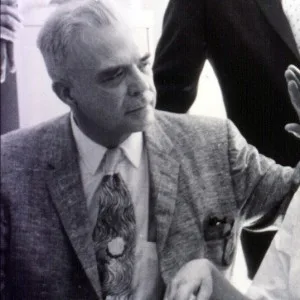
Ericksonian hypnosis is named after Milton H. Erickson (1901-1980), the American psychiatrist and psychologist who revolutionized the practice of hypnosis in the 20th century. His personal history explains much of his approach. Struck by polio at seventeen, immobilized, unable to move and at times to speak, he spent months observing the people around him — their gestures, their intonations, what they said without saying it. He also taught himself to regain the use of his body by mentally reliving past movements: a form of self-hypnosis before the term existed.
From that ordeal came the two pillars of his method: an extreme attentiveness to the individual person, and the conviction that change comes from within. Before him, hypnosis was largely authoritarian: the practitioner ordered, the subject was expected to obey, and those who didn't "succeed" were judged to be poor subjects. Erickson reversed the logic. If the person resists, it isn't their problem: it's the approach that must adapt.
The four principles that define it
- You already have the resources. This is the central premise: no one is empty. You have already known, at some point, how to be calm, decisive, confident… even briefly. The work isn't about adding something from the outside, but about reactivating and reorganizing what already exists within you.
- The practitioner guides, they don't command. Where so-called classical hypnosis states ("you are relaxed"), the Ericksonian approach proposes ("and as you listen to my voice, notice the way your breathing settles…"). This permissiveness isn't mere politeness: it leaves your unconscious mind free to choose its own path. And what isn't imposed meets far less resistance.
- Utilization: working with what you bring. This may be Erickson's most elegant idea. Nothing you bring is an obstacle: your skepticism, your need for control, your difficulty letting go, your restlessness… all of it becomes material to work with. You doubt it will work? We use that doubt. You can't stand being told what to do? The approach adapts to that.
- Tailoring over protocol. Erickson never left behind a standardized method, and that was deliberate: two people coming in for the same issue won't receive the same support, because they don't share the same history, the same language, or the same resources.
How Does Ericksonian Hypnosis "Work"?
What actually happens in a session

If you're picturing a swinging pendulum, a booming voice, and "sleep, I command it," you'll be surprised: an Ericksonian hypnosis session looks, at first, like a conversation. The practitioner talks, you listen; sometimes you respond. The voice slows, attention narrows, and the hypnotic state settles in gradually, often without a clearly identifiable moment. You remain conscious, you hear everything, you can speak and interrupt. Many people leave a session saying "I'm not sure I was even hypnotized"… and notice the effects in the days that follow.
The most characteristic tools
- Metaphor and storytelling. Erickson told many stories, seemingly casual, often drawn from his own childhood. A metaphor bypasses the defenses of the critical mind: it doesn't argue, it suggests. A well-chosen image often accomplishes more than an explanation.
- Open suggestions. Rather than imposing a precise content, they open up a space: "your unconscious mind already knows how to do this work, in its own way and at its own pace." This phrasing respects the fact that only you know what's right for you.
- Reframing. This means shifting the angle on a stuck situation. Not to deny it, but to make it workable.
- Task assignments. A small action to carry out between sessions, often unexpected, that extends the work into real life rather than confining it to the chair.
- Self-hypnosis, finally, taught from the very first sessions: perfectly true to Erickson's spirit, since it makes you self-sufficient.
Ericksonian, classical, conversational: the differences
Classical (or directive) hypnosis works through direct, authoritative suggestions. It isn't a bad approach — it remains effective, particularly for simple goals and with highly receptive people — but it leaves little room for individuality, and someone who "resists" tends to make little progress with it.
Ericksonian hypnosis favors flexibility, indirection, and adapting to each person. It particularly suits analytical profiles, people who need to stay in control, and those put off by an authoritative approach.
Conversational hypnosis refers to the use of these tools within an ordinary exchange, without a formal induction. It's an extension of the Ericksonian approach. In practice, most trained practitioners move between these styles depending on the person and the moment: the question isn't "which school is best?" but "what works for you, today?"
The Benefits of Ericksonian Hypnosis
An important clarification: yes, it is manipulation, and it serves your goal
This needs saying plainly, because the question comes up at almost every first appointment. Yes, Ericksonian hypnosis influences you, and that is exactly what it is asked to do. Indirect language, rapport and open suggestions act on the way you picture a situation. Those same tools have indeed been picked up by an entire "persuasion" industry: sales, seduction, "influence communication." Pretending that nothing is happening would be dishonest, and you would feel it.
The useful question is therefore not whether there is influence, but whose goal it serves. A salesperson steers you towards their own objective. Here, the objective is the one you set out at the first conversation, and the practitioner pursues no other: stopping smoking, sleeping again, speaking in public without shaking. Two safeguards come on top of that, and they do not depend on their goodwill. No one can be made, under hypnosis, to do something that contradicts their values: incompatible suggestions are rejected. And you remain conscious from start to finish, free to refuse, to speak, to interrupt. That was Erickson's whole approach already: he was not trying to make people do things, he was trying to make things possible.
What the science says
Our usual position: say what's solid and what's less so. What's established is the effectiveness of hypnosis in several areas, pain being the best documented, and the existence of the hypnotic state itself, now visible through brain imaging — the detail is in our guide What Is Therapeutic Hypnosis?
What's far less established is the comparison between styles. Very few serious studies pit the Ericksonian approach against the directive one, for a simple methodological reason: a tailored practice, adapted to each person, doesn't lend itself well to the standardized protocols research requires.
What to take away: be wary of anyone who claims that "Ericksonian hypnosis is more effective." That isn't demonstrated. What can reasonably be said is that it's better tolerated by people whom authority puts off, and that the alliance between practitioner and person, a priority in this approach, matters to the success of any course of support.
Is it right for you?
It's especially well suited if you're the analytical type, if you need to understand things and stay in control, if authority puts you off, or if you've already tried hypnosis without results using a directive approach.
And a reassuring note for skeptics: skepticism isn't an obstacle in Ericksonian hypnosis, it's actually useful material. The only real condition remains willingness: anyone who comes to challenge the practitioner always wins, and wastes their time.
Where this support stops
The Ericksonian approach, however flexible, remains complementary well-being support. It does not treat illness, does not replace medical or psychological advice, treatment, or care, and never authorizes stopping a treatment. Some situations require the prior agreement of your doctor; others fall squarely under other professionals. And a serious practitioner will tell you so at the first conversation.
Why trust the Solutions Hypnose team
A standard of competence : each partner goes through a professional hiring process, takes part in ongoing training and collective supervision, and will tell you frankly when another professional should come first.
Code of ethics : we follow the code of ethics of RITMA (Regroupement des Intervenants et Thérapeutes en Médecine Alternative) and of the ICF (International Coach Federation), notably on client information and respect, confidentiality, and conflict of interest. In France, the most respected hypnosis schools, where our partners trained, have their own ethical charters.
What Ericksonian hypnosis can help with
Stress & Anxiety
Emotional Regulation
Self-Confidence
Habits & Behavior
Health & Quality of Life
Performance
Relationships
Hypno-Coaching



Frequently asked questions about Ericksonian Hypnosis
The classical approach works through direct, authoritative suggestions ("you are relaxed"); the Ericksonian approach proposes and adapts ("you may perhaps notice that…"). The former leaves little room for individuality and works mainly with highly receptive people; the latter uses what you bring, including your resistances. In practice, most trained practitioners move between the two depending on the person and the moment.
That isn't demonstrated, and be wary of anyone who claims it is. Studies comparing styles are rare, because a tailored practice doesn't lend itself well to the standardized protocols research requires. What can reasonably be said: it's better tolerated by people whom authority puts off, and it particularly nurtures the alliance with the practitioner, a factor that matters in any course of support.
Yes, in the technical sense of the word, and that is what hypnosis is asked to do. The language used acts on the way you picture your situation. What matters is the direction: it is set by the goal you stated, not by the practitioner, who pursues no other. And nothing that contradicts your values gets through: under hypnosis, incompatible suggestions are rejected, you stay conscious, and you can interrupt at any time.
It's actually a good starting point. The Ericksonian approach uses what you bring, including doubt and the need for control, which become material rather than obstacles. Many of our most analytical clients are the ones who progress the best, precisely because nothing counter-intuitive is asked of them. The only real condition: being willing.
Often, yes. Especially if the previous experience was directive. Erickson reversed the logic of his time: if a person doesn't "succeed," it isn't their problem, it's the approach that must adapt. Simply say so at the first conversation: what didn't work the first time is valuable information for building things differently.
It looks, at first, like a conversation: no pendulum, no booming voice. The practitioner talks, the voice slows, attention narrows, and the state settles in gradually, often without a clear turning point. Metaphors follow, along with open suggestions, sometimes a small task to do at home. Many people come out doubting they were even hypnotized, then notice the effects in the days that follow.
Two to six for most topics, as with our other forms of support: the topic page relevant to you specifies its own format. Self-hypnosis, taught from the start, is perfectly in keeping with Erickson's spirit: the goal is your autonomy, not your loyalty.
Simply ask: which school, how long, which certifications — since "certified" on its own means nothing. Another reliable sign: a serious Ericksonian practitioner won't promise a guaranteed result and will refer you to a doctor or psychologist if your situation calls for it. That's a more telling mark of seriousness than any framed diploma.
Well-being hypnotherapy is complementary support: it does not treat illness and does not replace medical or psychological advice, treatment, or care.

Page written by Emmanuelle Sardou
hypnotherapist
partner at Solutions Hypnose.
English version reviewed by David Veilleux
Updated .