
Hypnosis and Back-to-School stress
Mid-August, something shifts. The child who slept well wakes at night. The one who talked all the time goes quiet, or the opposite, unbearable. The stomach aches come back.
And there is the question asked at bedtime, always the same one: *what if there is nobody I know in my class?*
With a teenager, it looks more like irritation. They do not want to talk about it, they shrug, and they spend three more hours on their phone.
One thing that reassures most parents: apprehension before the start of term is normal, it affects a large share of children, and it settles by itself in the first few days.
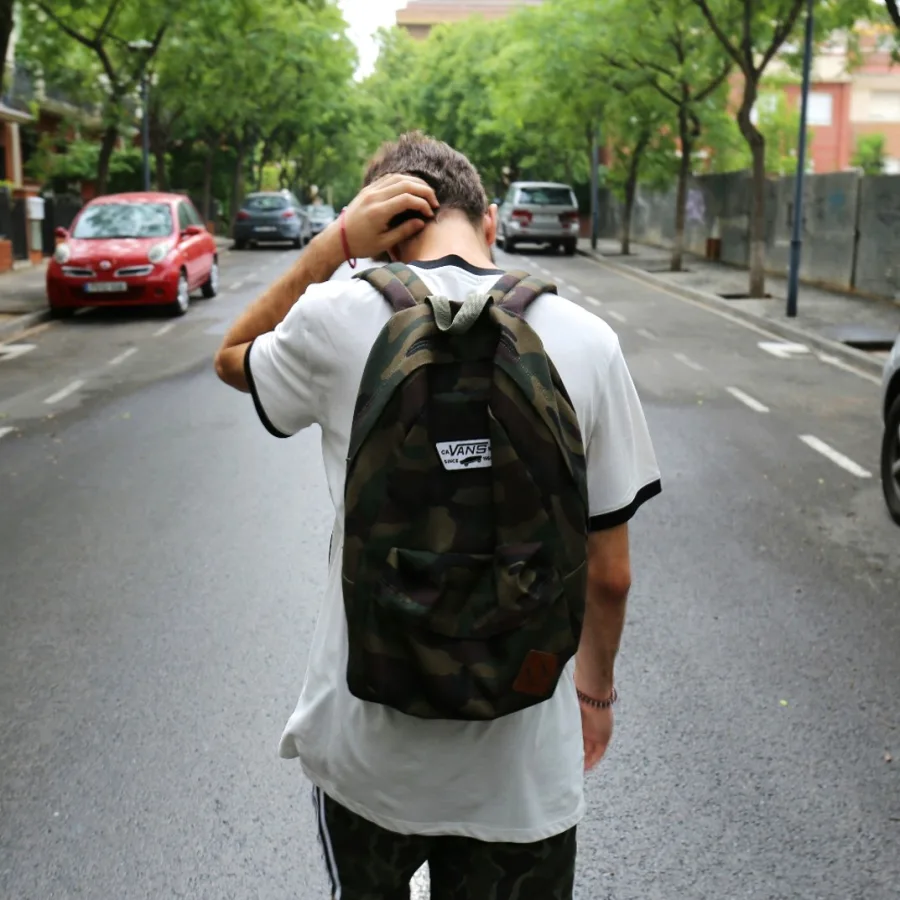

What is normal, and what is not
It is the question every parent asks, and nobody answers.
It is ordinary back-to-school apprehension when…
It builds over the two or three weeks before, it is strongest the evening before and on the morning itself, and it clearly settles in the days that follow. The child dreads it, then tells you about their day, then moves on.
It deserves a closer look when…
- It lasts. If the anxiety is still there at the autumn half-term, it is no longer the start of term: it is something else, and it is worth talking to your doctor. It is the most useful marker on this page.
- The child refuses to go, physically, despite their own wish to. It is neither laziness nor defiance, it is a real block that calls for an assessment.
- The fear is about separation rather than about school: they dread something happening to you while they are away, no longer sleep alone, follow you around the house. Separation anxiety is common at that age and can be worked on, with a professional.
- The physical symptoms are intense: vomiting, daily stomach aches, settled insomnia.
- They dread running into one person in particular.
If your child dreads a person, this is not anxiety to be soothed. A child who is afraid of running into one particular classmate is afraid of something real, and their reaction is healthy. No work on anxiety should be used to make them more tolerant of a situation that must stop. The priority is to make the bullying stop, with the school, which has a legal duty to act. France: 3018, free, confidential, 7 days a week. Quebec: the school's anti-bullying protocol, compulsory for every school, and Tel-jeunes 1 800 263-2266 or Kids Help Phone 1 800 668-6868.
What we do not do. Our hypnotherapists make no diagnosis and assess no disorder. Faced with school refusal, marked separation anxiety or significant physical symptoms, start with your doctor or paediatrician.
What parents can do, right away and without us

A good part of what helps costs nothing and needs no appointment. It may as well be said. Shifting sleep in advance is the most effective measure on this list, and the most neglected. Moving bedtime and waking time a quarter of an hour earlier every two days, over about ten days, avoids the wall of tiredness in the first week. A tired child takes everything less well — our page on sleep problems goes further on this.
Making the unknown concrete. Going to see the school, finding the entrance, the playground, the route. The unknown manufactures anxiety; the familiar defuses it. For a new secondary school, it changes a great deal.
Getting back in touch with a classmate before the day. Knowing you will know at least one person counts for more than any amount of encouragement.
Naming without amplifying. "I can see it worries you, that's normal, we can talk about it if you want" opens a door. "Don't be silly, it'll be fine" closes it, because the child understands the subject is not welcome.
Not passing on your own apprehension. Children read adults' worry very well, especially when it is denied.
Preparing together, bag, clothes, route. Taking part reduces the feeling of being subjected to it.
And for a teenager: fewer head-on questions, more availability from the side. The important conversations rarely happen face to face, more often in the car or while doing something else — it is also what our page on hypnosis for teenagers describes.
What Hypnosis can bring
It does not make the start of term pleasant for a child who does not want to go, and some apprehension remains normal and even useful. It guarantees no result.
What support aims at:
- Working on anticipation, which is the whole subject here: it is not the first days that hurt, it is the fortnight before.
- Rehearsing the scene in imagination: the journey, walking into the playground, the moment you look for a face you know. A child who has already lived it mentally arrives less helpless.
- Setting up an anchor they can use alone in class, discreetly.
- Reactivating what they already know how to do. A child who handles pressure very well at judo or on stage already has the resource; the work consists in making it available elsewhere.
- Getting sleep back, often the first effect parents notice.
- Defusing a specific memory, when the fear comes from one particular year.
The calendar, and this is specific to the subject
This reason to consult has a deadline, which changes how it is organised. Two or three weeks before the start of term is the right moment: early enough to work, close enough for it to be concrete. One session after the start of term, once you know how it went, allows adjustments based on what actually happened rather than on guesses.
If you are reading this page in September, it is not too late: a good part of the work is precisely about what is already happening.
What research says
There is no study looking specifically at hypnosis and the start of the school year. What is documented is its effect on anxiety in general, better alongside other approaches than used alone. See our page what science says about hypnosis.
An example of support: Maxime's case
*Illustrative example, built from situations we frequently encounter.*

Maxime (name changed), 9, had a hard time with every start of term. That year he was changing teacher and dreaded above all finding none of his friends in his class. His parents described three difficult weeks every August, with waking at night and stomach aches. The work focused on the fortnight before rather than on the day itself. Maxime first identified what he already knew how to do elsewhere, particularly at judo, where stepping onto the mat in front of strangers posed him no problem. He then mentally rehearsed arriving in the playground and the moment you look for a face you know. His parents, for their part, shifted bedtimes ten days in advance and went back to see the school with him.
This case describes one possible path. It does not predict your child's. The pace and the results vary from child to child, and no support can guarantee a result.
How a session unfolds
The preliminary contact, with you. What exactly worries your child, since when, and what happened in previous years.
Your child must be willing. That is a condition, not a preference. Show them the practitioner's introduction and let them decide.
The session. We start with you, then one-to-one with the child if they wish. The hypnosis part lasts 30 to 45 minutes, through stories, drawings and characters — that is what our page on hypnosis for children describes. With a teenager, the format comes closer to the adult one.
What they take away. A short exercise, often an image or a gesture to use alone in class.
What you take away. A few pointers for September mornings.
How many sessions? That is discussed at the first contact. On this subject, the deadline matters more than the number.
Book an appointment
Tell us the date of the first day back: on this subject, it organises everything else. Ask us your question or book an appointment. In the consulting room, our practitioners who work with children and teenagers in English see families in Montreal, Gatineau, La Prairie and Beloeil, as well as in Paris and Lille. Wherever you are, video consultation is possible: our article on hypnosis by video with children explains how it works. Show the practitioner's introduction to your child: they are the one who decides.
Where would you like to consult?
All areas
 Annie Mayrand
Gatineau - Cumberland (ON)
👤
🧑🎓
🚭
❤️
💻
Annie Mayrand
Gatineau - Cumberland (ON)
👤
🧑🎓
🚭
❤️
💻
 Christian Rocher
Beloeil
👤
🧑🎓
👶
🚭
❤️
💻
Christian Rocher
Beloeil
👤
🧑🎓
👶
🚭
❤️
💻
 David Veilleux
Montréal - Anjou
👤
🧑🎓
🚭
❤️
🤰
💻
David Veilleux
Montréal - Anjou
👤
🧑🎓
🚭
❤️
🤰
💻
 Florence Aton
Sutton
👤
🚭
❤️
💻
Florence Aton
Sutton
👤
🚭
❤️
💻
 Jessica Reid
Sherbrooke
👤
🚭
💻
Jessica Reid
Sherbrooke
👤
🚭
💻
 Julie Rocque
Montréal - Jean-Talon
👤
🧑🎓
👶
🚭
❤️
🤰
💻
Julie Rocque
Montréal - Jean-Talon
👤
🧑🎓
👶
🚭
❤️
🤰
💻
 Nuria Pérez de León
Montréal - Rosemont - Saint-Lambert
👤
🧑🎓
💻
Nuria Pérez de León
Montréal - Rosemont - Saint-Lambert
👤
🧑🎓
💻
 Romain Rastoin
Bromont
👤
🧑🎓
🚭
❤️
💻
Romain Rastoin
Bromont
👤
🧑🎓
🚭
❤️
💻
 Réjeanne LeBlanc
La Prairie
👤
🧑🎓
👶
💻
Réjeanne LeBlanc
La Prairie
👤
🧑🎓
👶
💻


Frequently asked questions about Hypnosis and Back-to-School Stress
Two or three weeks before is the right moment. Earlier, it is too abstract for a child; later, there is little room left. One session after the start of term allows adjustments.
That is common, especially with teenagers. The body often speaks first: sleep, appetite, irritability. You can name what you observe without demanding an answer.
From 5 or 6, depending on maturity.
Generally not. Back-to-school apprehension settles in the first few days. If it is still there at the autumn half-term, talk to your doctor: it is no longer about the start of term.
That is a different matter, and it calls for an assessment. Start with your doctor. See also our page on school stress.
Then it is settled school stress that needs looking at, not the start of term. That is covered on our dedicated page.
Tell the school without delay. Bullying is dealt with by making it stop, not by learning to put up with it.
Mention it at the first contact. We will never ask for a treatment to be stopped or changed: that decision belongs solely to the prescribing doctor.
Sources and references
In English
- School Refusal — American Academy of Child & Adolescent Psychiatry, Facts for Families. On school refusal, most common between 5 and 7 and again between 11 and 14.
- The Anxious Child — American Academy of Child & Adolescent Psychiatry, Facts for Families.
In French
- Troubles anxieux et troubles obsessionnels compulsifs (TOC) de l'enfant — Ameli, French national health insurance. On separation anxiety and school performance anxiety.
- L'anxiété chez les enfants et les adolescents — la prise en charge des troubles anxieux — Canadian Paediatric Society, position statement.
Worth knowing about one marker on this page: the autumn half-term is not an official threshold. It is a practical marker, useful for telling back-to-school apprehension from settled anxiety, and that is how it is presented here.
Hypnosis as practised by the members of Solutions Hypnose is a complementary support approach. It is neither a medical act, nor a diagnosis, nor psychotherapy in the regulatory sense, and it in no way replaces a consultation, follow-up or treatment prescribed by a health professional.
Our practitioners do not assess and do not treat mental disorders or illnesses. They never ask for an ongoing treatment to be stopped or changed: that decision rests exclusively with your doctor.
No result can be guaranteed. The testimonials and examples presented on this page describe individual experiences and do not predict what you will experience.
In case of significant distress, unexplained physical symptoms or suicidal thoughts, contact a doctor, emergency services or a helpline without delay.

Page written by Sabine Chapuis
hypnotherapist
partner at Solutions Hypnose.
English version reviewed by David Veilleux
Updated .