
Hypnosis for Habits: smoking, eating, behaviour
You know what you should be doing. You have decided to, sometimes a hundred times.
And yet the cigarette comes back, the hand dives into the cupboard, the nails get it, the evening drink pours itself.
This is not a character flaw: an established habit works precisely where willpower has no grip.
This page explains that shared mechanism, sets out the limits we never cross, and points you to the support that matches your situation.

Identify your situation
| What you want to change | Your page |
|---|---|
| Quitting smoking — cigarettes, vaping, shisha. | Quit Smoking |
| Your relationship with food: snacking, binges, eating your emotions, weight. | Eating & Weight |
| A repetitive gesture or behaviour: nails, hair, skin, quirks — or drinking. | Change a Behaviour |
The shared mechanism: the habit loop
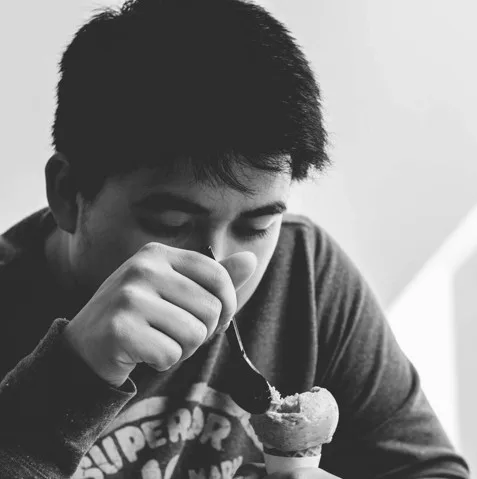
Whatever the behaviour, the mechanics are the same and run in three steps.
- A trigger, often invisible: a tension, boredom, a place, a time, the end of a meal, a specific emotion.
- A behaviour that starts before you have even noticed it.
- Relief, brief, real, and it is this that explains why it persists: the gesture soothes something.
Two consequences follow, and they change how you should approach the problem.
Reasoning with yourself is not enough. The decision is made in one register, the automatism plays out in another. That is exactly the gap hypnosis can work on.
Removing without replacing rarely works. If the behaviour was soothing a tension, removing it leaves the tension whole: it comes back, or shifts elsewhere. That is why serious support never simply forbids.
Habit or dependency? The distinction that changes everything
These two words cover different realities, which is why the support does not look the same.
A behavioural habit: biting your nails, snacking in the evening, twirling your hair… involves no substance. The body demands nothing: it is a learned automatism, tied to specific triggers. The hypnosis work targets the loop itself.
A substance dependency (smoking, alcohol…) adds a physical dimension: the body has adapted to its presence, and stopping brings on real symptoms. This does not make change impossible, far from it, but it does call for a framework. For smoking, aids exist and combine well with hypnosis. For alcohol, stopping must be planned with a doctor, for a reason we detail further down.
Many situations mix both: people smoke out of nicotine dependency and gestural habit alike. That is exactly why both dimensions are worked on together.
What hypnosis brings, whatever your situation
- Making the automatism conscious. You cannot change what you do not see, and many people discover in session when and why the behaviour really happens.
- Defusing the triggers. The coffee that calls for a cigarette, the boredom that opens the cupboard, the meeting that sends your hand to your nails: these associations come undone.
- Addressing what feeds it. Behind most of these behaviours is a tension to soothe. Treating it upstream stops it resurfacing elsewhere (stress, anxiety, sleep).
- Installing an alternative, because you cannot take something away without offering anything in its place.
- And making you self-sufficient, through self-hypnosis taught from the first sessions: it is what serves at the exact moment the craving comes back.
What we will not do
- No promise of a single session. It is the most common claim on the market, especially around smoking. An automatism established over years needs its triggers defused, an alternative put in place, and the first few weeks to be got through. Count on a few sessions instead.
- No guarantee of results, whether for quitting or for weight. Relapses happen, they are part of the path, and they do not cancel out what has been gained.
- No dietary advice, no numbered weight target: that is not our job, and it would be counter-productive.
- And never work in place of medical care when the situation calls for it (see below).
Three situations that call for a doctor first
Alcohol
Eating disorders
If your relationship with food comes with severe restriction, binges followed by compensatory behaviours, an overwhelming preoccupation with weight, or significant distress, the first step is a doctor or a psychologist. These situations need proper care, and well-being support does not replace it (details).
Recognised behavioural disorders
OCD, neurological tics, hair-pulling or skin-picking with lesions. Each calls for specific professionals, and hypnosis only comes in as a complement (details).
In all three cases, a serious practitioner does this sorting-out at the first meeting and refers you on without hesitation.
What our clients say

« I really enjoyed my three hypnosis sessions for weight loss. With the sessions, and thanks to Annie's valuable advice, I managed to overcome my everyday stress and lose weight. I'm living a more fulfilling life and I've learned to let go. I'm very grateful and I recommend her without hesitation! Thank you for everything! 😁 »
Lyna, client of Annie Mayrand
« I met Nuria Perez for a sugar addiction. I'd tried to quit several times but it was very hard. After meeting Ms. Perez I no longer had that ''sugar craving'' like before. I can watch my kids eat ice cream with no problem, and I don't even crave sugar anymore! Thank you so much Nuria for your help! :) P.S. My local Dairy Queen misses me ;) »
Erick, client of Nuria Perez de Leon
« Florence is very attentive and a wonderful support — I couldn't do it alone, and I'm nearly at the end of the hell of cigarettes »
Christelle, client of Florence Aton
« For my first session, it went really well. She took the time to explain hypnosis to me properly, to understand why I binge eat, and to help me find realistic, positive goals. With her attentiveness, empathy, and compassion, I felt comfortable the whole session. »
Annick, client of Annie Mayrand
« That's it! It's now been more than 6 months since I quit smoking. I loved his approach and his listening. I'm very happy with the result and I warmly and unreservedly recommend this gentle, attentive professional »
Michael, client of Jean-Marie Balestrat
« Nothing was working for my eating disorder. I recently started my sessions with Sandra Djina Ravalia and I'm already seeing changes — it's relaxing too! Less confronting and uncomfortable than other approaches. I finally feel like things are moving, thank you for your care and your work Sandra. »
Annie, client of Sandra Djina Ravalia
« Great results with my eating habits. I feel like I salivate more, I put my spoon down and chew slowly, my taste buds are discovering new flavors. I eat the same amount of food but I don't feel any pressure in my digestive system. »
Catherine, client of Sabine Chapuis
« I consulted Annie to help me quit smoking and I'm entirely satisfied with the result! It was the little push I needed to get there! Very good service, attentive to her clients and above all no judgment! I recommend her without hesitation! »
Céline, client of Annie Mayrand
« I'll recommend your services to anyone who wants to quit smoking, thanks again Nassim »
Francoys, client of Nassim Zafar
« Meeting Sandra was a hugely positive event in my life. At a turning point, she helped me quit smoking in just a few sessions. It's now been a month since I completely quit, and the urge to smoke is completely gone. I highly recommend consultations with Sandra! »
Eloi, client of Sandra Djina Ravalia
« Nuria is an exceptional person. I started working with her on weight loss, but I quickly realized her sessions go far beyond that. She welcomes with great kindness, sincere and non-judgmental listening. Her approach helped me regain confidence in myself, reconnect with my strengths, and find deep, lasting motivation. Thanks to her support, I not only saw concrete changes in my life, but she literally transformed how I see myself and my future. She helped me move forward with more serenity, lightness, and hope. I can say today that she changed my life for a better future. Every session was a precious moment, where I felt understood, guided, and supported. Her professionalism, gentleness, and humanity make all the difference. I recommend her from the bottom of my heart to anyone who wants a real change, in a safe, inspiring setting. ❤️🥰❤️ »
Karine, client of Nuria Perez de Leon
« An exceptional experience. After 13 years of tobacco addiction, I finally managed to quit thanks to truly high-quality support — professional, human, and effective. You feel listened to, understood, and guided with great care. I highly recommend it to anyone who wants to free themselves from tobacco. »
Oussama, client of Sanae Belgarch
« I managed to quit smoking after only two sessions with Sandra. Not only did the sessions help me quit, but the whole thing was much easier than expected. I've tried several methods to quit smoking, and this is the first time it's worked. I recommend everyone try it. »
Francois, client of Sandra Djina Ravalia
Going deeper into a specific topic
Find a Hypnotherapist near you
All areas
 Annie Mayrand
Gatineau - Cumberland (ON)
👤
🧑🎓
🚭
❤️
💻
Annie Mayrand
Gatineau - Cumberland (ON)
👤
🧑🎓
🚭
❤️
💻
 Christian Rocher
Beloeil
👤
🧑🎓
👶
🚭
❤️
💻
Christian Rocher
Beloeil
👤
🧑🎓
👶
🚭
❤️
💻
 David Veilleux
Montréal - Anjou
👤
🧑🎓
🚭
❤️
🤰
💻
David Veilleux
Montréal - Anjou
👤
🧑🎓
🚭
❤️
🤰
💻
 Florence Aton
Sutton
👤
🚭
❤️
💻
Florence Aton
Sutton
👤
🚭
❤️
💻
 Jessica Reid
Sherbrooke
👤
🚭
💻
Jessica Reid
Sherbrooke
👤
🚭
💻
 Julie Rocque
Montréal - Jean-Talon
👤
🧑🎓
👶
🚭
❤️
🤰
💻
Julie Rocque
Montréal - Jean-Talon
👤
🧑🎓
👶
🚭
❤️
🤰
💻
 Nuria Pérez de León
Montréal - Rosemont - Saint-Lambert
👤
🧑🎓
💻
Nuria Pérez de León
Montréal - Rosemont - Saint-Lambert
👤
🧑🎓
💻
 Romain Rastoin
Bromont
👤
🧑🎓
🚭
❤️
💻
Romain Rastoin
Bromont
👤
🧑🎓
🚭
❤️
💻
 Réjeanne LeBlanc
La Prairie
👤
🧑🎓
👶
💻
Réjeanne LeBlanc
La Prairie
👤
🧑🎓
👶
💻

Frequently asked questions about Hypnosis for Changing Habits
Because an established habit does not play out in the part of the brain that decides: it runs on an automatic loop, triggered by signals that are often invisible.
The decision is made in one register, the automatism in another. So it is not a character flaw, and it is exactly that gap hypnosis works on.
It is a common promise, and it is rarely kept.
An old automatism needs its triggers defused, an alternative put in place, and the first few weeks to be got through. It takes a few sessions, with self-hypnosis between appointments.
That is a real risk: quitting smoking and starting to snack, for example.
It explains why we never simply remove a behaviour: if it was soothing a tension, removing it without treating the tension leaves it whole. So the work addresses what feeds it as much as the gesture itself.
It is possible, but rarely a good idea.
Every change takes energy and attention, and tackling them all at once increases the risk of failing on every front. We usually start with what weighs the most, and move on from there. And what is gained in the first piece of work serves the next.
Nothing final.
A relapse usually signals that a trigger had not been identified, or that a period of tension outpaced the tools in place. It is information, not a failure, and we factor this in from the start: the work includes what to do when the craving comes back.
Yes, and it should be said plainly: hypnosis is a collaboration, not something done to you.
Someone who comes because their family is insisting, without wanting it themselves, will make little progress. But being motivated does not mean being sure of yourself: doubting your ability to succeed does not stand in the way. It is actually the most common starting point.
Generally three to six depending on the subject, more when the behaviour is long-standing or tied to a strong emotional charge.
Each page sets out its own format, and the practitioner will give you an idea at the first meeting. Independence remains the goal: no endless sessions.
The guides in this topic
- Quit Smoking — cigarettes, vaping, shisha: dependency and gestural habit.
- Eating & Weight — snacking, binges, eating your emotions.
- Change a Behaviour — repetitive gestures, quirks, alcohol.
Related topics
Hypnotherapy is complementary well-being support: it is neither a diagnosis nor a treatment, it replaces neither advice nor medical or psychological follow-up, and it guarantees no result. Never cut down or stop a regular alcohol habit abruptly without medical advice. Eating disorders and diagnosable behavioural disorders are a matter for health professionals.
Page written by Christian Rocher
hypnotherapist and NLP coach
partner at Solutions Hypnose.
English version reviewed by David Veilleux
Published .