
Hypnosis and Weight Loss
It's late, you are on your phone, and you type "hypnosis to lose weight". This is not the first method you have looked up.
You know the foods, you roughly know what to do. Information is not what's missing. What's missing is what happens at six in the evening when the day has been long, or on a Sunday night when it all comes back at once.
And then there are the pages you have just been through: very precise promises, numbers, photographs side by side. Part of you would like to believe them. Another part already knows how this ends.
This page starts with the sentence that governs everything else: hypnosis does not make you lose weight. It sets out what this work can aim at, how to spot a dubious offer, and what the research actually shows.
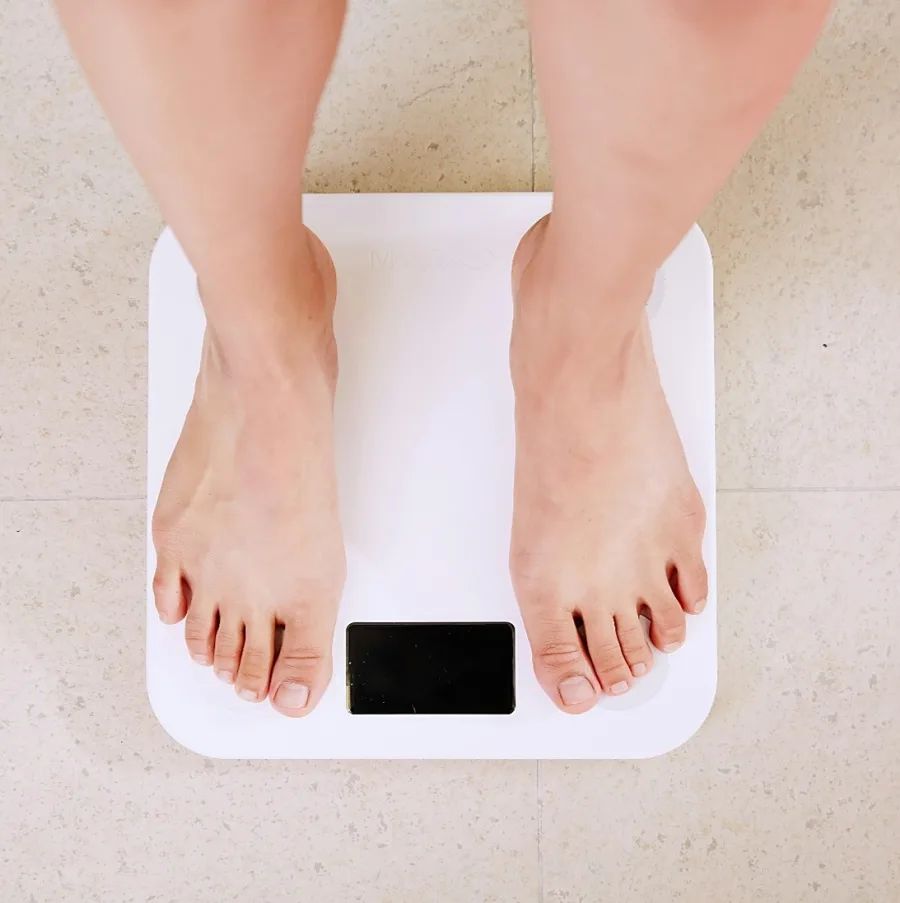

What it is like when you are trying to lose weight
Before you read.
This page offers no diet, no weight target and no slimming method.
If your weight varies without explanation, if you have eating binges, or if medical care is already under way, the first step is an appointment with your doctor.
Hypnosis comes alongside that, never instead of it.
There were the apps, the weeks when you held on, the lists started again on Monday.
If this is where you are, it is not for want of willpower. You have spent an enormous amount of it, probably more than most people who have never had to think about it.
What is weight loss by hypnosis?
Let's start with the sentence that governs this whole page, and our whole site: hypnosis does not make you lose weight.
It acts neither on metabolism, nor on fat, nor on the absorption of food. No hypnosis session changes your body's physiology. What this work aims at is something else: your relationship with food, the automatic habits that trigger eating without hunger, and the emotions that eating serves to answer.
Four different things travel under the same word, and confusing them keeps the misunderstandings alive.
Medical weight loss belongs to a care pathway. In Quebec as in France it starts with a doctor, who then refers on: France's health authority has published a care-pathway guide for overweight and obesity in adults, and in Quebec access to specialist clinics goes through a medical referral. That pathway involves a doctor, often a dietitian or nutritionist, and sometimes other specialists.
A slimming diet is a voluntary restriction of intake. It is the most widespread method, and the one our main page explains in detail: why it so often turns against the person.
Bariatric surgery (band, sleeve, bypass) is a regulated surgical act. The decision to operate is taken in a multi-professional case conference, and it commits the person to lifelong follow-up.
Hypnosis support works on the behavioural and emotional side. It replaces none of the three above and can sit alongside them.
When to see a doctor.
Rapid, unexplained weight gain or loss, unusual fatigue, variations you cannot connect to anything: these deserve to be assessed.
Several medical causes and several current medications act on weight.
Any decision about your treatment belongs solely to the doctor who prescribed it.
Video transcript
Hi! Are you worried about your weight or your relationship with food? And you've already tried everything: diets, miracle pills, intensive sport...? And yet you can't manage to lose a single pound? Hypnosis could be for you! Basically, it's our behavior, our eating habits and our lifestyle that influence our weight. So, eating well and moving to burn off what you eat are the basics. Sometimes, you may need help and be accompanied by specialists in nutrition or sports coaching...
But sometimes you just can't help it. We feel that despite all our efforts, nothing is moving on the scales... Or we feel that something is pushing us to eat compulsively, or to snack incessantly. Sometimes we crave something sweet or salty.... And we can't help it.... And these habits are repeated every day.... So, when you've tried everything, you're already doing everything right - you're eating healthily, you're exercising...
but there's nothing moving on the scale.... And of course, you've consulted a doctor if you've gained or lost a lot of weight all of a sudden... If the answer to all these questions is “yes”, that’s where hypnosis can help. How does hypnosis work? Hypnosis is a modified state of consciousness, which manifests itself as a state of deep relaxation - a bit like daydreaming, or when you're driving on a road you're used to driving on, as if you were on “autopilot”.
In this state, attention is focused and perception of the external environment diminishes. In hypnosis, you remain conscious and in control, but the part of you that thinks and analyzes takes a step back, opening up a channel of communication between the conscious and the unconscious. And since it's in the unconscious that most of our blockages and impulses lie, that's where it gets interesting. How does a hypnosis session for weight loss work?
First, we'll analyze your eating behaviors, then help you identify the emotions that drive you to eat in a compulsive or unhealthy way - such as stress, anxiety or boredom - and find healthier alternatives to meet those needs. Next, we'll help you strengthen your motivation and self-confidence. We'll also work on your negative thought patterns and limiting beliefs that sabotage your weight-loss efforts. Finally, we'll help you reframe your perception of food.
Often, food is associated with feelings of comfort, reward or even guilt. Hypnosis can help you change the way you perceive food, guiding you towards a healthier, more balanced relationship with food, so that you no longer see it as a source of emotional comfort. Hypnosis for weight loss can't be done in just one session. Of course it all depends on how receptive you are to hypnosis and, above all, on the origin of the blockage and how long it's been there.
Each session is unique and tailored to your specific needs, situation and goals. The Solutions Hypnosis team is here to support you. Either face-to-face near you, or by video, which works just as well. Make an appointment now to create the life you want with hypnosis! See you soon!
Hypnotherapy is a complementary form of support and does not replace medical advice, diagnosis, or treatment. If you have any concerns about your health, please consult a physician first.
What the search for weight loss costs day to day
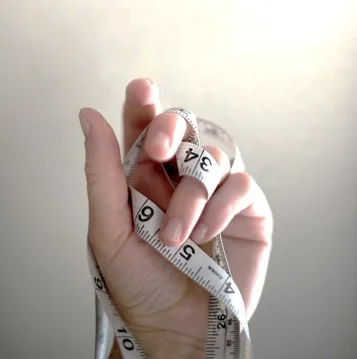
What a permanent preoccupation with weight costs goes far beyond the question of weight itself. There is the mental time. Part of your attention is occupied continuously: what you ate, what you will eat, what you should have. There is sleep, often spoiled by complicated ends of day. There is social avoidance: the invitation declined, the restaurant that becomes a calculation, the swimming pool you no longer go to. There are the clothes sorted into categories of hope.
And above all there is the mood loop: a day "ruined" on the food front weighs on the whole rest of the day, and sometimes on the week. That load does not show on a scale. It is often what exhausts people most.
The recognised approaches, apart from hypnosis
The way in is your doctor. Only they can rule out a medical cause, look at the possible effect of a current medication, and point you to the right resource. That is the first step, not a formality.
- A dietitian or nutritionist sets out, where it is useful, an eating framework suited to your situation. That is their profession and their responsibility; it is neither for a hypnotherapist.
- Adapted physical activity, supervised by a trained professional, particularly where there are joint or cardiac limitations.
- Psychotherapy, cognitive behavioural therapy in particular, whose contribution to eating behaviour is documented and recognised by the health authorities.
- Medication, prescribed and monitored by a doctor, in specific situations.
- Bariatric surgery, at the end of a specialist pathway and a team assessment.
- Support groups and associations, whose effect on isolation is real.
Hypnosis sits alongside these approaches, on the side of behaviour and emotions.
What this work can aim at
Let's start with what hypnosis does not do, because that is where almost all of the sector's false promises live.
It does not melt fat. It does not replace medical or nutritional follow-up. It does not put you to sleep and makes you do nothing against your will. It does not remove the desire to eat, and that would in any case be a very bad idea. It guarantees no result, and nobody honest can guarantee one.
What this work does aim at:
- Changing automatic habits: uncoupling identified triggers (coming home, the screen, the empty hour of the afternoon) from the eating gesture attached to them.
- Unloading from food a role that is not its own: soothing, rewarding, filling, keeping company. As long as that role is not handed to other resources, eating less means removing a solution without offering another.
- Slowing down and relearning to listen to the body's signals: hunger, fullness, satiety. Eating fast makes people eat more, that is well established; what happens in perception, on the other hand, remains poorly understood. We work on the attention paid to a meal, not on a mechanism to be switched back on.
- Easing the way you look at yourself. This is not a comfort: exposing someone to judgement about their weight makes them eat more, and the gaze turned against oneself does the same. Self-contempt feeds precisely the behaviours it reproaches.
- Reducing the urgency in cravings, so that a choice becomes possible again where there was only a reflex.
The deeper work on emotional hunger, compulsions and the diet cycle is set out on our main page: hypnosis for eating and weight. And if it is sugar in particular that is at issue, we have given it a page of its own.
How to spot a dubious offer
On this search term, sorting is simple. Five signals should make you close the page.
1. A number of kilos advertised, paired with a number of sessions. It is the most reliable sign of a lack of seriousness: no practitioner can know in advance how the weight of a person they have not met will change. 2. Before-and-after photographs. They show a person, never a method, and they install exactly the comparative gaze that feeds the problem. 3. The virtual gastric band sold as "surgery without a scalpel". It is a suggestion, nothing more: the little data available do not show that it causes weight loss, and the UK advertising regulator has explicitly forbidden implying that such a programme acts like a gastric band. Presenting it as the equivalent of surgery is misleading. 4. A package to be paid up front, when the number of sessions can only be worked out at the first conversation. 5. Silence about the doctor. A page that never mentions the situations that belong first to a medical opinion tells you something important about whoever wrote it.
These are not academic scruples. In 2023 the UK advertising regulator ruled against a hypnotic gastric band programme advertised with "a 95 % success rate" and before-and-after pictures, for want of any evidence.
Why the scale says poorly what is changing
Your weight on a given day depends on hydration, on transit, on the hormonal cycle, on yesterday's salt, on a medication. Weighing yourself every morning means reading a slow signal through a great deal of noise.
For some people that daily appointment is useful and reassuring, and nothing here says to give it up. But if you have arrived on this page, it may be that the number has taken a place it should not have: when the whole day depends on what the scale shows, the instrument has become part of the problem. That is what we are talking about, not the scale itself.
What changes first, in this work, shows elsewhere: a craving whose intensity falls instead of rising, a cupboard opened then closed, a difficult evening that no longer ends the same way, a day when you simply did not think about food. These observations are more modest and far more reliable.
What the research says
A French randomised clinical trial, the HYPNODIET programme, was run by a hospital-university team (AP-HP, Université Paris Cité). People being followed for obesity and showing high eating disinhibition were allocated at random between usual dietary support and that same support plus sessions of Ericksonian hypnosis and self-hypnosis training. The work, published in the American Journal of Clinical Nutrition, reports a reduction in eating disinhibition in the hypnosis group.
Two honest points you won't read everywhere. First, what this trial measures is eating behaviour, not slimming: on weight, the gap between the two groups did not reach statistical significance, in other words the trial did not demonstrate that hypnosis causes weight loss. The researchers themselves warn against offers promising spectacular results. Second, it is a trial run in a precise setting with selected participants, and the current state of knowledge allows no definitive conclusions.
That is exactly our reading: hypnosis has shown its value on eating behaviour, and nothing more. That is the ground we work on, promising nothing about what your scale will show.
An example: Nadia's case
Name changed, published with her agreement.

Nadia came with a clear request: she wanted us to make her lose weight. She had brought the list of what she had tried, in order, with the dates; she also kept a notebook in which she had written down her weight every morning for years, and she opened it on the desk without being asked. The first conversation mostly served to move the question, not to dodge hers, but because the honest answer was no: that is not what we know how to do.
What we could look at with her was the half-hour between getting home from work and the meal, which she described as "a hole". That is where the work went. In her words: "What surprised me most is that nobody asked me to stop anything. I spent fifteen years stopping things."
She eventually put the notebook away, which she now describes as the most important change. What became of her weight afterwards belongs to her, and is not an argument we use.
This case describes one possible path. It predicts nobody else's.
How a session on this subject unfolds
The first conversation. Your history with weight and diets, what you have already tried, your triggers, your medical context and current medications. We will also ask about any eating binges: that is what lets us know whether we are the right resource, or whether another door should open first.
The objective. Worked out together, and never expressed in kilos. It looks more like: get through the end of the day differently, be able to leave food on the plate, stop thinking about food during meetings.
The induction. A natural state of focused attention, which you already know without naming it. You stay conscious, you hear everything, you can speak and stop whenever you wish.
The work. On this subject it most often concerns separating a situation from the gesture attached to it, the resources that can do the job food was doing, and the attention paid to the body's signals.
The debrief and the exercise. A conversation about what you experienced, and a self-hypnosis exercise to take away. The essential part happens between sessions, in real life.
Book an appointment

The first conversation is there precisely to work out whether hypnosis is the right resource for your situation, and a clear answer (including "this isn't for you") is part of the work. Ask us a question or book an appointment. Our practitioners who work in English see people in Montreal, Sherbrooke, Gatineau, Paris and Lille, and by video wherever you are in the world. The number of sessions is worked out at the first conversation.
Where would you like to consult?
All areas
 Annie Mayrand
Gatineau - Cumberland (ON)
👤
🧑🎓
🚭
❤️
💻
Annie Mayrand
Gatineau - Cumberland (ON)
👤
🧑🎓
🚭
❤️
💻
 Christian Rocher
Beloeil
👤
🧑🎓
👶
🚭
❤️
💻
Christian Rocher
Beloeil
👤
🧑🎓
👶
🚭
❤️
💻
 David Veilleux
Montréal - Anjou
👤
🧑🎓
🚭
❤️
🤰
💻
David Veilleux
Montréal - Anjou
👤
🧑🎓
🚭
❤️
🤰
💻
 Florence Aton
Sutton
👤
🚭
❤️
💻
Florence Aton
Sutton
👤
🚭
❤️
💻
 Jessica Reid
Sherbrooke
👤
🚭
💻
Jessica Reid
Sherbrooke
👤
🚭
💻
 Julie Rocque
Montréal - Jean-Talon
👤
🧑🎓
👶
🚭
❤️
🤰
💻
Julie Rocque
Montréal - Jean-Talon
👤
🧑🎓
👶
🚭
❤️
🤰
💻
 Nuria Pérez de León
Montréal - Rosemont - Saint-Lambert
👤
🧑🎓
💻
Nuria Pérez de León
Montréal - Rosemont - Saint-Lambert
👤
🧑🎓
💻
 Romain Rastoin
Bromont
👤
🧑🎓
🚭
❤️
💻
Romain Rastoin
Bromont
👤
🧑🎓
🚭
❤️
💻
 Réjeanne LeBlanc
La Prairie
👤
🧑🎓
👶
💻
Réjeanne LeBlanc
La Prairie
👤
🧑🎓
👶
💻


Frequently asked questions about Hypnosis and Weight Loss
No serious practitioner will give you a figure, ourselves included. Every history, every body and every medical context is different, and the available research is about eating impulsivity, not about a number. An offer that advertises "X kilos in Y sessions" tells you mostly about itself.
No. The hypnotic state is a state of focused attention, not sleep and not being under anyone's influence. You stay conscious, you hear everything, and you keep at all times the ability to refuse a suggestion, to speak or to stop the session.
Yes. Hypnosis is a non-drug approach that adds to your medical follow-up rather than replacing it. Just tell us what you take at the first conversation. Any decision about your treatment belongs solely to the doctor who prescribed it: we will never ask you to stop or change it.
Psychotherapy is a regulated framework, practised by professionals whose title is protected, and it can address the whole of psychological functioning and established disorders. Hypnosis as we practise it is a narrower kind of support, centred on a precise objective and on the automatic habits attached to it. The two are not opposed and often combine well.
We prescribe none, and it is not our role. If a nutritional framework is useful in your situation, it belongs to a dietitian, a nutritionist or a doctor, with whom hypnosis combines very well.
It is one suggestion among others, not a method, and certainly not surgery. The available data are thin and show no effect on weight: the only published randomised trial found no difference from a simple relaxation session. We may use it as one lever, never as a product and never as the main argument.
Talk to a doctor first. Frequent binges with a sense of loss of control can point to binge eating disorder or another eating disorder, which call for specialist care. Hypnosis can then support certain aspects, alongside the team following you. That is the first step, and it matters more than we do.
Regaining weight after losing it is very well documented, and it has nothing to do with willpower: the body defends its weight, appetite rises and satiety signals dull. France's health authority warns against restrictive, unbalanced diets. Hypnosis does not suspend that biology and guarantees nothing over time. What it aims at is something else: forbidding nothing, and working on automatic habits and resources rather than on permanent willpower.
Sources and references
The care pathway
- Guide du parcours de soins : surpoids et obésité de l'adulte, Haute Autorité de santé, January 2023, updated February 2024 (in French). It warns against "les régimes restrictifs et déséquilibrés", describes the "effet yo-yo" of repeating them, and states that "la décision finale d'opérer se prend lors d'une réunion de concertation pluriprofessionnelle".
On how weight is looked at
- Rubino, F. et al. (2020). Joint international consensus statement for ending stigma of obesity. Nature Medicine, 26, 485-497. pmc.ncbi.nlm.nih.gov: "Experimental studies also show, paradoxically, that exposing individuals to weight stigma can lead to increased food intake, regardless of BMI."
On dubious offers
- Pure Clear Minds Ltd, ruling of 10 May 2023, Advertising Standards Authority (UK): advertising for a hypnotic gastric band programme claiming "a 95% success rate" alongside before-and-after pictures was found misleading, for want of evidence.
- Weight control: Complementary therapies, ASA/CAP, November 2025: "Marketers promoting hypnotic gastric bands should ensure they do not guarantee results", and "Marketers should not imply that hypnotherapy alone causes weight loss".
- Bénéfices, risques et encadrement associés à l'utilisation des produits, services et moyens amaigrissants, Institut national de santé publique du Québec, 2008 (in French): some advertising carries claims "considérées comme non plausibles selon l'état actuel des connaissances scientifiques, telles que 'perte de poids permanente'". The report counts hypnosis among these means, and we therefore count our own practice in.
On the trial cited
- AP-HP, press release on the HYPNODIET trial, which AP-HP headlined "L'hypnose : un traitement utile chez certaines personnes atteintes d'obésité". aphp.fr: the word "traitement" is AP-HP's and describes a hospital research protocol; it does not describe our practice, which is support. The lead investigator is quoted there: "beaucoup d'offres sont en réalité de fausses promesses quand on annonce aux patients qu'ils perdront beaucoup de poids".
- Delestre, F., Lehéricey, G., Estellat, C., Diallo, M. H., Hansel, B., & Giral, P. (2022). Hypnosis reduces food impulsivity in patients with obesity and high levels of disinhibition: HYPNODIET randomized controlled clinical trial. The American Journal of Clinical Nutrition, 115(6), 1637-1645. PMID 35170724.
Hypnosis as practised by the members of Solutions Hypnose is a complementary support approach. It is neither a medical act, nor a diagnosis, nor psychotherapy in the regulatory sense, and it in no way replaces a consultation, follow-up or treatment prescribed by a health professional.
Our practitioners do not assess and do not treat mental disorders or illnesses. They never ask for an ongoing treatment to be stopped or changed: that decision rests exclusively with your doctor.
No result can be guaranteed. The testimonials and examples presented on this page describe individual experiences and do not predict what you will experience.
In case of significant distress, unexplained physical symptoms or suicidal thoughts, contact a doctor, emergency services or a helpline without delay.

Page written by Charlotte de Joybert
hypnotherapist and sophrologist
partner at Solutions Hypnose.
English version reviewed by David Veilleux
Updated .