
Hypnosis for School Stress (School Anxiety)
It is Sunday, six in the evening. The stomach ache arrives, the way it did last week. You already know how Monday morning will go: the negotiations in the hallway, the "it really hurts", your own hesitation between believing them and pushing them out the door, and the guilt either way.
Or it is a teenager who used to revise well and now hands in blank pages. Who knows the material the night before and can find none of it on the day of the exam. Who goes to bed at midnight and does not sleep.
Or a child who says nothing at all, and has simply become irritable, or too quiet, without your being able to say since exactly when.
If you are reading this page, you have probably already tried reasoning, encouraging and reassuring, and none of it is enough. That is normal: anxiety is not settled by argument, and even less so in a child than in an adult.
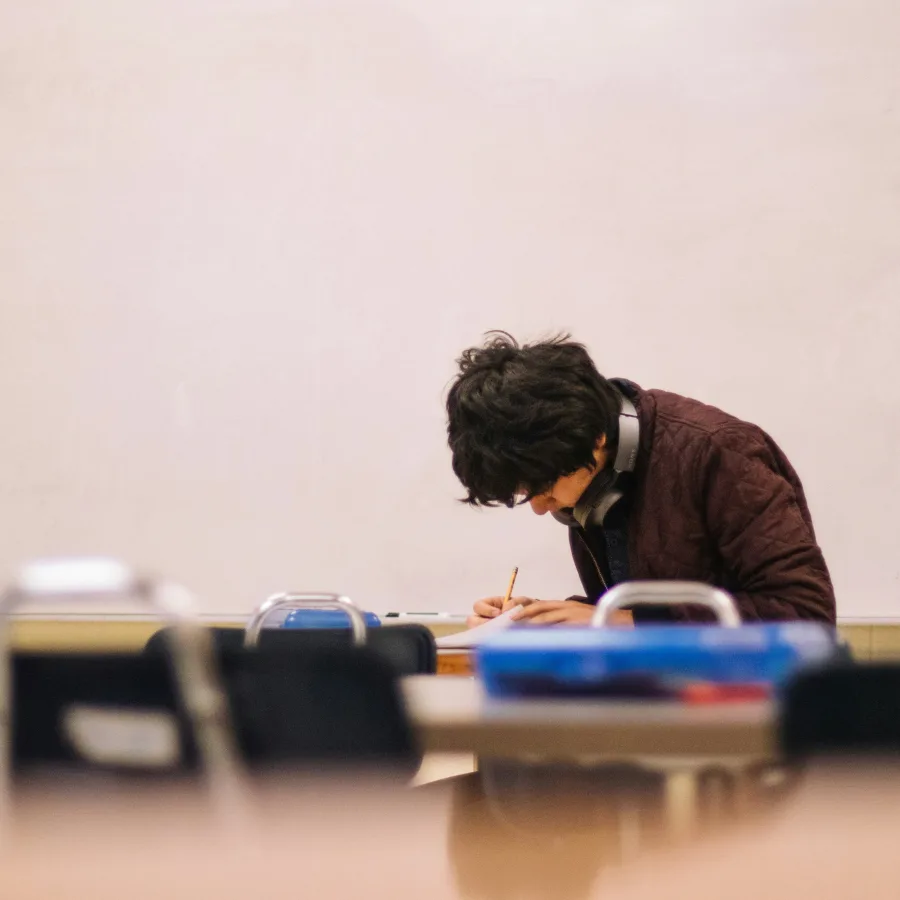
What is School Stress?
School stress describes the tension tied to what school demands: assessments, workload, pace, relationships with peers and teachers. Part of that stress is normal and even useful: it mobilises and prepares.
School anxiety begins when the tension spills outside that frame. It settles in outside class hours, takes over evenings and Sundays, speaks through the body, and ends up undermining the very thing it was supposed to serve.
Anxious school refusal, often called school phobia, is its heaviest form: the child can no longer get to school, despite their own wish to and sometimes despite good results. It is not laziness, not defiance, not a whim. It is a real block, and it calls for professional assessment.
The signs worth your attention
They rarely come with the word "stress". What tends to signal them is:
- The body: stomach aches and headaches concentrated on Sunday evening and Monday morning, nausea, disturbed sleep, nightmares.
- Emotions: unusual irritability, tears close to the surface, withdrawal, or on the contrary restlessness.
- School: falling results, refusing to go, complaints in order to stay home, avoiding certain subjects or certain classes.
- Daily life: loss of appetite, dropping an activity they loved, less contact with friends.
Where young people stand, with the figures
In Quebec, the third edition of the Quebec survey on the health of secondary school students, published by the Institut de la statistique du Québec, reports that in 2022-2023 20% of secondary students had received a diagnosis of an anxiety disorder, a proportion that rises to 29% among girls. It was 9% in 2010-2011 and 17% in 2016-2017. The survey also notes that almost half of students sleep less than the recommended duration during a school week.
In France, the EnCLASS 2022 survey by Santé publique France concludes that the mental health and wellbeing of secondary school students deteriorated markedly between 2018 and 2022, more sharply among girls. It reports that 14% of lower-secondary and 15% of upper-secondary students show a significant risk of depression.
In other words: if your child is affected, they are far from an exception.
What we do not do. Our hypnotherapists make no diagnosis and assess no disorder. See your family doctor, your paediatrician or a psychologist if your child refuses to go to school, if their physical symptoms are frequent, if their sleep or their eating is lastingly affected, if they are withdrawing, or if they express dark thoughts. A repeated physical complaint should be medically assessed first: a Sunday-evening stomach ache is often linked to anxiety, but it is not for a hypnotherapist to decide that.
If there is bullying, this is not anxiety to be soothed. A bullied child does not have a disproportionate fear: they are afraid of something real, and their reaction is healthy. No work on anxiety should ever serve to make them more tolerant of a situation that has to stop. The priority is to make the bullying stop, with the school, which is legally required to act on both sides of the Atlantic. France: 3018, the national line against school bullying and cyberbullying, free, confidential, 7 days a week. Quebec: the school's anti-bullying protocol, mandatory for every establishment; for the student, Tel-jeunes 1 800 263-2266 or Kids Help Phone 1 800 668-6868. Once the situation has been dealt with, if an apprehension persists although the danger is gone, that can be worked on. Not before.
The impact of School Stress on daily life
It quickly spills beyond school.
On learning itself, and this is the cruellest loop. A brain on alert memorises poorly and retrieves what it learned poorly. The child revises, knows the lesson in the evening, and finds nothing the next day in front of the page. They conclude they are useless, which raises the anxiety, which worsens the block.
On sleep, often the first domino. A teenager who sleeps badly absorbs everything else less well, and the Quebec survey is a reminder that nearly one secondary student in two already sleeps less than what is recommended — the subject of our page on sleep disorders.
On self-esteem. Young people in Quebec report a clear decline in how they see themselves over a dozen years. A child who fails where they are assessed every week ends up generalising: it stops being "I failed that test" and becomes "I am useless" — our page on confidence and self-esteem covers that side.
On the family. Mornings turn into negotiations, evenings into standoffs about homework. Parents swing between firmness and protection, sometimes contradict each other, and often feel guilty. You have done nothing wrong.
On social life, when the child starts turning down invitations, outings, the Wednesday activity.
The resources that exist outside Hypnosis
Many are free, and that is where to start.
- The family doctor or paediatrician, the first port of call, not least to rule out a physical cause behind repeated complaints.
- The school team. School psychologist, learning support teacher, guidance counsellor, head teacher. In France, the form teacher and the CPE. In Quebec, student services. Accommodations exist, and they are under-used because families often do not know they are possible.
- Psychological care. Cognitive behavioural therapy is the best documented approach for anxiety in children and adolescents.
- A learning assessment, when the school difficulty precedes the anxiety rather than the reverse: an unidentified learning disorder, attention disorder or eyesight problem produces exactly the same signs.
- Helplines for young people, free and anonymous. France: Fil Santé Jeunes 0 800 235 236. Quebec: Tel-jeunes 1 800 263-2266, Kids Help Phone 1 800 668-6868.
- Work on sleep and screens, less spectacular but often the lever with the best return.
Hypnosis adds itself to that list. It does not replace it, and above all it does not replace the school in its own role.
Hypnosis for School Stress: aims and benefits
It will not raise your child's marks, and nobody should promise you that. It will not make them indifferent to school. It settles neither a learning disorder, nor a bullying situation, nor a difficult family context. It guarantees no result.
What support aims at, with a child or a teenager, starts with giving them a tool of their own: an anchor of calm, a gesture or a breath they can use alone in the exam room, in the corridor, or on the bus. It is often the first change they notice themselves, before you do: they stop merely enduring, and feel less powerless in the face of what is landing on them. Everything else in the work is built from there. How hypnosis works is set out on the page what is therapeutic hypnosis.
- Easing the physical manifestations, the stomach, the throat, the racing heart.
- Undoing the link between assessment and catastrophe. This is not positive thinking: it is about replacing one repeated mental scenario with another, just as repeated.
- Reworking a specific memory, the oral presentation that went wrong, the blackboard, the mockery, which often serves as the starting point for all the rest.
- Recovering sleep, often the first change parents notice.
- Gradually taking back what is being avoided, in imagination first.
A word about children: they enter hypnosis far more easily than adults. They spend their time in the imaginary, and the work looks more like a story or a game than a formal session. Our pages on hypnosis for children and on teenagers set out what is done at each age.
What the research says
A systematic review published in 2023 in Cogent Psychology examined twelve studies covering 515 school and university students, published between 2000 and 2021, on the use of hypnosis for test anxiety. The authors conclude that hypnosis helps reduce that anxiety, while underlining two limits it would be dishonest to leave out: the studies included are highly heterogeneous, and more rigorous research, with longer follow-up, is still needed.
This is an encouraging signal, not a demonstration. Note too that this work is mostly about test anxiety in students, not about school refusal in young children, which is a different situation.
An example of support: Léa's case
Léa (name changed), 18, was starting medical school. As Léa was of age, she gave her consent herself.
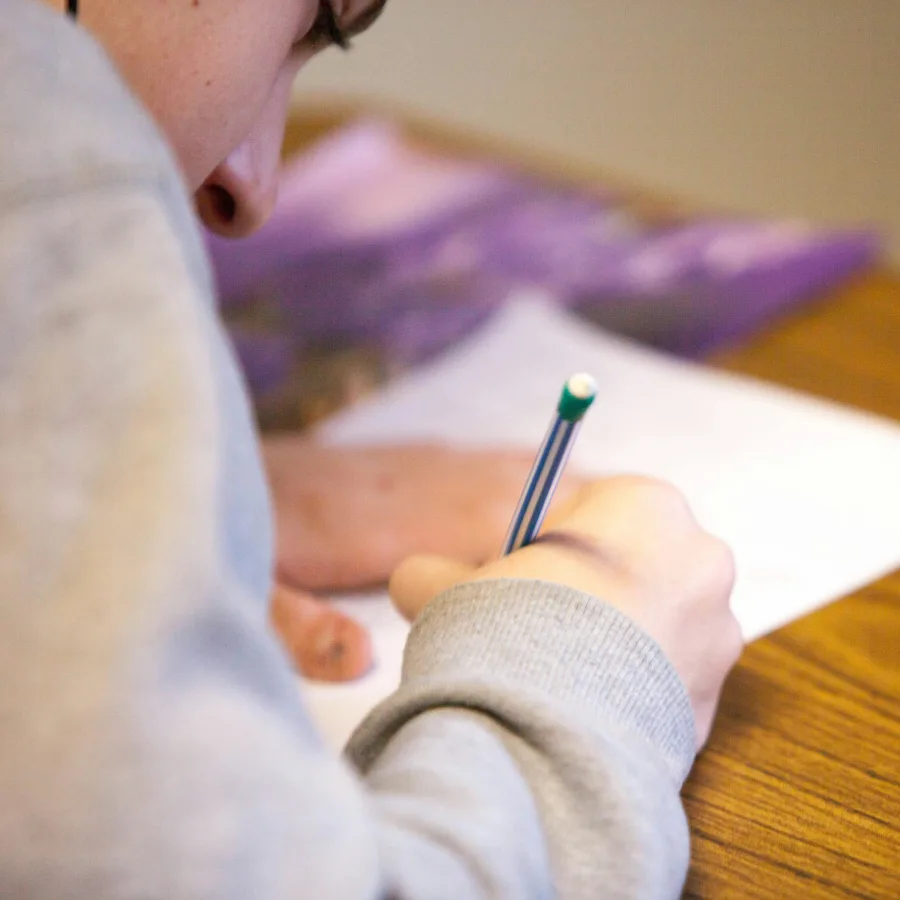
The block was always the same, and always in the same place: the first question. She would read it, read it again, and her mind would empty. She would end up skipping it, promising herself she would come back, except that time always ran out. On her papers, the first question stayed blank. And the rest of the exam suffered for it: she was starting late already, already in debt, and every question after that passed through that filter. She had done show jumping as a child, and still talked about it in detail, her eyes elsewhere.
The work was built on that: walking the course before the round, the rhythm between the fences, and above all the first jump, the one that sets the tone for everything after it. In session she pictured the course first, then the exam room, until the paper became a track and the first question a first fence, cleared before she had time to think about it.
This case describes one possible path. It predicts nobody else's. Pace and results vary from one person to another, and no support can guarantee a result, still less an improvement in marks.
How a Hypnosis session with a child or teenager unfolds
The preliminary contact, with you. Before any session, a phone conversation with at least one parent makes it possible to understand the situation and check that we are the right resource. Sometimes the answer is no, and we will tell you so.
Your child has to be willing. That is a condition, not a preference. A young person brought against their will does not engage, and the session serves no purpose. You can show them the practitioner's photo or introduction video so that they choose for themselves whether they want to meet that person.
The interview, then the session. The meeting starts with the parent or parents, then continues one to one with the child, unless they want you there. The hypnosis part generally lasts between 30 and 45 minutes depending on age. The general shape of a session is described on the page what to expect in a hypnosis session.
What happens in it. With the youngest, it often looks like a story, a game, a drawing, a character they invent. With teenagers, the format is closer to that of adults. In both cases the child stays conscious, hears everything, and can stop whenever they want.
Do not worry about what happens during the session: ask. Some members of the team offer a video monitor without sound, which lets you follow the session from the waiting room. That option exists precisely so that you do not have to choose between your peace of mind and the privacy your child needs in order to talk.
Carrying it home. The young person almost always leaves with a short exercise to practise, and you with a few markers for supporting them without watching over them.
How many sessions, and from what age? The number is discussed at the preliminary contact: nobody can know it before meeting your child. The practitioners on the team see children from the age of five or six depending on their maturity.
Book an appointment
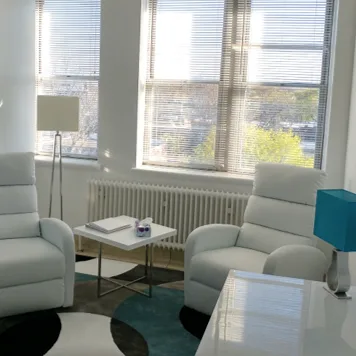
Our practitioners see children and teenagers in Quebec — Montreal, La Prairie, Beloeil, and Gatineau for teenagers — and in France — Paris and Lille. Show your child the photo or the introduction video: it is for them to decide whether they want to meet that person. No practitioner near you? Video consultation often works well with young people, though it depends on age.
Not sure? Write to us describing the situation. We will tell you frankly whether hypnosis seems suitable for your child, and where to turn if it is not.
Where would you like to consult?
All areas
 Annie Mayrand
Gatineau - Cumberland (ON)
👤
🧑🎓
🚭
❤️
💻
Annie Mayrand
Gatineau - Cumberland (ON)
👤
🧑🎓
🚭
❤️
💻
 Christian Rocher
Beloeil
👤
🧑🎓
👶
🚭
❤️
💻
Christian Rocher
Beloeil
👤
🧑🎓
👶
🚭
❤️
💻
 David Veilleux
Montréal - Anjou
👤
🧑🎓
🚭
❤️
🤰
💻
David Veilleux
Montréal - Anjou
👤
🧑🎓
🚭
❤️
🤰
💻
 Florence Aton
Sutton
👤
🚭
❤️
💻
Florence Aton
Sutton
👤
🚭
❤️
💻
 Jessica Reid
Sherbrooke
👤
🚭
💻
Jessica Reid
Sherbrooke
👤
🚭
💻
 Julie Rocque
Montréal - Jean-Talon
👤
🧑🎓
👶
🚭
❤️
🤰
💻
Julie Rocque
Montréal - Jean-Talon
👤
🧑🎓
👶
🚭
❤️
🤰
💻
 Nuria Pérez de León
Montréal - Rosemont - Saint-Lambert
👤
🧑🎓
💻
Nuria Pérez de León
Montréal - Rosemont - Saint-Lambert
👤
🧑🎓
💻
 Romain Rastoin
Bromont
👤
🧑🎓
🚭
❤️
💻
Romain Rastoin
Bromont
👤
🧑🎓
🚭
❤️
💻
 Réjeanne LeBlanc
La Prairie
👤
🧑🎓
👶
💻
Réjeanne LeBlanc
La Prairie
👤
🧑🎓
👶
💻


Frequently asked questions about Hypnosis for School Stress (School Anxiety)
No. It is a complement. Where there is school refusal, significant symptoms or marked distress, medical or psychological assessment comes first.
From five or six years old depending on the child's maturity, and depending on the practitioner.
That depends entirely on the situation and is discussed during the first contact. We do not give a figure in advance, and we invite you to be wary of anyone who does.
That is not the aim and it cannot be promised. The work is on what gets in the child's way: sleep, the block in front of the page, the Sunday stomach ache. What happens on the report card afterwards does not depend on us alone.
Do not force them, it will not work. Show them the practitioner's introduction and let them decide. If the refusal is global, if they want to see nobody and no longer want to go to class, that is a sign to go through the doctor or the school rather than through us.
Yes if your child wants you to. Some practitioners also offer a video monitor without sound from the waiting room. Talk about it before the session.
Rates vary by practitioner: allow about CAD $135 or €80. Some practitioners issue receipts that private insurers or supplementary health plans partly accept. It depends entirely on your policy and on the practitioner's professional affiliation: check with your insurer before booking.
Not in place of what has to be done. The bullying must stop first, and the school is required to act. Once the situation has been dealt with, if an apprehension persists although the danger is gone, that can be worked on.
Yes, alongside their usual care. Mention it at the first contact. One caution: when an unidentified learning difficulty is the source of the stress, what is needed is an assessment, not hypnosis.
Yes. Mention it at the first contact. We will never ask for a treatment to be stopped or changed: that decision belongs solely to the doctor who prescribed it.
Sources and references
In Quebec
- Secondary students are faring less well than before psychologically — Institut de la statistique du Québec, Quebec survey on the health of secondary school students, 3rd edition (in French)
In France
- The mental health and wellbeing of secondary school students: results of the EnCLASS 2022 survey — Santé publique France (in French)
The study cited on hypnosis
- Pachaiappan, S. et al. (2023). Hypnosis interventions for reducing test anxiety among students: A systematic review. Cogent Psychology, open access. doi.org/10.1080/23311908.2023.2281745
Helplines for young people and families. France: 3018 school bullying and cyberbullying · Fil Santé Jeunes 0 800 235 236 · 3114 suicide prevention. Quebec: Tel-jeunes 1 800 263-2266 · Kids Help Phone 1 800 668-6868 · Info-Social 811 option 2 · 1 866 APPELLE (277-3553).
The start of the school year has a stress of its own: we give it a separate page, hypnosis for back-to-school stress.
Hypnosis as practised by the members of Solutions Hypnose is a complementary support approach. It is neither a medical act, nor a diagnosis, nor psychotherapy in the regulatory sense, and it in no way replaces a consultation, follow-up or treatment prescribed by a health professional.
Our practitioners do not assess and do not treat mental disorders or illnesses. They never ask for an ongoing treatment to be stopped or changed: that decision rests exclusively with your doctor.
No result can be guaranteed. The testimonials and examples presented on this page describe individual experiences and do not predict what you will experience.
In case of significant distress, unexplained physical symptoms or suicidal thoughts, contact a doctor, emergency services or a helpline without delay.

Page written by Rachelle Letarte
hypnotherapist and family coach
partner at Solutions Hypnose.
English version reviewed by David Veilleux
Updated .