
Hypnosis for Teens and Young Adults
This page has several readers, and we know it. A parent looking for help for a teen who's stressed, shut down or overwhelmed — and wondering whether hypnosis is legitimate. A teen, sometimes sent here by that same parent, mainly checking one thing: are they going to try to manipulate me, psychoanalyze me, or lecture me? A teen or a young adult, looking for tools to build their own resources.
Hypnosis for teenagers and young adults is a space of their own, judgment-free, where we don't dig through the past but equip the present: exam stress, confidence, emotions that overflow, sleep… And it starts with one absolute rule: we never force a teen to come.


Why this is when hypnosis works best
Adolescence is a construction site
The body changes, identity is under construction, the brain is rewiring itself…
All under a triple pressure that's new to this generation: school that ranks, social media that compares, and a future they're already expected to have chosen.
Many of the behaviors that worry parents (withdrawal, irritability, procrastination) are actually responses to this overload, not character flaws.
Teens also happen to make excellent hypnosis subjects: they've kept a childhood-level direct access to imagination (the hypnotic state is a bit like being absorbed in a video game or a show — familiar territory) and gained an adult-level ability to work toward concrete goals.
Early adulthood: new challenges
The move into adult life packs a series of firsts into just a few years, and any one of them can knock you off balance.
- Choosing a direction. Making choices that feel like they commit a whole life, at 17, 18, 19… Our role is not to advise but to work on what paralyses: the fear of getting it wrong, the confusion between your own wishes and your family's expectations.
- The first year of higher education. No more day-to-day structure, a study method to reinvent, a pace nothing like secondary school. Many young people who were doing perfectly well until then drop off at exactly this point — not for lack of ability, but for lack of bearings.
- The first place of their own. Managing a budget, a household, sometimes loneliness. And often the guilt of finding it hard when "it is supposed to be the best time of your life".
- Starting out at work. A first job or first placement, impostor syndrome, difficulty setting limits with an employer (see our Professional coaching page).
- First serious relationships, too: what you accept, what you dare to say, the fear of being left.
Our young clients arrive with questions, with doubts about themselves and their choices, with stress…
The result: often short accompaniments, with tools they pick up fast, including self-hypnosis, which they then use on their own.
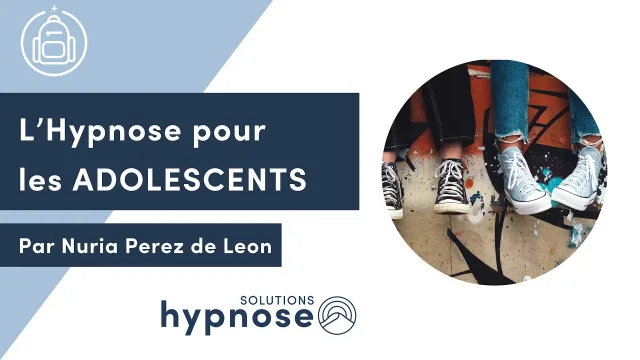
Video available in French
Video transcript
Bonjour ! L’adolescence…. C’est une période de la vie pas toujours évidente… C’est une période de grandes transformations, avec tous les bouleversements qui peuvent venir avec. D’abord, il y a les changements physiques, liés à la puberté…. Et c’est aussi une période de grands questionnements. Des questionnements par rapport à son identité, à sa sexualité, à son rapport à soi et aux autres, à sa place dans la société, à sa place dans la vie, à son avenir, à son choix de carrière…
L’adolescence, c’est une période où le regard des autres compte beaucoup. Les amis prennent beaucoup de place et vont souvent avoir beaucoup d’influence… L’opinion des parents est parfois questionnée, ou carrément laissée de côté. Parce qu’à l’adolescence, on est souvent tiraillé entre le désir de devenir plus indépendant, de s’affirmer… tout en restant dépendants des parents. Et en même temps… on veut se faire aimer et respecter par eux.
C’est la période des expériences sexuelles, de l’expérimentation par rapport à plein de choses… et de la prise de risques… c’est aussi à l’adolescence ou même à la pré-adolescence qu’on vit souvent nos premières peines d’amour… Les ados sont super connectés et ont accès à plein d'informations sur le monde …. Et en même temps, tous les changements qu’ils vivent peuvent générer de la confusion, des conflits, de l’angoisse…
Cette angoisse peut se manifester sous différentes formes : un manque de motivation par rapport à l’école, des notes qui baissent, de la colère, le repli sur soi, la tristesse… Toutes ces émotions ou ces manifestations sont à prendre au sérieux… parce qu’elles peuvent avoir un grand impact sur la suite des choses… L’hypnose, dans un contexte de coaching, est un outil efficace, et tout en douceur, pour accompagner les adolescents dans cette période délicate de leur vie.
L’hypnose peut, par exemple, aider à surmonter des difficultés scolaires, à augmenter la concentration ou la motivation, à réduire le stress lié à la performance, à mieux gérer des émotions comme la colère, l’agressivité ou la tristesse, à retrouver une plus grande confiance, à se sentir bien dans sa peau, à trouver son chemin de vie, à clarifier son identité, à surmonter une peine d’amour …. et bien plus…. Comment ça marche une séance d’hypnothérapie ou de coaching avec les ados ?
Généralement, c’est un des parents qui prend contact au début. L’important, c’est que l’ado soit d’accord avec la démarche, sinon ça ne marchera pas. Après, la séance elle-même se passe juste avec l’ado, puisqu’à partir de 14 ans, un mineur peut consentir tout seul à une démarche thérapeutique – sauf si sa santé physique ou mentale est à risque. L’équipe d’hypnothérapeutes de Solutions Hypnose est là pour vous accompagner.
En présentiel, près de chez vous, ou par vidéo, ça fonctionne aussi super bien. Prenez rendez-vous dès maintenant pour créer la vie que vous souhaitez grâce à l’hypnose ! A bientôt !
Hypnotherapy is a complementary form of support and does not replace medical advice, diagnosis, or treatment. If you have any concerns about your health, please consult a physician first.
How hypnosis can help teens and young adults
What we support most often

Here is what most often brings a young person to us.
- Performance stress and exams. The blank mind in front of the test paper, sleepless nights before an exam, a grade experienced as a verdict on their worth: performance stress has become the number-one reason teens come to us. The work combines exam-day tools (on-demand calm, recovering after a bad question) with deeper work: separating their worth from their results (see our Focus & Exams page).
- Confidence and how others see them. The age when self-image is under construction… under crossfire from comparison — classmates, social media, the mirror. Isolating shyness, fear of speaking up, feeling "not enough": confidence can be repaired, and this is the best time to do it (see our Self-Confidence page).
- Emotions that overflow. Disproportionate anger, storm-like sadness, hypersensitivity: the teenage brain feels more intensely than it regulates. That's neurological, not bad attitude. Hypnosis teaches how to recognize the wave and surf it instead of being pulled under (see our Emotional Regulation page).
- Shifted sleep. Teens' biological clock naturally runs later, and screens, stress and late-night studying make it worse. The result: zombies in first period. The work restores a workable bedtime routine without turning the bedroom into a battleground (see our Sleep page).
- Screens and video games, without moralizing. Important point: we're not here to demonize what is also their culture, their downtime and their social connection. The work begins when the person themselves feels the balance is off (sleep sacrificed, grades slipping, irritability without a screen): we then look at what the screen provides — decompression, belonging, escape from stress — and widen the range of options, instead of confiscating the one resource that's working.
- Fears, nagging habits, a changing body. Fears that settle in (see our Fears & Phobias page), bitten nails, stress tics, discomfort with a changing body: all of these respond well to the work. Even better when the teen can talk about them in a judgment-free space.
What calls for a doctor or psychologist first
Honesty is part of the framework — and we say this to both readers of this page.
Some signals go beyond hypnotherapy and call for health professionals, quickly: significant, ongoing withdrawal, lasting sadness with loss of interest in everything, dark thoughts, self-harm, severe food restriction or binge episodes with loss of control, or any substance use that worries you.
To parents: see a doctor or psychologist as a priority. These situations are treatable, and waiting never helps.
To the teen who recognizes themselves here: talking to a trusted adult is the bravest thing you can do, and helplines exist.
Hypnosis can then support the journey, alongside and in agreement with those professionals.
Hypnosis with minors
A clear framework
For the teen: what's said in session stays in session. The space is theirs — no detailed reporting to parents, no judgment, no lecturing. With one limit, clear and non-negotiable, stated from the start: if their health or safety — or someone else's — is at risk, or if a referral to a doctor or psychologist is needed, parents are informed and the referral is made.
This limit isn't a betrayal — it's what makes the space trustworthy.
For parents: you stay in the loop that matters. Your consent is required, the first meeting sets the frame together (often with all three of you, then the session turns toward the teen), and you're kept informed of the essentials — the scope of the work, the progress, and immediately anything touching on safety.
What you don't get is the verbatim. Because a teen who knows everything will be repeated stops talking, and the process dies.
The essential condition for hypnosis with a teen: their buy-in
A teen dragged in against their will will just go through the motions.
What works: offering a no-commitment first contact with the practitioner, where they ask their questions and decide afterward.
Many reluctant teens change their minds once they understand it's neither magic nor psychoanalysis — and some even seek it out on their own, like this young client: "I did my own research and decided to try hypnosis."
What about school direction and motivation?
When a teen is generally doing fine but feels lost (about their direction), unmotivated or disorganized, that's a different kind of support — closer to coaching, often combined with hypnosis — which we cover on a dedicated page (see our Coaching for Teenagers page).
From 18 onwards: a different framework
One detail that matters, and that many families are unaware of: from the age of majority, the framework changes entirely.
A young adult books on their own, without their parents' consent or knowledge, and confidentiality becomes absolute — including towards them, even when they are paying for the sessions. We will tell them neither what was said, nor even whether the person came. That is the rule for any adult, whatever their age.
It also changes the nature of the work: a young adult sets their own goal, decides the pace, and owns their decisions. Many discover on this occasion that they have, for the first time, a space entirely their own.
To the parents reading this: if your adult child is going through a hard time, you can tell them about us. But the step is theirs to take, and a booking made on their behalf would achieve nothing.
What our clients say

« I took my 15-year-old daughter to see Daby, who helped her a lot. He's truly attentive, patient. His human touch definitely makes all the difference. »
Nicolas, client of Daby Touré
« I'm often anxious and impulsive. I love hypnosis! I go when I feel like things aren't going well in my life, it helps me, and it helps calm my knot of stress and refocus on myself. »
Justin (15 ans), client of Marjorie Gilbert
« The connection, the progress, and the results from Nuria's work with our 13-year-old daughter are remarkable. I highly recommend her. »
Art, client of Nuria Perez de Leon
« I want to thank Patricia for her exceptional work and compassion. My daughter was going through a very difficult time after a toxic friendship that had isolated her and deeply affected her. She had developed intense anxiety, including emetophobia, which was impacting her daily life. Thanks to Patricia's professional and fair support, things improved remarkably. In less than a year, my daughter found real peace of mind and a confidence she'd lost, and today she's able to assert herself, set her limits, and stand up to people who mean her harm. Thank you again! »
Christel, client of Patricia Jouannet
« Consultation for my pre-teen. An extremely positive experience! Very welcoming, skilled at building a connection and breaking down very technical concepts, creative and authentic approach, no canned script. I recommend her! »
Andréanne, client of Rachelle Letarte
« Excellent experience for a teenager, I highly recommend! Sabine is very skilled, attentive, and takes her time. »
Eleanore, client of Sabine Chapuis
« I did my own research and decided to try hypnosis. In the end, we also talked a lot, and it helped me figure out who I am, what field of study to pursue, and what I want to do with my life. »
Élodie (14 ans), client of Nuria Perez de Leon
« My teen has nothing but positive things to say about the experience! Completely satisfied! Thank you again! »
Sara Melissa
« I love the work we do together. It lets me shape my brain into doing what I want, on my own terms… »
Émeline, client of Sandra Djina Ravalia
More on some teen-related subjects
Consult a practitioner near you
All areas
 Annie Mayrand
Gatineau - Cumberland (ON)
👤
🧑🎓
🚭
❤️
💻
Annie Mayrand
Gatineau - Cumberland (ON)
👤
🧑🎓
🚭
❤️
💻
 Christian Rocher
Beloeil
👤
🧑🎓
👶
🚭
❤️
💻
Christian Rocher
Beloeil
👤
🧑🎓
👶
🚭
❤️
💻
 David Veilleux
Montréal - Anjou
👤
🧑🎓
🚭
❤️
🤰
💻
David Veilleux
Montréal - Anjou
👤
🧑🎓
🚭
❤️
🤰
💻
 Florence Aton
Sutton
👤
🚭
❤️
💻
Florence Aton
Sutton
👤
🚭
❤️
💻
 Jessica Reid
Sherbrooke
👤
🚭
💻
Jessica Reid
Sherbrooke
👤
🚭
💻
 Julie Rocque
Montréal - Jean-Talon
👤
🧑🎓
👶
🚭
❤️
🤰
💻
Julie Rocque
Montréal - Jean-Talon
👤
🧑🎓
👶
🚭
❤️
🤰
💻
 Nuria Pérez de León
Montréal - Rosemont - Saint-Lambert
👤
🧑🎓
💻
Nuria Pérez de León
Montréal - Rosemont - Saint-Lambert
👤
🧑🎓
💻
 Romain Rastoin
Bromont
👤
🧑🎓
🚭
❤️
💻
Romain Rastoin
Bromont
👤
🧑🎓
🚭
❤️
💻
 Réjeanne LeBlanc
La Prairie
👤
🧑🎓
👶
💻
Réjeanne LeBlanc
La Prairie
👤
🧑🎓
👶
💻


Frequently asked questions about Hypnosis for Teenagers
We don't force it. Hypnosis imposed on someone doesn't work, buy-in is condition number one.
What works: offering a simple, no-commitment discovery meeting by phone or video, where they ask their questions and decide afterward. Many reluctant teens change their minds once they understand it's neither magic nor psychoanalysis, but concrete tools — and that what's said stays within a trusted framework.
Yes, with one clear limit stated from the start: the space belongs to the teen, unless their health or safety — or someone else's — is at risk, or a referral to a doctor or psychologist is needed.
In those cases, parents are informed. Parents know the framework, the progress and anything touching on safety; the detailed content of sessions stays with the teen.
In practice, around 11-13, once the "children's stories" format no longer fits and the young person wants to be treated as an equal conversation partner.
And up through young adults, where the same issues (studies, confidence, the future) continue.
Often few: three to five sessions in most cases.
Teens pick up the tools fast, self-hypnosis included.
A focused goal (an exam, an oral presentation) can be prepared in two or three sessions; deeper work on confidence or emotions may take a bit more.
Not against their will, and not by demonizing it: the screen is also their downtime, their culture and their social connection.
The work becomes possible when the teen themselves feels the balance is off — sleep sacrificed, irritability, slipping grades. We then look at what the screen provides (decompression, belonging, escape from stress) and widen their range of resources, instead of confiscating the one that's working.
It's actually the number-one reason teens come to us.
The work combines tools for the day itself — on-demand calm, managing the blank-mind moment, recovering after a bad question — and deeper work: reviewing without panicking, sleeping before exams, and above all separating their worth from their grades.
Two or three sessions before a deadline often bring clear results.
Both work very well.
Teens are at home with a screen, and video sometimes removes the awkwardness of that first step. The first meeting sets the frame with a parent present, then the format adapts to the teen. A quiet spot and headphones are all it takes.
Not as a first step.
Significant withdrawal, lasting sadness, dark thoughts, self-harm, disordered eating: these signals call for a doctor or psychologist first. These situations are treatable, and seeing someone sooner beats waiting too long.
Hypnosis can come afterward, alongside and in agreement with those professionals.
We do this sorting from the very first contact, and we'll point you in the right direction honestly.
Important: if they're suffering, start with a consultation with a doctor or a psychologist.
Then a simple test:
- If they have day-to-day difficulties that don't amount to suffering (stress, emotions, damaged confidence, sleep), start with hypnosis, that's what this page is about.
- If they're doing fine but feel lost or unmotivated (direction, study methods, motivation), start with coaching (see our Coaching for Teenagers page).
A state of relaxed focus you already know: the one where you're absorbed in a game or a show, used to train yourself from the inside — rehearsing an oral presentation in your imagination, building a calm you can call up during an exam, turning down the volume on an emotion.
You stay aware, you hear everything, and you can stop whenever you want.
As 12-year-old Émeline put it: "it lets me tweak my brain so it works for ME instead of against me."
Hypnotherapy is complementary support: it does not replace medical advice or psychological care. Supporting a minor requires parental consent. If a teen is experiencing significant distress, please see a doctor or psychologist first.

Page written by Sabine Chapuis
hypnotherapist
partner at Solutions Hypnose.
English version reviewed by David Veilleux
Updated .