
Hypnosis for Artists: stage fright, performing, creative blocks
There is an injustice particular to artists: hundreds of hours of work can hang on three minutes, and that is precisely when the body chooses to shake.
Stage fright that paralyses, the audition where everything deserts you, the memory blank in the middle of the movement, the blank page that lasts, the bad concert that haunts the next ones: this page covers the main areas of the artistic mind.
Written by practitioners, several of whom are professional artists themselves, and who know from experience what the wings feel like ten minutes before curtain up.


Stage fright, performing, auditions, creative blocks
Stage fright is not the enemy: paralysing stage fright is
First distinction, and it is a crucial one: stage fright is normal, universal and useful.
The greatest performers have always said so, and the references in the field confirm it: that activation before playing is the body mobilising for a moment that counts (Médecine des Arts).
An artist with no stage fright at all often plays flat: activation, in the right dose, gives presence, intensity, that extra something rehearsal does not have.
The problem starts when stage fright changes sides: hands shaking on the instrument, the voice tightening, memory emptying, weeks of dread before the date, the opportunities you turn down to avoid having to go on.
It is the same mechanism we describe for athletes (see Sports Performance): too low and you are switched off; too high and you are overwhelmed.
So the aim of the work is never to remove stage fright: it is to bring it back down into the zone where it becomes fuel again.
Why your brain mistakes the stage for a danger
The mechanism is worth understanding, because it takes the guilt away: on stage, your old brain detects every marker of danger (dozens of eyes fixed on you, no possibility of escape, maximum social stakes) and triggers the response designed for predators: racing heart, muscles under tension, "surplus" functions (fine memory, fluid movement) put on standby.
That is the artist's tragedy: the emergency response cuts off exactly the functions their art needs.
And a learned layer is almost always added:
- the audience experienced as a tribunal (often inherited from a harsh teacher, a humiliation at the conservatoire, a striking failure);
- perfectionism ("one wrong note ruins everything");
- and identity at stake ("if I fail, then I AM a failure").
It is that layer, the real root, that hypnosis works on.
What Hypnosis can do for artists (professional and amateur)
Five concrete levers
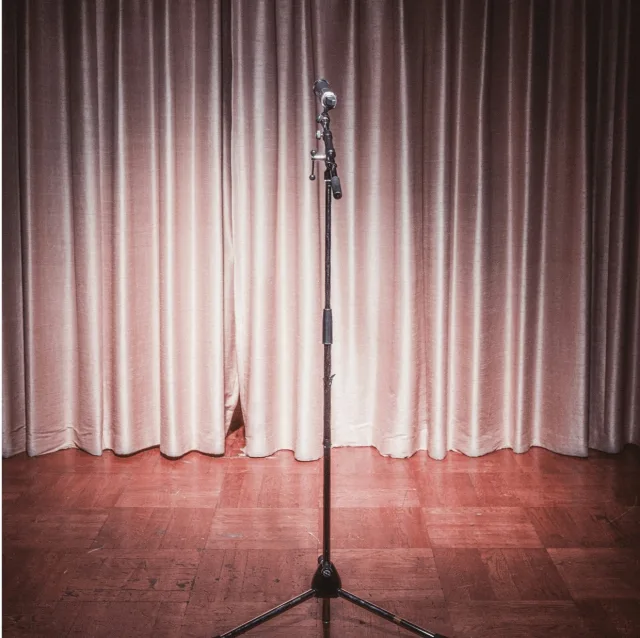
- Coming back down into the zone.
Anchors of calm you can call on in the wings (a gesture, a breath, a word, installed under hypnosis so they hold up in real intensity), a pre-stage routine that replaces the spiral of dread, and regulation of the body: the hands, the breath, the voice.
- Desensitising the gaze.
The audience-as-tribunal can be re-educated: gradual exposure in imagination (playing in front of ten, a hundred, a thousand people, so the brain gets used to it in session before getting used to it in the hall), reframing the real audience (there to be moved, not to judge: the audience wants you to succeed), and defusing the founding scenes, the humiliating teacher, the disastrous audition. Revisited with today's resources, they stop coming on stage with you. - Mentally rehearsing, like athletes.
Rehearsal in imagination engages the circuits of real execution: under hypnosis you rehearse walking on, the difficult passage, and the unexpected handled (the string that breaks, the line that catches), crossed calmly in imagination so they lose their power to cause panic. Specialist resources for musicians converge on this point (CodaBow). - Taming the mistake, and the bounce back.
A wrong note has never killed a concert; the panic afterwards does. The work installs the bounce back: the mistake crossed without collapse, an immediate return to the present, because the audience forgets the note but feels the panic. - Reopening memory.
A memory blank on stage is not an erasure: it is blocked access under stress (the mechanism is set out on our page Focus & Exams): the knowledge is there, the door is stuck. We install the keys: anchors for getting back in, landmarks within the work, and above all the drop in activation that reopens the door.
Video available in French
Video transcript
Imaginez, vous êtes derrière le rideau, les lumières, le public, le son, la tension qui monte. Et là, tout peut se passer : une corde qui casse, un retour son qui lâche, un trou de mémoire. Sur scène, il faut être présent, souple, concentré. L'hypnose c’est un outil incroyable pour cela. Elle permet d'entrainer le mental, de préparer le corps, de retrouver cette zone où tout devient fluide, naturel, vivant. En tant que musicien, j'ai connu les bugs, les stress, les imprévus...
Et aujourd'hui, j'aide les artistes à transformer ces moments en espace de liberté. L'hypnose c'est une autre façon de se préparer à la scène, une façon plus intérieure, plus consciente, plus créative. Et quand tout est aligné, la musique circule. La magie de l'hypnose, ce n'est pas un tour mais le résultat d'un état où le corps et l'esprit sont enfin en harmonie. Concrètement, l'hypnose vous permet de désamorcer les blocages inconscients : ce trac qui paralyse, ces doutes qui sabordent...
Retrouver un accès direct à vos ressources : confiance, flow, précision... Incarner votre musique pleinement sans ce filtre d'anxiété. Alors, prêt ou prête à laisser s'exprimer cette version de vous libre et alignée ? Le premier pas est de prendre rendez vous en cabinet à Montréal ou depuis chez vous en vidéo. L'aventure est la même. C'est le chemin pour retrouver le plaisir pur de jouer. Merci, à bientôt.
Hypnotherapy is a complementary form of support and does not replace medical advice, diagnosis, or treatment. If you have any concerns about your health, please consult a physician first.
Video transcript
Vous connaissez ce moment juste avant de passer devant un jury, une audition, une sélection, un concours ou juste avant de monter sur scène. Le cœur s'accélère, les mains deviennent moites, la gorge se serre, les pensées s'emballent. Ce fameux trac qui parfois nous paralyse. Je me souviens de ce musicien de l'orchestre de l'Opéra de Paris, qui avant chaque entrée en scène, était saisi d'un tel trac qu'il devait impérativement se rendre aux toilettes pour vomir.
Son corps exprimait de manière spectaculaire et incontrôlable l'angoisse que son mental refusait de conscientiser. Moi, je suis musicien et je l'ai vécu des dizaines de fois avant un concert. Et c'est justement ce qui m'a amené à l'hypnose. L'hypnose, c'était un moyen simple, concret et puissant pour transformer cette énergie du trac en présence, en concentration, en plaisir. On ne cherche pas à supprimer le trac, on apprend à le traverser, à retrouver le calme, la confiance et ce lien profond avec la musique qu'on veut partager.
Non pour supprimer son stress, mais pour en comprendre le message et retrouver son pouvoir personnel. Ce musicien de l'Opéra de Paris a ainsi transformé cette angoisse en une concentration maîtrisée. La rapidité du changement avec l'hypnose peut surprendre, mais elle témoigne de la puissance d'un travail qui va au delà du conscient. Que vous soyez musicien, chanteur, comédien ou simplement que vous ayez à prendre la parole en public l’hypnose peut vous aider à apprivoiser vos émotions et à faire du trac un allié plutôt qu'un obstacle.
Si cette approche résonne en vous, je vous propose de nous rencontrer. Je vous montrerai concrètement ce que l'hypnose peut faire en vous y connectant de l'intérieur. Je consulte à mon cabinet à Montréal ainsi qu'en vidéoconférence, une modalité qui s'avère, elle aussi, remarquablement efficace pour ce travail. A bientôt.
Hypnotherapy is a complementary form of support and does not replace medical advice, diagnosis, or treatment. If you have any concerns about your health, please consult a physician first.
When to use Hypnosis?
The dates that count: end-of-year concerts, auditions, competitions, castings
For amateurs of all ages, the school theatre group's performance or the end-of-year concert can be significant ordeals, precisely because these moments are exceptional and new for people who sometimes cope remarkably well in front of audiences at work.
For young professionals, the audition is surely the cruellest stage of all: no warm audience, a panel, a table, sometimes three minutes for years of work, and a career at stake.
It is prepared for specifically: mental rehearsal in real conditions (the cold room, the "thank you, that is fine" that cuts you off, the wait in the corridor with your competitors), managing the stakes (playing your music rather than playing your life, so the crushing stakes get reframed), and the ritual of the minutes beforehand.
The same logic applies to competitions, castings and conservatoire exams. See our page Focus & Exams for the academic side.
Creative blocks: the blank page and the impostor
The other side of the artistic mind does not play out on stage but in the studio: the blank page that lasts, the piece never finished, the album pushed back. And a blank page is rarely a lack of ideas: it is an excess of judge.
The inner censor, creative perfectionism, impostor feelings, the flow state and projects abandoned after a rejection are covered in detail in our article Hypnosis for Artistic Creativity.
After the incident: the "failed" performance that haunts you
A public memory blank, a disastrous concert, a scathing review: and ever since, every time you go on stage the ghost replays. It is a frequent reason established artists come.
The work is the work of images that block: taking the charge out of the past scene (revisited at a distance, never relived) so that the next stage becomes a new story again.
Artists who have done it describe the same thing: the ghost no longer comes on stage with them.
The artist's body: a precaution that matters
What our clients say
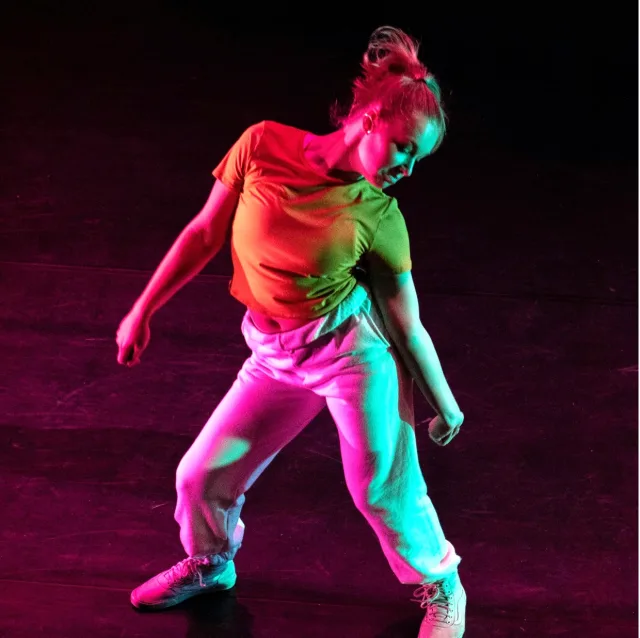
« At the end of the last school year, I had auditions for some famous dance and musical theater schools. I couldn't sleep at night anymore, had trouble concentrating during rehearsals, and above all I no longer dared to really give it my all for fear of getting hurt, fear of falling... In a few sessions, I managed to calm my stress, better manage my performance anxiety to stay focused purely on the moment... and rediscover the joy of dancing! »
Anais
More on some artistic-performance-related subjects
Find a Hypnotherapist for Artistic Performance near you
All areas
 Annie Mayrand
Gatineau - Cumberland (ON)
👤
🧑🎓
🚭
❤️
💻
Annie Mayrand
Gatineau - Cumberland (ON)
👤
🧑🎓
🚭
❤️
💻
 Christian Rocher
Beloeil
👤
🧑🎓
👶
🚭
❤️
💻
Christian Rocher
Beloeil
👤
🧑🎓
👶
🚭
❤️
💻
 David Veilleux
Montréal - Anjou
👤
🧑🎓
🚭
❤️
🤰
💻
David Veilleux
Montréal - Anjou
👤
🧑🎓
🚭
❤️
🤰
💻
 Florence Aton
Sutton
👤
🚭
❤️
💻
Florence Aton
Sutton
👤
🚭
❤️
💻
 Jessica Reid
Sherbrooke
👤
🚭
💻
Jessica Reid
Sherbrooke
👤
🚭
💻
 Julie Rocque
Montréal - Jean-Talon
👤
🧑🎓
👶
🚭
❤️
🤰
💻
Julie Rocque
Montréal - Jean-Talon
👤
🧑🎓
👶
🚭
❤️
🤰
💻
 Nuria Pérez de León
Montréal - Rosemont - Saint-Lambert
👤
🧑🎓
💻
Nuria Pérez de León
Montréal - Rosemont - Saint-Lambert
👤
🧑🎓
💻
 Romain Rastoin
Bromont
👤
🧑🎓
🚭
❤️
💻
Romain Rastoin
Bromont
👤
🧑🎓
🚭
❤️
💻
 Réjeanne LeBlanc
La Prairie
👤
🧑🎓
👶
💻
Réjeanne LeBlanc
La Prairie
👤
🧑🎓
👶
💻


Frequently asked questions about Hypnosis for Artistic Performance
No, and that is not the aim: stage fright is the fuel of stage presence, and a completely cold artist often plays flat.
The work brings activation back down into the useful zone: the racing heart becomes intensity instead of paralysis.
Our artist clients all put it the same way: "I still get stage fright, but now it works for me."
Let us be frank about it, because it is a reality of the profession: these medicines exist, and they belong exclusively to prescription and medical follow-up. We will never give an opinion on that; talk to your doctor.
What hypnosis offers is something else: an approach with no substance, working on the root (the inner tribunal, the founding scenes) and not only on the symptoms. The two are not mutually exclusive.
Yes, in two stages: taking the charge out of the incident (revisited at a distance, never relived, it stops coming on stage with you), then reinstalling confidence in your memory.
Understanding that the blank was blocked access under stress and not a failure of your memory, placing landmarks within the works, and anchoring the way back in.
Most artists then play the cursed piece again, and it is often the most moving session.
Yes, it is even a classic format: three to five sessions are enough to install the essentials (pre-audition anchor, mental rehearsal in real conditions, managing the stakes), with daily self-hypnosis practice between sessions.
Starting earlier is still ideal, but six weeks well used changes an audition.
It is one of its natural grounds: creativity and the hypnotic state are cousins, the same letting go of control, the same loosened imagination.
The work silences the censor during creation (judge later, create first), defuses what froze things (a rejection, a review, a comparison), and reopens access to flow.
A blank page is rarely a lack of ideas: it is an excess of judge.
Your stage fright does not know your status, and neither does your enjoyment: the amateur shaking at their choir concert or dance show deserves the same work as the professional, for the same reason, hours of passion spoiled by three minutes of panic.
The format is often shorter (amateur stage fright rarely has a career riding on it as well), and the result changes everything: finally playing for the pleasure you came for.
You have to sort it out: high standards (aiming high, reworking, progressing) are an engine; paralysing perfectionism (nothing is ever showable, one mistake ruins everything, the inner judge censors before the sketch) is a brake disguised as a virtue.
The work keeps the engine and disconnects the brake: high standards without the terror is where most artists make their real leap.
The root yes, the triggers no: the stage activates the gaze and irreversibility; the studio activates perfectionism (the take that is never quite good enough, the red light that freezes you) and the engineer's ear.
We adapt: stage anchors for one, the relationship with the take and with judgement for the other. Many artists work on both.
Three to six for specific stage fright or a fixed date (an audition, a concert, a tour), sometimes a little more when a founding scene or a striking incident needs defusing.
The self-hypnosis learned from the start becomes your tool in the wings. Our constant aim remains your self-sufficiency: the pre-stage ritual has to work without us.
Several of them are on it: our team includes practitioners who are professional artists themselves, and who know from experience what the wings feel like ten minutes before curtain up, what an audition panel is like, or a review that stings.
That experience changes the support: you will not have to explain what it feels like.
Going further
- Hypnosis for musicians: the article dedicated to musicians on stage.
Hypnotherapy is complementary support: persistent physical symptoms (voice, tension) are first a matter for a doctor, and any question of medication belongs to your health professionals.

Page written by Daby Touré
hypnotherapist
partner at Solutions Hypnose.
English version reviewed by David Veilleux
Updated .