
Hypnosis for Agoraphobia and Panic Attacks
You look at the queue at the till and you work it out. How many people, how long, where the exit is. Sometimes you leave the basket and walk out.
On the underground, you stay near the doors. At the cinema, you take the seat at the end of the row. On the motorway, you watch the distance to the next exit, and the bridge tightens your throat long before you reach it.
It is not the crowd that frightens you, nor open space. It is the idea of feeling unwell somewhere you could not get out of, in front of people, with nobody able to do anything. So you organise: your times, your routes, your seats. Each thing given up brings relief in the moment, and the world closes in by one notch.
You are not making too much of it, and you are not going mad. What you are reading here is common, it is well known, and it is one of the situations for which the available approaches are among the best documented.
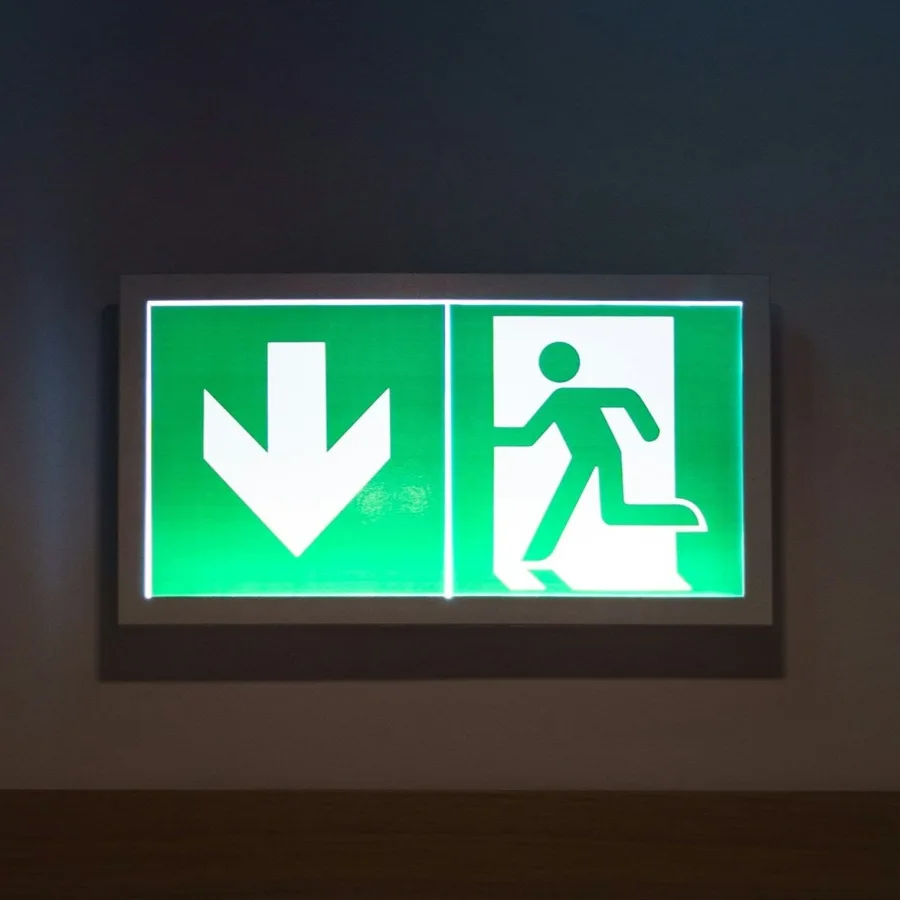

A panic attack can resemble a heart problem.
Palpitations, chest pain, shortness of breath, sweating, a sense of dying: these are the sensations of a panic attack, and they are also those of several medical emergencies.
If this is your first episode, if there is chest pain, or if anything differs from usual, call the emergency services or seek advice without delay. 911 in Quebec, 15 or 112 in France. A check-up rules out what needs ruling out, and it is reassuring once done.
Agoraphobia and panic disorder can be looked after, with approaches whose effectiveness is established. The first step is your doctor, who will guide you. Hypnosis comes alongside, never first.
What is Agoraphobia?
Let us start by undoing an idea that the etymology installed and that almost every site repeats.
Agoraphobia is not the fear of open spaces. It is the fear of being in situations that would be difficult to get out of, or in which help might not be available, should distressing sensations arise: a panic attack, but equally a faint, a fall or a digestive emergency one would dread going through in public.
This definition explains what the old one could not: why the same person dreads both a deserted bridge and a packed queue. In both cases, there is no quick way out.
The situations involved fall into five families: public transport, open spaces such as a car park or a bridge, enclosed places such as a shop or a cinema, queues and crowds, and being outside the home alone. Health professionals make this diagnosis when several conditions are met: at least two of those five families, a fear out of proportion to the actual danger, and a duration of at least six months. That assessment is theirs to make. It is not made by reading a web page, and we do not make it.
Three points that matter
- It is not a specific phobia. Current classifications make it a diagnosis in its own right, distinct from the fear of spiders or of flying: the DSM-5 separated it from panic disorder in 2013, and ICD-11 followed. The difference is not academic, it explains why the fear moves from one situation to another instead of staying attached to a single object, and why the work bears as much on the sensations of the body as on the places being avoided.
- A panic attack is not agoraphobia. It is an abrupt surge of intense fear with physical symptoms, peaking within minutes. It is far more widespread than people think: the World Health Organization's world surveys put at about one person in eight those who will have at least one in their lifetime, and fewer than one in eight of those will develop panic disorder. Having one therefore announces nothing.
- Panic disorder refers to these attacks recurring, with the constant fear of the next one. It is frequently associated with agoraphobia, though not always: roughly a quarter of people with agoraphobia also have panic disorder.
If your fear is about being stuck at the wheel, in a tunnel or a traffic jam, this page concerns you more than our page on Hypnosis for the Fear of Driving, which deals with the fear of driving itself. And if it is about enclosed places in particular, the lift, the cabin, the imaging scan, see instead Hypnosis for Claustrophobia, which deals with suffocation and confinement.
The mechanism of avoidance
This is the most useful thing to understand, because it explains why the fear grows even as you do everything to avoid meeting it.
It starts with an unpleasant experience in a given place. You avoid it the next time, and that immediate relief acts as a confirmation: the danger was real, and avoiding worked. The Government of Quebec calls this a vicious circle of fear and avoidance, because you never learn to face what frightens you. The list of places avoided lengthens, the perimeter shrinks, and the fear grows as you give way to it.
To this are added quieter moves, known as safety behaviours: staying near the exit, always carrying a bottle of water, keeping a tablet in your pocket without taking it, only going out accompanied. They bring genuine relief, and they keep the problem alive for the same reason avoidance does: they prevent you from finding out that the situation would have gone well without them.
That does not mean dropping everything at once. Recent work on exposure is nuanced: these supports can help you take the first steps, and what counts is letting go of them as you feel able to, not giving them up before you are ready.
Several conditions produce sensations close to a panic attack: heart rhythm disorders, thyroid problems, low blood sugar, asthma and other breathing disorders, anaemia, the effects of certain medications or substances, and also their abrupt withdrawal, alcohol and medicines included. These deserve to be assessed by a doctor, particularly at the first episodes.
One sign deserves particular attention: actually losing consciousness. A panic attack often gives the impression you are about to faint, but it almost never makes you fall. A genuine faint is not a panic attack and must be assessed without delay.
Any decision about your treatment belongs exclusively to the doctor who prescribed it: do not stop or change anything yourself, including if you feel better.
The impact of Agoraphobia on daily life
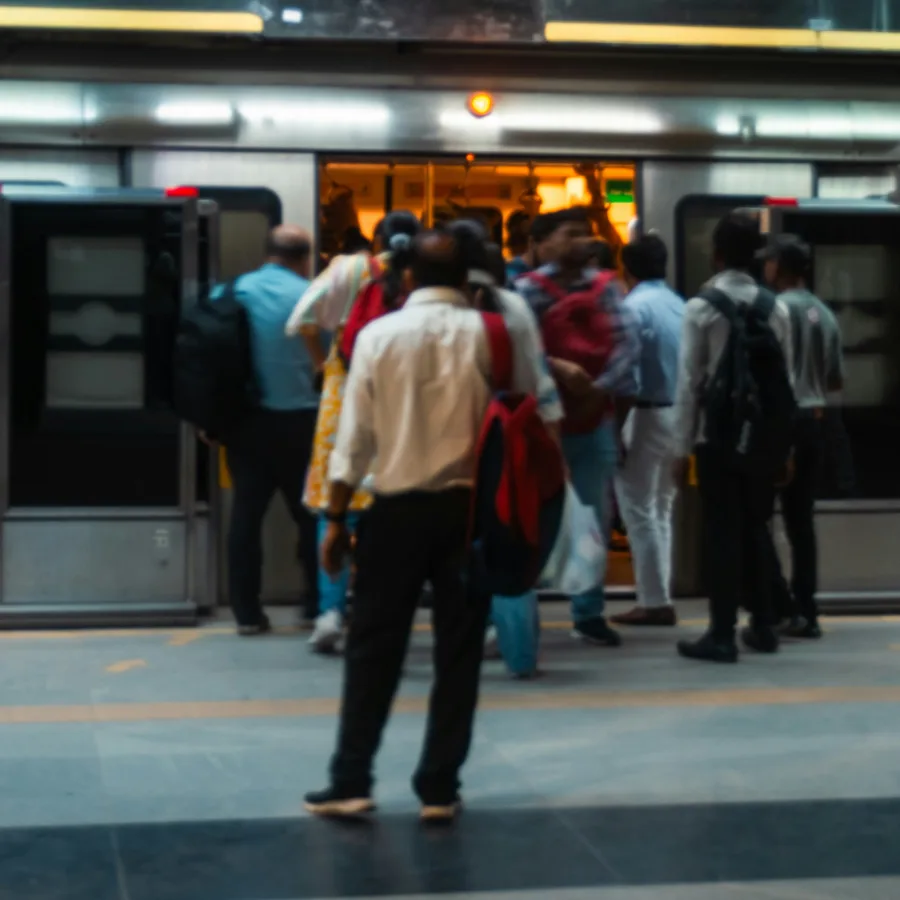
The perimeter shrinks, and that is what costs the most. First certain places, then certain times, then the distance from home. In severe forms, people no longer go out, or only accompanied. Agoraphobia affects roughly one person in sixty over a year, and it is one of the least visible difficulties from the outside: what it costs is measured in things given up, and things given up do not show. Nor does the shrinking show from the inside: each one seems reasonable at the moment you give it up.
Work is affected: travel, meetings, the lift, the canteen, sometimes the commute itself, with absences that have to be explained.
Social life closes in on what is feasible, which is less and less, and those around you grow weary or worried.
Dependence on a companion sets in, with the guilt it produces on one side and the exhaustion on the other.
And the fatigue of anticipation, constant, because the outing occupies the mind long before it happens.
Two things are worth mentioning to your doctor, and they are the ones health authorities ask them to look for as a matter of course: mood, which often suffers from the accumulation of things given up, since an estimated thirty-five to forty per cent of people living with panic disorder also go through a depression, and the use of alcohol or medication to face situations. These can be looked after, and they complicate everything if left to settle.
If a panic attack is happening now.
Stay where you are, sit down if you need to. Do not try to flee: leaving brings relief in the moment and strengthens the next attack.
Breathe slowly, more slowly than the body is asking for, until it subsides, and rest your eyes on something visible and unremarkable around you.
The most intense attacks last only a few minutes. It will be unpleasant, and it will be over.
If someone is with you, the most useful thing they can do is breathe slowly with you, at the same rhythm.
Do not breathe into a paper bag. It is an old reflex, and it is dangerous: if the episode is not a panic attack but a heart or breathing problem, it makes things worse. Slowing the breath is enough.
The recognised approaches outside Hypnosis
The point of entry is your doctor, who rules out what needs ruling out and guides you. It is also the most useful step, because this subject is one of those for which the available approaches work well.
- Cognitive behavioural therapy, at the heart of what health authorities recommend for panic disorder and agoraphobia. The British health service specifies that it is usually combined with exposure work: modest goals at the start, widened afterwards.
- Medication, where indicated, prescribed and followed by a doctor. In France as in Canada, SSRI antidepressants are the reference treatment when a medicine is indicated. It has its place, particularly in more marked forms. We set it against nothing.
- Work on breathing. Many sensations of a panic attack, tingling, light-headedness, the feeling of suffocating, come from breathing that has become too fast rather than from any danger. French guidance makes this a piece of learning in its own right, done over three or four sessions.
- Psychoeducation, which simply means understanding what happens in the body during a panic attack. This is not a detail: in the stepped-care model used by health authorities, information is the first care, before anything else, because it is enough to improve some of the less severe situations.
- Virtual reality exposure, offered by some services. The data available for agoraphobia rests on very few trials: it suggests that it does no worse than real-life exposure, without showing that it does better, and the Canadian guidelines present it as useful inside a behavioural therapy protocol, not in its place.
- Support groups and associations, which break the isolation of a difficulty very poorly understood by those around.
Hypnosis places itself alongside these approaches, supporting the exposure work and the relationship to physical sensations.
Hypnosis for Agoraphobia: aims and benefits
Let us start with what hypnosis does not do.
It is not the reference approach for agoraphobia or panic disorder, and we will not present it as such. It replaces neither medical advice, nor psychotherapy, nor treatment. It does not remove panic attacks. And it does not spare you going, step by step, into the situations you avoid.
What support aims at
- Changing the relationship to physical sensations. This is the model the recommended approaches rest on: what keeps panic going has less to do with the fast heartbeat than with the reading placed on it. Learning to let a sensation rise and fall without responding to it is the central work.
- Preparing a step of exposure by going through it mentally, in detail and at your pace, so that the first real time is not quite the first.
- Reducing anticipation, which often takes up more time and energy than the outing itself.
- Setting up a resource you can call on where you are, usable standing in a queue or sitting in a carriage.
- Easing what the fear has left on your image of yourself, after months or years of things given up. See Hypnosis for Confidence and Self-Esteem.
What we will not do: build a barrier
A word on a formulation that circulates widely, and that needs setting aside.
It is sometimes proposed to install a mental barrier between you and the situations that make you feel unsafe. It is appealing, and it is exactly the opposite of what is needed.
A barrier is one more safety behaviour. It relieves in the moment, then it becomes necessary, then its absence becomes distressing in turn. The mechanism is the same as that of the relative who accompanies you everywhere: what helps today keeps the problem alive tomorrow.
The work therefore goes the other way. Not protecting yourself from the situation, but discovering, in steps chosen with you, that the situation can be gone through and that the sensations subside on their own. It is more demanding, it is what exposure therapy does, and it is what holds over time.
A phrase from the previous version of this page says very well where this goes, and we are keeping it: you may never enjoy driving on the motorway, but you will be able to when you need to. The aim is not to enjoy, it is to be able.
What the research says
We need to be direct on this subject more than on any other, because approaches that work do exist and it would be serious to steer anyone away from them.
For panic disorder and agoraphobia, cognitive behavioural therapy has the best level of evidence among the psychological approaches. The Canadian clinical practice guidelines of 2014 rate it at the highest level of evidence. Health authorities work in steps: information and guided self-help for mild to moderate forms, then a structured therapy or medication for more marked ones.
On agoraphobia itself, the data concerning hypnosis is sparse and mixed, and it is better described than passed over. A Dutch trial in 1997 compared, in sixty-four people with agoraphobia, graded exposure alone with the same exposure accompanied by hypnosis: no additional benefit was demonstrated. A German pilot trial published in 2023 compared eight to twelve sessions of hypnotherapy with a waiting list in thirty-six people; it reports a greater improvement in the accompanied group, but on a small sample, with no comparison to a reference treatment, and its authors themselves call for confirmation. A French review in 2016 concluded that the evidence remains negative or insufficient for hypnosis in established anxiety disorders.
The broadest data is about anxiety in general, not agoraphobia: a meta-analysis published in 2019 in the *International Journal of Clinical and Experimental Hypnosis*, covering fifteen studies and seventeen trials, reports a greater reduction among people supported with hypnosis than in control groups, and better results when hypnosis accompanies other interventions rather than being used on its own.
That is the place we claim here, and it is a modest one: support within a course of care, not an alternative to it. If you have not yet seen a doctor about this difficulty, start there.
An example of support
*An illustrative example. The name is changed and the path described belongs only to the person who lived it.*

Réal lives on the island of Montreal. For several years he no longer left the city unaccompanied: the bridges and the tunnel set off a panic he dreaded for hours beforehand, to the point where he had taken to declining invitations on the far side of the river rather than having to explain why. He was under his doctor's care, which allowed us to work alongside that care. The first sessions were held by video, because travelling to a practice was precisely part of what he could not do.
The work bore on the physical sensations and on their interpretation, then on a progression he defined himself, step by step, starting with journeys that did not put him in difficulty.
> "What changed is not that I stopped feeling anything. It is that I stopped believing it was going to end badly." > Réal, name changed
He now drives off the island for some journeys, not for all, and he still prepares the longer ones. Every situation is different, and Réal's path says nothing about what you will experience.
How a Hypnosis session on this subject unfolds
The conversation. The situations you avoid, since when, what happened at the start, and what you do to cope when you cannot avoid. We will ask whether you have seen a doctor, whether a check-up has been done, and whether care is under way. If not, we will send you there: on this subject that is not a formality, it is the step that brings the most.
The aim. Framed together, as concrete steps rather than a state to reach. For example: staying in the queue right to the till on Saturday, or riding one stop on the underground.
The induction. A natural state of focused attention you already know without naming it. You stay conscious, you hear everything, you can speak and you can stop whenever you wish. On this subject in particular, the practitioner stays in spoken contact with you and you keep the lead at every moment, which matters when losing control is what you dread.
The work. It bears most often on the relationship to physical sensations, on mentally walking through the next step, and on gradually dropping one safety behaviour, chosen with you.
The return and the exercise. A conversation about what you experienced, a self-hypnosis exercise to take away, and a step to take before the next session. It is that step that does the work.
One practical point that matters here. If getting about is difficult, sessions are held by video, from your home. Many people start this way, and travelling to the practice sometimes becomes a step of the work itself. The number of sessions is settled at the first conversation.
Book an appointment
The first conversation serves to check that hypnosis is the right resource, and at the right moment, which on this subject mostly means: alongside a course of care rather than in its place. If you have not yet seen anyone about this difficulty, we will send you to your doctor before starting, and that is not politeness: it is the step that changes the most. It is also where the format gets decided, and on this subject that question is far from incidental, since coming to a practice may be exactly what you cannot do today.
By video first, wherever you are in the world, because getting about is often part of what is difficult. Here is how it works. In person afterwards, if and when that becomes possible: our practitioners see English-speaking clients in Quebec, in Montreal, Sherbrooke and Gatineau, and in France in Paris and Lille.
A question before you decide? Write to us describing your situation.
Where would you like to consult?
All areas
 Annie Mayrand
Gatineau - Cumberland (ON)
👤
🧑🎓
🚭
❤️
💻
Annie Mayrand
Gatineau - Cumberland (ON)
👤
🧑🎓
🚭
❤️
💻
 Christian Rocher
Beloeil
👤
🧑🎓
👶
🚭
❤️
💻
Christian Rocher
Beloeil
👤
🧑🎓
👶
🚭
❤️
💻
 David Veilleux
Montréal - Anjou
👤
🧑🎓
🚭
❤️
🤰
💻
David Veilleux
Montréal - Anjou
👤
🧑🎓
🚭
❤️
🤰
💻
 Florence Aton
Sutton
👤
🚭
❤️
💻
Florence Aton
Sutton
👤
🚭
❤️
💻
 Jessica Reid
Sherbrooke
👤
🚭
💻
Jessica Reid
Sherbrooke
👤
🚭
💻
 Julie Rocque
Montréal - Jean-Talon
👤
🧑🎓
👶
🚭
❤️
🤰
💻
Julie Rocque
Montréal - Jean-Talon
👤
🧑🎓
👶
🚭
❤️
🤰
💻
 Nuria Pérez de León
Montréal - Rosemont - Saint-Lambert
👤
🧑🎓
💻
Nuria Pérez de León
Montréal - Rosemont - Saint-Lambert
👤
🧑🎓
💻
 Romain Rastoin
Bromont
👤
🧑🎓
🚭
❤️
💻
Romain Rastoin
Bromont
👤
🧑🎓
🚭
❤️
💻
 Réjeanne LeBlanc
La Prairie
👤
🧑🎓
👶
💻
Réjeanne LeBlanc
La Prairie
👤
🧑🎓
👶
💻

Frequently asked questions about Hypnosis for Agoraphobia and Panic Attacks
No, and that is the most widespread received idea on this subject. It is the fear of situations that would be difficult to get out of, or in which help might not be available, should distressing sensations arise. That is why a deserted bridge and a packed queue can set off exactly the same thing.
A panic attack is not dangerous from a medical point of view. That is the wording health authorities use: it is extremely unpleasant, sometimes terrifying, it is not fatal and it passes. The most intense attacks last only a few minutes. What must be taken seriously lies elsewhere: its sensations resemble those of several medical emergencies. That is why a first episode, or any episode with chest pain, must be assessed by a doctor, not because panic would be dangerous, but to check that it is indeed panic.
The Government of Quebec sums it up this way: stay where you are, sit down if you need to, and breathe slowly until it stops. Leaving brings relief in the moment and strengthens the next attack. Rest your eyes on something visible and unremarkable around you. If someone is with you, the most useful thing they can do is breathe slowly with you, at the same rhythm. And do not breathe into a paper bag: it is an old reflex, and it is dangerous if the episode is not a panic attack.
No, and it is a particularly frequent question among people who dread precisely that. The hypnotic state is a state of focused attention, not sleep and not being placed under someone's influence. You stay conscious, you hear everything, and you keep the ability to refuse a suggestion, to speak or to stop the session at any moment. On this subject the practitioner stays in spoken contact with you from beginning to end.
Yes, and your care continues exactly as before: hypnosis as we practise it is a non-medicinal form of support that sits alongside it without interfering. Simply tell us what you are taking at the first conversation. Any decision about your treatment belongs exclusively to the doctor who prescribed it, and do not stop anything because you feel better: that is a question to take to them.
Psychotherapy is a regulated framework, practised by professionals whose title is protected. For agoraphobia and panic disorder, cognitive behavioural therapy is at the heart of what health authorities recommend, and that is what should be considered first. Hypnosis is a more circumscribed form of support, and it combines well with it.
This is common, and it is not an obstacle: sessions are held by video from your home. In several forms of support, travelling to the practice later becomes a step of the work itself, decided at the moment it becomes possible.
That is not a question for a web page to answer, and it is not one to settle on your own either. What we can say is what the recommended approaches describe: a close person's presence genuinely relieves, and in some cases it ends up being part of what makes going out impossible without them. Recent work on exposure is nuanced, and what counts is letting go of that support as you feel able to, not removing it all at once. This is something to raise with your doctor or with whoever is supporting you through this, who knows your situation, including what in your health may justify that presence.
It can come back, particularly in difficult periods, and that does not mean the work was useless. What counts is taking the steps up again quickly rather than letting avoidance settle back in. The tools you learned remain available.
The number of sessions is settled at the first conversation. On this subject it depends above all on the pace at which you take the steps between appointments, more than on the number of appointments.
Sources and references
Agoraphobia and panic disorder
- Agoraphobia. National Health Service, United Kingdom: "Many people assume agoraphobia is simply a fear of open spaces, but it's actually a more complex condition."
- Agoraphobie. Gouvernement du Québec, in French.
- Trouble panique. Gouvernement du Québec, in French: the source of what to do during a panic attack and of the vicious circle of fear and avoidance.
Management
- Canadian clinical practice guidelines for the management of anxiety, posttraumatic stress and obsessive-compulsive disorders. Katzman, M. A. et al. (2014). BMC Psychiatry, 14(Suppl 1), S1. Freely available.
- Generalised anxiety disorder and panic disorder in adults: management. NICE, guideline CG113, published in 2011 and updated in 2020. To be read knowing that NICE stated in September 2026 that an update is needed.
On hypnosis
- The Efficacy of Hypnosis as a Treatment for Anxiety: A Meta-Analysis. Valentine, K. E., Milling, L. S., Clark, L. J., & Moriarty, C. L. (2019). International Journal of Clinical and Experimental Hypnosis, 67(3), 336-363. Fifteen studies, seventeen trials, on anxiety in general.
- Hypnotherapy for agoraphobia: feasibility and efficacy investigated in a pilot study. Fuhr, K. et al. (2023). Frontiers in Psychology, 14, 1213792. Randomised pilot trial, thirty-six people, against a waiting list.
- Van Dyck, R., & Spinhoven, P. (1997). Does preference for type of treatment matter? A study of exposure in vivo with or without hypnosis in the treatment of panic disorder with agoraphobia. Behavior Modification, 21(2), 172-186 (PMID 9086865): sixty-four people, no additional benefit from hypnosis added to exposure.
- Pelissolo, A. (2016). Hypnose dans les troubles anxieux et phobiques: revue des études cliniques. La Presse Médicale, 45(3), 284-290 (PMID 26944812), in French.
If you are struggling as you read this
- Quebec: Info-Social 811, option 2 · 1 866 APPELLE (1 866 277-3553), text 535353, or suicide.ca, around the clock.
- France: 3114, the national suicide prevention line, free, around the clock, open to those close to someone too.
- Emergencies: 911 in Quebec, 15 or 112 in France, and 114 by text or video call for people who are deaf, hard of hearing or have aphasia.
And the neighbouring articles
- If the fear is about driving itself rather than about being trapped, see Hypnosis for the Fear of Driving.
- For anxiety more broadly, see Hypnosis for Stress and Anxiety.
Hypnosis as practised by the members of Solutions Hypnose is a complementary support approach. It is neither a medical act, nor a diagnosis, nor psychotherapy in the regulatory sense, and it in no way replaces a consultation, follow-up or treatment prescribed by a health professional.
Our practitioners do not assess and do not treat mental disorders or illnesses. They never ask for an ongoing treatment to be stopped or changed: that decision rests exclusively with your doctor.
No result can be guaranteed. The testimonials and examples presented on this page describe individual experiences and do not predict what you will experience.
In case of significant distress, unexplained physical symptoms or suicidal thoughts, contact a doctor, emergency services or a helpline without delay.
Page written by Annie Mayrand
hypnotherapist and NLP coach
partner at Solutions Hypnose.
English version reviewed by David Veilleux
Updated .