
Hypnosis and ADHD in Children
The school notebook. Again. The same remark as last month, worded a little differently.
Homework that was supposed to take twenty minutes and takes two hours, with two arguments along the way. The coat forgotten for the third time. The birthday invitation that never comes.
And then there is what your child tells you one evening, in the dark, and that you will not forget: that they are useless, or bad, or that they never manage anything.
It is often that sentence that leads parents to look for something else. Not the grades.


Read this before anything else. Hypnosis does not treat ADHD and does not improve your child's attention. No solid evidence supports that claim. ADHD is a neurodevelopmental disorder. Its diagnosis and care belong to qualified professionals: a paediatrician, child psychiatrist, paediatric neurologist, psychologist or neuropsychologist depending on the pathway. In Quebec, the assessment of neurodevelopmental disorders is a reserved activity. What hypnosis can accompany is what builds up around it: anxiety, sleep, self-esteem, the shame of being the one who is always being corrected. In a child, that is not a detail. It is often what will decide how school goes. A session requires the consent of a parent or holder of parental authority, as well as the child's own agreement.
What is ADHD in Children?
It is a neurodevelopmental disorder linked to how the brain works. It is the result neither of poor parenting nor of a lack of willpower.
Three presentations are distinguished: predominantly inattentive, predominantly hyperactive and impulsive, and combined.
One point to add, because it changes how you look at it: ADHD very often comes with something else. Learning disorders, anxiety, sleep problems, tics or OCD. These associated difficulties sometimes weigh more than attention itself, and they are picked up during the assessment.
Assessment comes first. Many things look like ADHD in a child: lack of sleep, an undetected sight or hearing problem, a learning disorder, anxiety, bullying, or a difficult period at home. Telling them apart requires an assessment. It takes time, it can be slow to obtain, and it is worth the wait: it determines everything that follows, including school accommodations. Start with your paediatrician or family doctor. Our hypnotherapists make no diagnosis and assess no disorder.
School, which is often the fastest lever. A diagnosis opens the way to accommodations: extra time, an adapted seat, instructions broken into steps, digital tools. In Quebec this goes through an intervention plan; in France, through a support plan or a personalised project depending on the situation. These arrangements change a child's daily life far faster than any outside support, and they are widely under-requested because families do not know they exist.
The impact on daily life
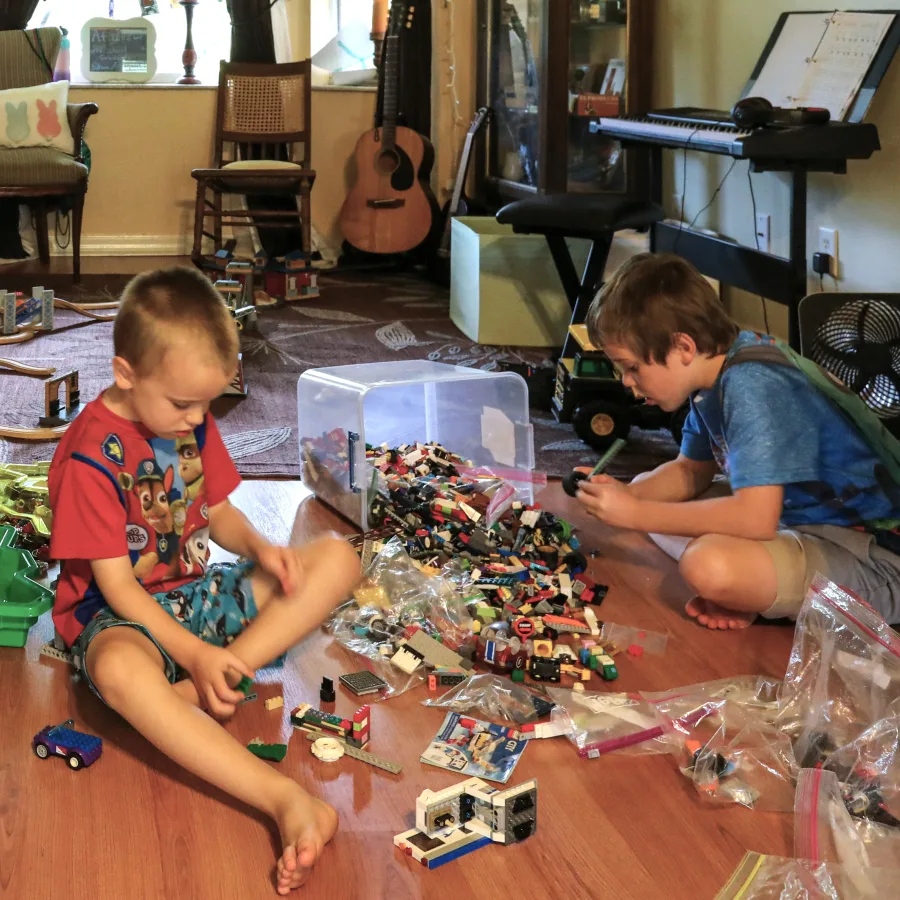
At school. Learning, yes, but above all status. A child corrected ten times a day becomes, in their own mind, the one who causes trouble, and classmates put them in the same box — which is also the ground covered by school stress. At home. Homework, mornings, transitions. Many parents describe a relationship that gradually shrinks to a string of instructions and reminders, which is exhausting for everyone. In relationships. The rules of the game, waiting your turn, misunderstandings. Invitations that grow rarer.
Sleep, very often affected, which makes everything worse from the next morning on — our page on sleep and insomnia covers it.
And self-esteem. It is the real stake of childhood, and it is what is decided fastest. A child who hears every day that they could if they wanted to ends up drawing a conclusion about themselves, and that conclusion can follow them for thirty years. Adults diagnosed late all say so. When worry dominates, see also our page on anxiety in children.
What exists, and in what order
- A diagnostic assessment, first.
- School accommodations, often the fastest lever.
- Parent training, in other words support for parents in everyday strategies. It is the best documented approach in children, and it comes first for the youngest.
- Medication if the doctor thinks it necessary, a decision that is theirs alone.
- Specialised educational support or speech therapy, when a learning disorder is associated.
- Sleep, to be addressed in its own right.
- Family associations, which inform and support.
Hypnosis adds to this list, on the emotional side.
Video available in French
Video transcript
J’imagine que si vous écoutez cette vidéo, c’est parce que vous avez un enfant diagnostiqué avec un TDAH, ou que vous êtes en contact avec un enfant concerné, et que vous cherchez à comprendre ce qu’il vit et comment l’aider. Alors cette vidéo peut certainement vous être utile. Tout d’abord, il n’est pas question ici et dans notre accompagnement en tant qu’hypnothérapeute de faire un diagnostic : il est important qu’avant de nous consulter pour accompagner votre enfant, il ait reçu une évaluation ou un diagnostic de la part d’un professionnel accrédité.
Très souvent, on définit les enfants ayant un TDAH par ce qu’ils n’arrivent pas à faire. On dit : il ne tient pas en place, il ne se concentre pas, il ne finit pas ce qu'il commence. Il oublie tout, il ne s'organise pas, il coupe la parole, il est impulsif, etc... La liste continue. Et c'est exactement là que se trouve le problème. Lorsqu'on décrit un enfant uniquement à travers ses difficultés, ce que lui retient c'est “je ne suis pas capable, je ne suis pas adapté, je ne suis pas assez.” Et à force, cela attaque l'estime de soi.
Puis viennent la frustration, la colère, la tristesse. Et en découle le stress et l'anxiété. Mais ce qu’il faut comprendre, c’est que le problème n’est ni l’enfant ni le TDAH. D’ailleurs on parle très souvent d’enfant TDAH : on associe ce trouble à l’identité de l’enfant. Définir un enfant par ce trouble est un problème en soi. C’est la raison pour laquelle je ne parle pas d’enfant TDAH mais d’enfant ayant un TDAH. Le vrai problème, c’est souvent l’incompréhension du monde autour de lui par rapport à ce trouble.
Un enfant ayant un TDAH ne fonctionne pas comme la majorité des autres enfants, et les systèmes, scolaire, social, familial, sont rarement pensés pour ce type de fonctionnement. Et quand un enfant vit dans un environnement qui ne comprend pas son mode de fonctionnement, cela crée de la tension, de l’incompréhension, de la culpabilité… des deux côtés. L’école, très souvent, demande à ces enfants de rentrer dans une case.
Mais cela ne leur correspond pas et ils n’y arrivent qu’au prix de gros efforts et cela leur est au minimum très pénible. Alors oui, ces enfants se sentent souvent inadaptés car comme ils n’arrivent pas à rentrer dans cette case, ils pensent que c’est eux le problème. Et malheureusement, beaucoup sont victimes de harcèlement, sont moqués ou exclus ou se sentent exclus. Alors comment les aider ? Le TDAH avec ou sans Impulsivité, c’est un trouble neurodéveloppemental qui affecte la manière dont le cerveau gère l’attention, l’impulsivité et parfois l’agitation, qui peut être visible extérieurement par une activité corporelle incessante ou intérieurement par une activité mentale également incessante, ou les 2.
Un enfant ayant un TDAH ne manque pas d’attention. Il a du mal à réguler son attention. Parfois il est distrait. Parfois il est en hyperfocus total. Il peut être impulsif. Il peut avoir des difficultés d’organisation, de gestion des priorités, de gestion du temps. Et il peut vivre les émotions très fort. On ne rentrera pas dans le détail des symptômes dans cette vidéo mais c’est évidemment bien plus complexe que cela.
Maintenant, comment on travaille à Solutions Hypnose avec les enfants ayant un TDAH ? Nous sommes toute une équipe d’hypnothérapeutes spécialisés dans l’accompagnement des enfants, mais bien sûr il y a différentes manières dépendamment de chacun. Personnellement, la première chose que je vais travailler ce n’est pas particulièrement la concentration. C’est l’estime de soi. Parce que si l’enfant se sent différent ou ne se sent « pas assez », aucun outil ne tiendra dans le temps.
Donc je commence par reconstruire la confiance notamment par la confirmation qu’il est correct, qu’il n’est pas le problème ! Ensuite, on s’appuie sur ce qu’il fait bien, sans le savoir. Parce qu’un enfant ayant un TDAH a des grandes forces, notamment : une énergie incroyable, une capacité d'hyper focus sur ce qui l'intéresse, une créativité souvent hors norme, une imagination visuelle débordante, une pensée globale et intuitive, une capacité d'adaptation immense.
Ces forces deviennent des leviers. Avec l’enfant, j’utilise beaucoup l’imaginaire, le jeu, les histoires, les métaphores. L’objectif est de ne pas bloquer son énergie mais de l’aider à apprendre à la canaliser. Je travaille notamment la respiration, la focalisation, la visualisation, la gestion émotionnelle et je crée des repères concrets que l'enfant peut réutiliser soit par l'imagination, soit par l'établissement de routines dans sa vie et en accord avec les parents.
Justement, le travail ne se fait pas seulement avec l’enfant. Il se fait aussi avec son entourage. Parce que très souvent, les parents ne manquent pas d’amour, mais ils manquent de clés pour comprendre et s’adapter au fonctionnement de leur enfant. Donc on travaille avec eux aussi. Parfois pour donner des clés si besoin et pour ajuster les attentes, créer des routines adaptées, et surtout sortir de la logique du « il pourrait, s’il voulait ».
Car non, ce n’est pas un problème de volonté. Quand l’entourage change son regard, le comportement de l’enfant change aussi. Et c’est souvent là que les plus grands changements arrivent. Il est aussi important de dire que les écrans et les réseaux sociaux ont un impact... négatif direct sur l’attention, la régulation émotionnelle et le besoin incessant de dopamine. Donc cela fait aussi partie de l’accompagnement de prendre conscience de cela et d’ajuster ce qui peut être ajusté.
Pour terminer, un message important : Un enfant ayant un TDAH n’est pas un problème à corriger. C’est un potentiel à comprendre, à structurer et à accompagner. Quand on travaille l’estime de soi, quand on aide l’enfant à comprendre son fonctionnement, et quand l’entourage ajuste son regard… les choses changent vraiment. Et c’est exactement ce que j’accompagne. Donc si votre enfant, ou vous d’ailleurs, avez des enjeux associés au TDAH, n’hésitez pas à me contacter ou un autre de mes collègues de Solutions Hypnose plus proche de chez vous.
Personnellement, je consulte à Montréal et par vidéo et cela nous fera plaisir de vous accompagner ainsi que votre enfant pour trouver des solutions pour vivre mieux ce que vous vivez.
Hypnotherapy is a complementary form of support and does not replace medical advice, diagnosis, or treatment. If you have any concerns about your health, please consult a physician first.
Hypnosis and ADHD in Children: what it can accompany
Why we do not offer a "concentration button"
Children are sometimes invited to imagine a concentration button they could press, or an anchor along the lines of "I am focused". The intention is good; the effect is not.
A child with ADHD does not have a willpower problem: they have a particular way their brain works. Giving them a button tells them attention is in their hands. The day they press it and it does not work — and that day comes — they draw the only conclusion possible at their age: they did not try hard enough. That adds one more failure for a child who is already collecting them.
What can usefully be worked on instead: getting back to a task after an interruption without tearing yourself apart, noticing that you have drifted off, finding calm again when frustration rises. These are not switches, they are skills, and you can fail without being at fault.
What the support can aim for
- Self-esteem. This is the main contribution. A child who regains confidence works better; the reverse is not true.
- Anxiety, very frequently associated, especially performance anxiety at school.
- Sleep, often the first change parents notice.
- Frustration and anger, by installing a pause between the trigger and the reaction.
- Shame, the shame of always being the one who gets corrected.
- Their strengths, provided you do not romanticise. ADHD is not a superpower, and presenting it that way rings false to a child who has just failed a test. On the other hand, a child who only ever hears about their difficulties needs to hear something else.
Our practitioners do not assess or treat neurodevelopmental disorders. They never ask for a treatment to be stopped, reduced or changed, and they express no opinion on any medication. No improvement at school or in behaviour can be promised.
Why children take to it easily
They live naturally in the imagination and love stories and role play. A session looks more like a story than an appointment — as described on our page on hypnosis for children.
What the research says
There is no solid evidence on hypnosis and ADHD. What is documented is its effect on anxiety: a 2019 meta-analysis bringing together fifteen studies reports a large average effect, better as a complement to other interventions than used alone. That concerns the anxious part, not the disorder.
An example of support: Nora's case
*An illustrative example, built from situations frequently encountered. It is not the testimony of a real person.*

Nora, 9, had been followed for two years, with an intervention plan at school and a treatment. What worried her parents was no longer attention: it was that she had started saying she was useless and refusing to try, because, she said, she was going to get it wrong anyway. The work did not focus on concentration. It focused on what she told herself at the precise moment she gave up, on what else she could do at that instant, and on a story she built herself in session, in which the character gets it wrong and carries on anyway.
Part of the work involved her parents, notably on what gets said after a mistake.
This example describes one possible course of support. It does not predict your child's. Pace and results vary from one child to another, and no support can guarantee a result.
How a Hypnosis session on this subject unfolds
The preliminary contact, with you. A conversation before any session to understand the situation, find out where the care pathway stands, and check that we are the right resource. Sometimes the answer is no.
Your child must be willing. It is a condition. Show them the practitioner's photo or introduction video and let them decide.
The interview, then the session. We start with the parents, then one-to-one with the child, unless they would like you there. The hypnosis part lasts between 30 and 45 minutes depending on age.
What happens in it. A story, a game, a drawing, a character. The child stays aware, hears everything, and can stop whenever they want.
The video monitor. Some practitioners offer to follow the session from the waiting room, without sound. This option exists so that you do not have to choose between your peace of mind and the privacy your child needs to talk. Ask for it.
Carrying it forward. A short exercise for the child, and a few pointers for you. On this subject, what parents change in the way they react often weighs as much as the sessions.
From what age? From 5 or 6 depending on maturity. By video, from 6, after checking with the practitioner.
How many sessions? That is discussed at the preliminary contact. We give no figure in advance.
Book an appointment
Wherever you are in the world, video consultation is possible from age 6, after checking with the practitioner. Our article on video hypnosis for children explains how it works, and here is the practical guide. In person, the practitioners who see children in English are in Quebec, in Montreal, La Prairie and Beloeil, and in France in Paris and Lille. Show your child the introduction photo or video: it is for them to decide. Describe the situation to us. Ask us your question: if an assessment, school accommodations or parent training seem more of a priority to us, we will tell you so.
Is it you who has ADHD? See our page on ADHD in adults.
Where would you like to consult?
All areas
 Annie Mayrand
Gatineau - Cumberland (ON)
👤
🧑🎓
🚭
❤️
💻
Annie Mayrand
Gatineau - Cumberland (ON)
👤
🧑🎓
🚭
❤️
💻
 Christian Rocher
Beloeil
👤
🧑🎓
👶
🚭
❤️
💻
Christian Rocher
Beloeil
👤
🧑🎓
👶
🚭
❤️
💻
 David Veilleux
Montréal - Anjou
👤
🧑🎓
🚭
❤️
🤰
💻
David Veilleux
Montréal - Anjou
👤
🧑🎓
🚭
❤️
🤰
💻
 Florence Aton
Sutton
👤
🚭
❤️
💻
Florence Aton
Sutton
👤
🚭
❤️
💻
 Jessica Reid
Sherbrooke
👤
🚭
💻
Jessica Reid
Sherbrooke
👤
🚭
💻
 Julie Rocque
Montréal - Jean-Talon
👤
🧑🎓
👶
🚭
❤️
🤰
💻
Julie Rocque
Montréal - Jean-Talon
👤
🧑🎓
👶
🚭
❤️
🤰
💻
 Nuria Pérez de León
Montréal - Rosemont - Saint-Lambert
👤
🧑🎓
💻
Nuria Pérez de León
Montréal - Rosemont - Saint-Lambert
👤
🧑🎓
💻
 Romain Rastoin
Bromont
👤
🧑🎓
🚭
❤️
💻
Romain Rastoin
Bromont
👤
🧑🎓
🚭
❤️
💻
 Réjeanne LeBlanc
La Prairie
👤
🧑🎓
👶
💻
Réjeanne LeBlanc
La Prairie
👤
🧑🎓
👶
💻


Frequently asked questions about Hypnosis and ADHD in Children
No, never. We will never ask for a treatment to be stopped, reduced or changed, and we express no opinion on any medication. That decision belongs solely to the prescribing doctor.
Not attentional capacity itself. What can be worked on is self-esteem, anxiety, sleep and frustration, which often weigh just as much on schooling.
Hypnosis is generally well tolerated by children. We prefer that wording to "no risk", which is never true of any approach. Mention any ongoing care at the first contact.
Start with your paediatrician. Lack of sleep, an undetected sight or hearing problem, a learning disorder, anxiety or bullying produce very similar signs and do not call for the same response.
From 5 or 6 depending on maturity, and from 6 by video.
Fees vary by practitioner: allow around CAD 135 or €80. Some practitioners issue receipts that private insurers or mutual insurance funds partly accept. It depends on your policy and on the practitioner's affiliation: check with your insurer.
That is common: ADHD is often associated with tics or OCD. Tell your doctor. We have pages dedicated to tics and to OCD.
One thing: what you say after a mistake. "You forgot again" and "right, where shall we put it for next time" do not produce the same child after a year.
Sources and references
In English
- Attention deficit hyperactivity disorder (ADHD) — Gouvernement du Québec
- Canadian ADHD Practice Guidelines, 4.1 edition — CADDRA, Canadian ADHD Resource Alliance
In French
- Neurodevelopmental disorder/ADHD: diagnosis and therapeutic interventions for children and adolescents — Haute Autorité de santé, in French
- Parent training — HyperSupers TDAH France, in French
The study cited on Hypnosis
- Valentine, K. E., Milling, L. S., Clark, L. J., & Moriarty, C. L. (2019). The Efficacy of Hypnosis as a Treatment for Anxiety: A Meta-Analysis. International Journal of Clinical and Experimental Hypnosis, 67(3), 336-363. doi.org/10.1080/00207144.2019.1613863 — it covers anxiety, not ADHD.
Hypnosis as practised by the members of Solutions Hypnose is a complementary support approach. It is neither a medical act, nor a diagnosis, nor psychotherapy in the regulatory sense, and it in no way replaces a consultation, follow-up or treatment prescribed by a health professional.
Our practitioners do not assess and do not treat mental disorders or illnesses. They never ask for an ongoing treatment to be stopped or changed: that decision rests exclusively with your doctor.
No result can be guaranteed. The testimonials and examples presented on this page describe individual experiences and do not predict what you will experience.
In case of significant distress, unexplained physical symptoms or suicidal thoughts, contact a doctor, emergency services or a helpline without delay.

Page written by Daby Touré
hypnotherapist
partner at Solutions Hypnose.
English version reviewed by David Veilleux
Updated .