
Hypnosis for the Fear of Spiders (Arachnophobia)
You saw it as you came in. Small, motionless, barely bigger than a coin. And the room changed nature.
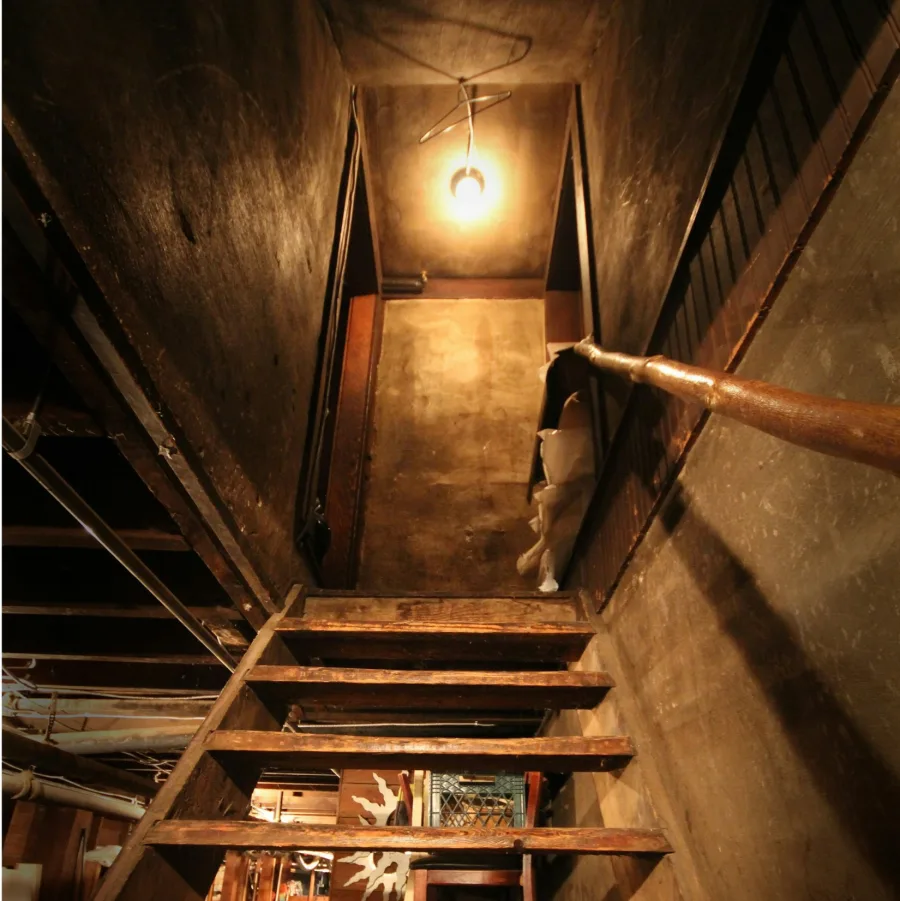
You do not take your eyes off it, because the worst would be to lose sight of it. You work out the distance to the door. You call someone, or you call nobody and shut the room for the night. Tomorrow you will check under the bed before going to sleep.
The next day, someone will tell you it is more frightened than you are. That is true, and it is of absolutely no use. You already know it is out of proportion: the part of you that knows has no authority over the part of you that reacts.

What is Arachnophobia?
Arachnophobia is an intense, persistent fear of spiders, set off by their presence or by the mere prospect of meeting one. It belongs to the family of specific fears and phobias, which are the most widespread anxiety disorders.
The distinction that matters is not how intense the fear is, it is what it costs you. Shuddering at a spider in the bath is ordinary disgust. Giving up going down to the cellar, no longer gardening, turning down a country house, sleeping elsewhere after seeing one: there, the fear is organising your life.
The Government of Quebec notes that this kind of fear frequently comes with very real physical signs, palpitations chief among them. When those go as far as an attack, that is the ground of our page on panic attacks. And the fear of spiders often sits next to the fear of insects in general.
How dangerous spiders really are
It is worth knowing, even though the information alone will not bring the fear down.
The Montreal Insectarium is clear: around 0.5% of the world's spider species are thought to be potentially dangerous to humans, and none of them is found in Quebec. It adds two things few people know. Spiders do not sting, they have no stinger: they can bite, with fangs generally too small or too fragile to pierce human skin. And when a bite does get through, it most often causes nothing more than passing pain.
In our latitudes, meeting a genuinely dangerous spider is therefore the exception. If you travel to regions where certain species are dangerous, the usual caution obviously still applies.
What we do not do. Our hypnotherapists make no diagnosis and assess no anxiety disorder. Speak to your doctor if this fear stops you occupying part of your home, if it comes with panic attacks, if it appeared after a significant event, or if it is adding to other fears that keep multiplying. And if you have been bitten and the area is not healing well, that is no longer a question of anxiety: see a doctor.
The impact of Arachnophobia on daily life
A phobia is not measured by its attacks, it is measured by the places you give up.
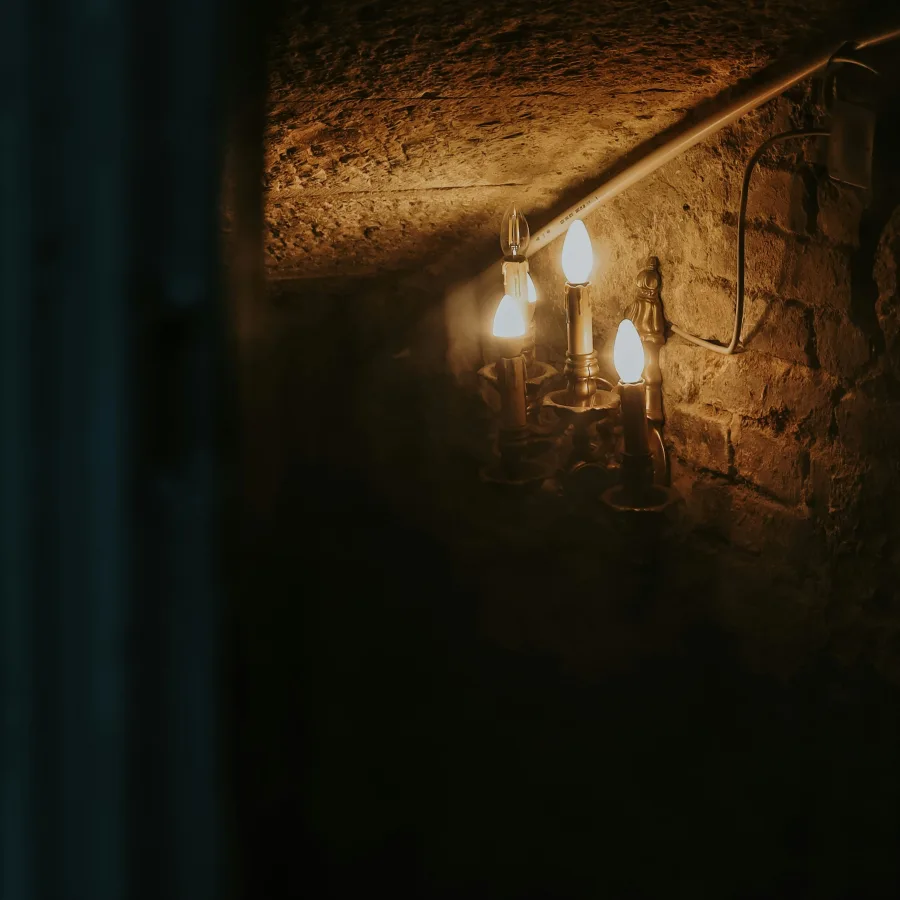
The home first. The cellar, the attic, the garage, the shed, sometimes a whole bedroom become areas you only cross with company, or no longer at all. Some people stop opening the windows in summer. Then the activities: gardening, camping, hiking, old houses, flea markets, clearing out the garage. Plans shift, holidays get chosen differently, without anyone really wanting to say why.
Then the relationship with others. You have to call someone for a gesture everyone considers trivial, and you have to put up with the smile that goes with it. Many adults describe real embarrassment on this subject, all the more so as arachnophobia is the phobia people laugh at most readily.
And finally there is what parents notice: children learn by watching. Fear transmits very well by imitation, which is often the motivation that pushes someone to deal with it after twenty years — our page on hypnosis for children sets out what can be done at that age.
Recognised approaches outside Hypnosis
On this subject in particular, we have to be honest: arachnophobia is one of the difficulties best addressed by an existing approach, and it would be dishonest not to say so.
- Exposure therapy, within CBT. It is the reference approach for specific phobias, and it obtains remarkable results, sometimes in very few sessions. If you are looking for what is best documented, that is where it is.
- Virtual reality exposure, offered in some centres, which lets you start without a real animal.
- Psychological follow-up, when the phobia is part of a wider picture.
- Breathing techniques, useful in the moment.
- Peer support groups. In Quebec, Phobies-Zéro documents anxiety disorders and runs peer support groups, in French. Its phone line is for members and open during office hours: for an urgent need, see the numbers below.
We advise you to talk to your doctor, who can guide you. Hypnosis adds itself to this list, it does not replace it.
Hypnosis for Arachnophobia: aims and benefits
It will not make you like spiders, and that is not the aim. It does not put you to sleep, does not make you lose control, and you stay conscious from beginning to end — the principle is explained on our page what is therapeutic hypnosis. It guarantees no result.
What the work aims at:
- Lowering the intensity of the reaction, so as to go from panic to manageable discomfort. That is an achievable aim, unlike total indifference.
- Working in the imagination first. That is the main advantage of hypnosis on this subject: nothing real enters the room. You can start with a tiny spider, in black and white, on a mental screen and at a distance, then adjust the size, the colour and the distance at the pace you can bear.
- Installing an anchor, a gesture or a breath associated in session with a state of calm, available at the moment you see one.
- Taking back the abandoned places, by mentally preparing the trip down to the cellar before making it for real.
- Undoing the learned rules, of the "if it disappears from view, it will drop on me" kind, which often explain why you cannot simply walk away.
Hypnosis or cognitive behavioural therapy?
That is the real question, and it deserves better than a sales answer.
Both approaches rest on the same principle: exposing yourself gradually to what you dread until the reaction diminishes. Exposure therapy is the best documented by far, and if you are ready to face images and then a real animal, that is where to go first.
Hypnosis takes the same road, but entirely inside your imagination, with images you create yourself and can soften at any moment. For some people it is the only acceptable way in, because the very idea of looking at a photograph is already unbearable. It is a difference of format, not a superiority.
What the research says
There is no solid study comparing hypnosis with classic exposure on arachnophobia. What is better documented is the effect of hypnosis on anxiety: a meta-analysis published in 2019 in the International Journal of Clinical and Experimental Hypnosis brought together fifteen studies and reports a large mean effect. The authors note that hypnosis obtained better results as a complement to other psychological interventions than when used on its own.
An example of support: Sophie's case
Sophie (name changed) had just moved into an old house with an attic.

Every trip up became an ordeal, to the point where she kept putting off sorting the boxes and asked someone to come with her to fetch an object. The work started far from the attic: an anchor of calm first, then mental images at a great distance, barely recognisable, brought closer gradually. Only then the trip up itself, prepared in imagination before being made again for real. Sophie summed up her change in her own way: she still sees them, and she now regards them as discreet tenants.
This case describes one possible course. It does not predict yours. The pace and the outcomes vary from one person to another, and no support can guarantee a result.
How a Hypnosis session on this subject unfolds
The interview. How long, in which situations, what you concretely avoid today, what sets it off most. The practitioner will also ask what you can bear: some people tolerate the word but not the image; others the reverse. That information is used directly to calibrate what follows.
Nothing will be shown to you. No photo, no video, no jar. The work happens in your imagination, with your own images, and you keep control of their intensity.
We set a concrete objective. Not "no longer being afraid", but: going down to the cellar alone again, clearing the garage this spring, sleeping at the country house without inspecting the bedroom.
The induction, then the work itself: a safe mental place, an anchor of calm, and a very gradual progression on the images. We move at the pace you can bear, and step back if it is too much.
The return and what follows. A conversation, then an exercise to practise at home. Many practitioners record part of the session. The full sequence is described on our page what to expect in a hypnosis session.
How many sessions? That is discussed at the first interview. Anyone who quotes you a figure before having met you is selling you something.
Booking an appointment
Our hypnotherapists practise in Montreal, Sherbrooke, Gatineau, Paris, Lille and by video anywhere in the world — a format that suits this subject well, since everything happens in the imagination. Hesitating? Write to us describing your situation. If exposure therapy seems better suited to you, we will say so. The first interview is there for exactly that.
Where would you like to consult?
All areas
 Annie Mayrand
Gatineau - Cumberland (ON)
👤
🧑🎓
🚭
❤️
💻
Annie Mayrand
Gatineau - Cumberland (ON)
👤
🧑🎓
🚭
❤️
💻
 Christian Rocher
Beloeil
👤
🧑🎓
👶
🚭
❤️
💻
Christian Rocher
Beloeil
👤
🧑🎓
👶
🚭
❤️
💻
 David Veilleux
Montréal - Anjou
👤
🧑🎓
🚭
❤️
🤰
💻
David Veilleux
Montréal - Anjou
👤
🧑🎓
🚭
❤️
🤰
💻
 Florence Aton
Sutton
👤
🚭
❤️
💻
Florence Aton
Sutton
👤
🚭
❤️
💻
 Jessica Reid
Sherbrooke
👤
🚭
💻
Jessica Reid
Sherbrooke
👤
🚭
💻
 Julie Rocque
Montréal - Jean-Talon
👤
🧑🎓
👶
🚭
❤️
🤰
💻
Julie Rocque
Montréal - Jean-Talon
👤
🧑🎓
👶
🚭
❤️
🤰
💻
 Nuria Pérez de León
Montréal - Rosemont - Saint-Lambert
👤
🧑🎓
💻
Nuria Pérez de León
Montréal - Rosemont - Saint-Lambert
👤
🧑🎓
💻
 Romain Rastoin
Bromont
👤
🧑🎓
🚭
❤️
💻
Romain Rastoin
Bromont
👤
🧑🎓
🚭
❤️
💻
 Réjeanne LeBlanc
La Prairie
👤
🧑🎓
👶
💻
Réjeanne LeBlanc
La Prairie
👤
🧑🎓
👶
💻


Frequently asked questions about Hypnosis for the Fear of Spiders (Arachnophobia)
No. In hypnosis, everything happens in your imagination, with images you create and that you can move away, shrink or erase at any time. Nothing real enters the room.
No, and nobody should promise you that. The aim is to make their presence bearable, not pleasant. Going from panic to a plain shrug is already a considerable change.
That is discussed at the first interview, once your situation is known. Nobody can know in advance.
It is not necessarily better. Exposure therapy is the best-documented approach for specific phobias. Hypnosis takes a similar path, entirely in the imagination, which suits people for whom real exposure is an impassable wall. Your doctor can help you choose.
No. How long a phobia has lasted does not make it a life sentence, and many people deal with it after decades, often because they do not want to pass it on to their children.
Avoid dramatising in front of them, and avoid forcing them too. Our page on hypnosis for children sets out what can be done at that age, and your paediatrician remains the first person to talk to.
That is a frequent reason for consulting, and working on it ahead of time is more comfortable than in a rush. Plan to start several weeks before you leave.
Yes. Mention it at the interview. We will never ask you to stop or change it: that decision belongs exclusively to the doctor who prescribed it.
Sources and references
In French
- Les araignées sont-elles dangereuses ? — Montreal Insectarium, Espace pour la vie
- Phobie spécifique — Government of Quebec
In English
- Arachnophobia (Fear of Spiders) — Cleveland Clinic
- Specific Phobias — Mayo Clinic
Study cited
- Valentine, K. E., Milling, L. S., Clark, L. J., & Moriarty, C. L. (2019). The Efficacy of Hypnosis as a Treatment for Anxiety: A Meta-Analysis. International Journal of Clinical and Experimental Hypnosis, 67(3), 336-363. doi.org/10.1080/00207144.2019.1613863 — on anxiety in general, not on arachnophobia.
Need to talk? In Quebec, Phobies-Zéro documents anxiety disorders and runs peer support groups, in French. Its phone line is for members and open during office hours: for an urgent need, see the numbers below. If you have been bitten and the area worries you, see a doctor without delay.
Hypnosis as practised by the members of Solutions Hypnose is a complementary support approach. It is neither a medical act, nor a diagnosis, nor psychotherapy in the regulatory sense, and it in no way replaces a consultation, follow-up or treatment prescribed by a health professional.
Our practitioners do not assess and do not treat mental disorders or illnesses. They never ask for an ongoing treatment to be stopped or changed: that decision rests exclusively with your doctor.
No result can be guaranteed. The testimonials and examples presented on this page describe individual experiences and do not predict what you will experience.
In case of significant distress, unexplained physical symptoms or suicidal thoughts, contact a doctor, emergency services or a helpline without delay.
Page written by Florence Aton
hypnotherapist and NLP coach
partner at Solutions Hypnose.
English version reviewed by David Veilleux
Updated .