
Hypnosis and Sports Performance: mind, imagery, pressure
In training, it is all there: the movement, the fitness, the split times.
In competition, something slips away: the body tightens, the movement rehearsed a thousand times jams, the head comments instead of playing.
This has an explanation, and a solution: what champions do intuitively (mental imagery, routines, managing activation) can be formalised, learned and trained.
That is the heart of mental preparation, and hypnosis is one of its most direct tools.
This guide explains how it works, for which sports, how to come back after an injury, and what it will never do in your place.


Sports performance is (almost) as much in the head as in the body
With equal fitness, the mind decides
Sports preparation long rested on three pillars: physical, technical, tactical (plus nutrition and recovery).
The fourth, the mental side, remained the poor relation, even though it is often what decides: at equivalent physical level, the athlete who handles pressure better, stays in their bubble and bounces back after a mistake wins.
That observation is no longer a changing-room intuition: the psychological dimension of performance is now recognised by sport and health institutions.
INSEP, which trains France's Olympic athletes, for instance published an interview with the national judo coach on hypnosis in training (INSEP, Réflexions Sport no. 28), and learned societies are structuring the field (Société Française de Psychologie du Sport).
Let us be clear from the outset about what this guide is not: hypnosis replaces neither training, nor the coach, nor the strength and conditioning specialist.
It improves results built by the work: it does not create them out of nothing.
Mental imagery: rehearsing the movement without moving
This is the best documented lever in mental preparation: when an athlete lives their movement mentally in a rich, sensory way (seeing it, feeling it, hearing it), the brain largely activates the same circuits as during real execution.
Rehearsing in imagination is therefore genuinely training: refining a technical movement, preparing a sequence, living the race route in advance right down to the sensations of effort.
Hypnosis multiplies that tool: the hypnotic state intensifies the sensory vividness of the imagery (the images are more "real", so the training goes deeper) and lets you build in the emotional state you want (calm, controlled aggression, confidence), so that the movement and the state arrive together on the day.
When the mind gets in the way of performance
Pressure on the day: finding your activation zone

Pre-competition nerves are not an enemy to be removed: they are energy to be dosed.
Sport psychology has formalised this for over a century with the Yerkes-Dodson curve: performance is optimal at an intermediate level of activation.
- too low and you are switched off;
- too high and you tighten up, and the movement goes out of tune.
So the whole work consists in finding and then returning at will to your zone: the one where you are switched on without being overwhelmed.
In practice:
- identifying your optimal level of activation (it differs by sport: a weightlifter and a golfer do not play in the same zone);
- anchoring it in session, making it available through a short ritual (a breath, a gesture, a word);
- then rehearsing it in imagery under the conditions of the day: the changing room, the call, the start line, the opponent's eyes.
When the day comes, your brain has already been there dozens of times: the bubble closes on command.
Bouncing back after a mistake: competitions are won there too
A competition is rarely lost on one mistake: it is lost on the three points that follow, the double-faulting player replaying the fault instead of playing the next point, the goalkeeper who concedes and "leaves the match".
The ability to wipe the slate and move on is a mental skill in its own right, and it can be trained:
- a reset protocol (a gesture, a breath, a word that closes the sequence);
- bringing attention back to the task at hand;
- and deeper work on inner dialogue: replacing the catastrophising commentator with a coach on the touchline (see Self-confidence).
Video transcript
How can hypnosis help you to be more concentrated, more efficient in learning, or also more creative? There are at least three levels of action of hypnosis to improve our intellectual or sports performance. And this is not only if you have trouble concentrating or suffer from hyperactivity. The subject of hypnosis and ADD - Attention Deficit Disorder - or ADHD - with hyperactivity - especially in children is a separate topic, which will be the subject of another video. So I come back to your initial wish to be more efficient in your studies, for an exam, or a sports competition. And on these three levels, therapeutic hypnosis is interesting: First of all, hypnosis is a state of very high internal focus.
You create your own bubble and become more focused on your goal. For instance, studies have shown faster reading and better comprehension in school children with the use of hypnosis. In fact, when I have something boring to do, for example a report to write, I put myself in self-hypnosis by mentally programming myself on a time frame: for example, in half an hour, I want to be done. And then I get into my bubble, and it works surprisingly well... Then, you can increase your motivation and your self-confidence thanks to hypnosis, especially by combining NLP techniques under hypnosis. You can make your goal more attractive, change limiting beliefs about the task at hand or about yourself. This can help you avoid procrastination or negative ideas that make you doubt your own abilities.
And also, to get you to work or train more easily and regularly. Finally, and this is particularly useful for exams or sports competitions, hypnosis can help you better manage stress and anxiety before and during the test. Too much stress makes us lose our faculties, and some students even talk about sweating, accelerated heartbeat or an empty brain.... There have been very interesting studies, since the end of the 1960's, on different methods to help students reduce their stress. Hypnosis had good results, better than the tranquilizing drugs that were tested at the time. So, if you want to improve your concentration to work more efficiently, develop your self-confidence or prepare for exams in a more serene way, try therapeutic hypnosis.
Our team of hypnotherapists at Solutions Hypnose are here to help you. Either in person, near you or on video, which also works very well. Make an appointment now to create the life you desire through hypnosis! See you soon.
Hypnotherapy is a complementary form of support and does not replace medical advice, diagnosis, or treatment. If you have any concerns about your health, please consult a physician first.
What Hypnosis offers in sports performance
Routines, sleep, motivation: the daily mental work
Performance is also built between competitions:
- Pre-performance routines: the stable sequence that puts body and head into competition mode.
- Sleep: an athlete's first legal performance aid, often sabotaged by the activation of the night before a match (see our page Sleep).
- Motivation through long preparations: sticking to a winter training plan, getting up after a poor result, holding the course when results are slow to come.
Self-hypnosis, learned from the first sessions, becomes the athlete's daily tool: portable mental preparation.
Precision, endurance, team, combat: each family of sports has its own work
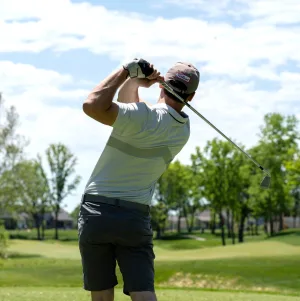
- Precision sports (golf, shooting, darts, biathlon on the range): fine management of activation, where the zone is narrow, and the movement routine. One caveat specific to these disciplines: jerks or freezes that are involuntary and occur only on one precise movement — what golfers call the yips — may be a focal dystonia, a neurological movement disorder. That is seen with a doctor, not with us. Our article dedicated to golf sets out that work and that distinction in detail.
- Endurance sports (running, cycling, swimming, triathlon): the dialogue with the discomfort of effort (without ever masking the pain of an injury), the mental management of the kilometres, the famous "wall".
- Team sports: bouncing back after a mistake under the team's eyes, holding your role under pressure, handling the bench and the quiet spells.
- Combat sports and one-on-one duels: controlled aggression, the opponent's eyes, handling defeat.
- Young athletes (sport-study programmes, early competition): the double pressure of school and sport has its own page, see Hypnosis for Teens.
Coming back after an injury: the body heals, the head has to follow
This is one of the most valuable kinds of support, and one of the most delicate.
That said, coming back from injury has a mental side that rehabilitation does not deal with: the fear of getting injured again.
It makes you play "with the handbrake on" (avoiding weight on the leg, holding back), and an athlete who protects themselves is paradoxically more exposed.
Hypnotic work rebuilds confidence in the healed limb (imagery of complete, committed movements, validated by the medical green light), defuses the film of the injury replaying on a loop, and supports the patience of rehabilitation, often the hardest test of all for a competitor.
What hypnosis will not do (and the ethical frame)
Let us set out the ethical frame:
- It will never replace training: it optimises what the work has built.
- It guarantees no result: nobody can promise a time or a victory, and anyone who does should be a warning sign.
- It does not mask the body's signals: pain and concussion are medical matters, full stop.
- It fits into the team, not against it: we are glad to work in connection with coaches and mental preparation specialists. To choose a mental preparation professional, the learned societies in the field (SFPS) keep directories of qualified practitioners.
One last point, and it matters: the mind is the only completely legal performance aid.
No anti-doping rule will ever forbid being calmer, more focused and more confident than your opponent.
What our clients say
« After an injury, I had trouble getting back into training... Loss of motivation, fear of getting hurt again, and at the same time wild ideas about international competitions. I worked on respecting my limits with a gradual training plan, letting go of my focus on titles and deadlines. In short, to rediscover my love for my daily practice. »
Julien
« Rajeanne helped us a lot, my daughter succeeded to perform on a very important final competition and got a first place, becoming a Quebec champion in Juvenile cathegory. L »
Nika, client of Réjeanne LeBlanc
« I consulted Ms. Perez De Leon for anxiety related to my preparation for the Ottawa Marathon in May 2026. Once again, her help was invaluable and allowed me to finish my training well and get excellent results in my race. I highly recommend her if you're dealing with this kind of worry. Thank you Nuria!! »
Denis, client of Nuria Perez de Leon
More on some sports-performance-related subjects
Find a Hypnotherapist for Sports Performance near you
All areas
 Annie Mayrand
Gatineau - Cumberland (ON)
👤
🧑🎓
🚭
❤️
💻
Annie Mayrand
Gatineau - Cumberland (ON)
👤
🧑🎓
🚭
❤️
💻
 Christian Rocher
Beloeil
👤
🧑🎓
👶
🚭
❤️
💻
Christian Rocher
Beloeil
👤
🧑🎓
👶
🚭
❤️
💻
 David Veilleux
Montréal - Anjou
👤
🧑🎓
🚭
❤️
🤰
💻
David Veilleux
Montréal - Anjou
👤
🧑🎓
🚭
❤️
🤰
💻
 Florence Aton
Sutton
👤
🚭
❤️
💻
Florence Aton
Sutton
👤
🚭
❤️
💻
 Jessica Reid
Sherbrooke
👤
🚭
💻
Jessica Reid
Sherbrooke
👤
🚭
💻
 Julie Rocque
Montréal - Jean-Talon
👤
🧑🎓
👶
🚭
❤️
🤰
💻
Julie Rocque
Montréal - Jean-Talon
👤
🧑🎓
👶
🚭
❤️
🤰
💻
 Nuria Pérez de León
Montréal - Rosemont - Saint-Lambert
👤
🧑🎓
💻
Nuria Pérez de León
Montréal - Rosemont - Saint-Lambert
👤
🧑🎓
💻
 Romain Rastoin
Bromont
👤
🧑🎓
🚭
❤️
💻
Romain Rastoin
Bromont
👤
🧑🎓
🚭
❤️
💻
 Réjeanne LeBlanc
La Prairie
👤
🧑🎓
👶
💻
Réjeanne LeBlanc
La Prairie
👤
🧑🎓
👶
💻


Frequently asked questions about Hypnosis for Sports Performance
Yes, mental preparation is now part of the support structure in elite sport, and hypnosis is among the recognised tools, as the publications of sport institutions and learned societies in the field show.
What has changed in recent years: these tools, long reserved for the elite, are now available at every level, from the amateur marathon runner to the young person in a sport-study programme.
Because competition adds what training does not have: the stakes.
Under pressure, your activation goes beyond your optimal zone (tension, tight movement, intrusive thoughts), and the body momentarily unlearns what it knows how to do.
It is not a lack of level, it is a dosage to find again: we identify your zone, anchor it, and rehearse the day in imagery until it becomes familiar ground.
It is one of the best established tools in mental preparation: living a movement mentally in a rich, sensory way largely activates the same brain circuits as actually performing it.
Rehearsing in imagination is genuinely training. Hypnosis multiplies the effect by intensifying the vividness of the images and building in the emotional state you want.
That is discussed at the first appointment, and it depends on what you are coming for: preparing for a set date is not the same work as installing routines and an activation zone. Nobody can say in advance.
If you have a competition coming up, give the date at the first contact: it organises everything else.
The aim is always your self-sufficiency: an equipped athlete does not need their practitioner at the side of the pitch.
Not only compatible but complementary, and we insist on it: the coach builds the performance, the mental preparation specialist structures the psychological side, hypnosis brings specific tools (intensified imagery, anchors, work on blocks).
Many of our athletes are in fact referred to us by their support staff. Tell your team: preparation works better when everyone plays from the same score.
No, and be wary of anyone who would agree to. Pain is a signal: masking it without medical assessment means risking turning a warning into a serious injury.
Our rule is absolute: any pain goes through the doctor or the physiotherapist first, and we only work on the relationship with the discomfort of effort within a medically validated frame. The same applies, without the slightest exception, to concussion: stop and follow the medical protocol.
It is in your head, and that is normal: the brain has recorded the injury and is protecting you.
The problem: an athlete who plays "with the handbrake on" (avoiding weight on the leg, holding back) is paradoxically more exposed.
Once the medical green light is given, the work rebuilds confidence in the healed limb through imagery of complete, committed movements, and defuses the film of the injury replaying on a loop.
Everyone benefits, and often faster than the elite, because there is more mental room to improve: the runner who wants to finish their half marathon without blowing up, the amateur golfer whose putting collapses the moment anyone watches, the club player who loses the matches that count.
The mechanics are the same at every level; only the stakes change.
Yes, provided the real cause is addressed: collapsing motivation often hides something else, a goal that is no longer yours, tiredness that has not been listened to, enjoyment lost from view.
The work reconnects training with pleasure and meaning (few people last months on discipline alone), installs anchors for getting started, and gives progress its visibility back.
Perfectly well: the work happens in imagery and in a state of concentration, two things that travel very well through a screen.
It is in fact the preferred format for athletes travelling or at training camps: mental preparation follows the competition calendar, wherever you are.
Hypnotherapy is complementary support: it replaces neither training, nor sports staff, nor, above all, medical follow-up. Any pain or injury is first a matter for a doctor or a physiotherapist; any concussion means stopping and following the medical protocol.

Page written by Ghislain Lepage
hypnotherapist
partner at Solutions Hypnose.
English version reviewed by David Veilleux
Published .