
Hypnosis and Pain: Hypnoanalgesia, Chronic Pain
Let us start with the rule that governs this whole guide: pain is a signal, and a signal is examined by a doctor first. Hypnosis never works on undiagnosed pain, and it replaces no treatment.
That said, pain management is the area where hypnosis has the strongest medical recognition: used in many hospitals to support painful care and some anaesthesia, studied with brain imaging, it helps people living with chronic pain regain comfort and freedom, alongside their medical follow-up.
This page explains how, for which pains, and within what limits.
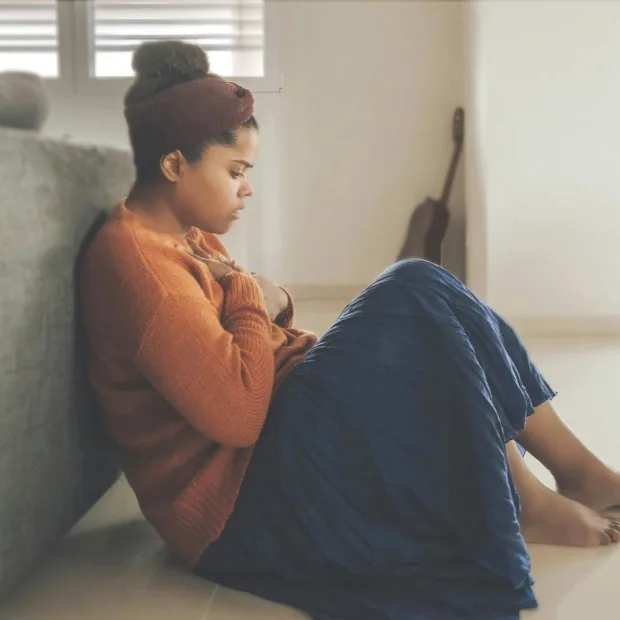

Pain: a signal to respect before modulating it
Acute pain is an ally
It signals that something is happening: an injury, an inflammation, a problem to be treated.
That is why the first step is always medical: masking pain without knowing its cause is unplugging the fire alarm because it is making noise.
A serious hypnosis practitioner will systematically ask where you are in your medical journey before any hypnotic work.
Chronic pain has changed in nature
Settled in for months or years, often despite treatment, it has lost its function as a useful signal.
The pain system has in a sense gone out of tune: it rings without announcing anything new.
That is the ground where hypnosis brings the most: when the cause is known, medically followed, and the question becomes living better with or despite the pain.
Pain is not a simple mechanical transmission
It is a construction of the brain, which integrates the physical signal but also the attention you pay it, the emotion that comes with it (fear, discouragement, anger) and the meaning you give it.
Two people with the same injury can experience very different pain.
And the same person hurts more on an anxious evening than on a holiday afternoon.
This is not "in your head" in the sense that the pain would be imaginary: it is in the brain in the sense that this is where it is made, and therefore where it can be modulated.
How Hypnosis can modulate the perception of pain
What the studies say

Brain imaging work has shown it: under hypnosis, suitable suggestions change the activity of the areas that process the intensity and the unpleasantness of pain (work by P. Rainville et al.).
In practice, hypnotic work acts on three levers
- Attention: pain shrinks when it stops occupying the whole mental screen, through distancing, displacement, transforming the sensations…
- Emotion: fear and discouragement physiologically amplify pain. Settling them reduces the overall suffering, sometimes spectacularly.
- Tension: pain makes you tense up, and tensing up feeds the pain. Deep relaxation helps break that circle.
Hypnoanalgesia in hospitals: an established medical use
This is the most telling fact in the field: hypnosis is used today in many health facilities to support painful care (dressings, punctures), dental care, and even for some surgical procedures carried out under hypnosedation, combining hypnosis with lightened local anaesthesia.
Care teams train in hypnoanalgesia, and specialist pain clinics include it in their approaches.
That recognition does not make hypnosis a miracle treatment; it simply establishes that hypnotic modulation of pain is a real phenomenon, documented and used by medicine itself.
Our hypnosis practice works in the same spirit, at its own level. We do not perform medical procedures; we teach people who are under medical follow-up the tools that improve their day-to-day comfort.
The pain-stress-tension circle: the main ground to work on
Chronic pain almost always installs the same gearing:
- Pain generates stress and apprehension ("when is it going to start again?").
- Stress contracts the muscles and puts the nervous system on alert.
- Tension and hypervigilance amplify the perception of pain.
- Amplified pain generates more stress…
Degraded sleep often gets added to this, lowering the tolerance threshold, along with a morale that wears down, which amplifies the experience of pain further.
Video available in French
Video transcript
Bonjour. Mon nom est Christian Rocher. Je suis coach en programmation neuro linguistique et hypnothérapeute. Aujourd'hui je vais vous parler de la douleur. Qu'est ce que la douleur ? Eh bien la douleur simplement - c'est paradoxal à dire - est un signal qui vient du corps qui se rend au cerveau pour nous informer d'une situation problématique pour laquelle il veut que nous prenions action. Ca veut dire quoi ? Si je mets ma main au feu, je vais être informé que ça brûle, je vais enlever ma main : j'ai pris action.
Et ça ça me permet d'assurer ma survie et mon bien-être. Alors évidemment la douleur a plusieurs sources : ça peut être une maladie, une blessure, ou somatique. Alors somatique qu'est ce que ça veut dire ? Ca veut dire que je fais face à une situation problématique difficile et que je ne suis pas en mesure de la résoudre volontairement ou involontairement pour toutes sortes de bonnes raisons et que mon signal va partir pour me dire "fais quelque chose et résout ce problème là".
Et comme je ne l'écoute pas, le signal va augmenter, la douleur va commencer à apparaître, et moins je l'écoute, plus le signal va augmenter et plus la douleur va être forte. Alors vous avez plein de gens qui vont vous raconter qu'ils savent pas pourquoi ils ont mal au dos, pourquoi ils ont mal à l'épaule ou à la jambe... Puis ils partent en vacances ils n'ont plus mal... intéressant ! Ou toutes sortes de situations de ce genre là.
Ce que ça veut dire, c'est que selon la source du problème on va dire il y a plusieurs façons d'aborder la solution. Si vous y pensez un instant on fait aujourd'hui des opérations à cœur ouvert et des opérations du cerveau avec anesthésie par hypnose pratiquement uniquement, peu ou pas de chimie pour le faire. Les dentistes ici, certains travaillent déjà avec des anesthésies par hypnose. C'est une très belle preuve que ça marche très bien par exemple l'hypnose ou de l'autohypnose pour la gestion de la douleur.
Alors quand les gens viennent dans mon cabinet parce que moi je fais de l'hypno-antalgie donc de l'hypnose pour la douleur pour mieux apprendre à gérer leur douleur, il va y avoir deux situations : 1 - Vous avez une maladie, une blessure, une condition médicale je dirais connue, surveillée et c'est clair pour vous parce que vous savez votre médecin, votre spécialiste vous l'a dit, vous en avez discuté que à part prendre des pilules pour la douleur, il n'y a rien que vous puissiez faire d'autre à cette étape-ci.
Donc ça c'est connu, c'est contrôlé. A ce moment-là vous entrez dans mon bureau vous arrivez avec ça, je vais vous enseigner les techniques de gestion de la douleur. Je vais aussi vous enseigner à être responsable de la douleur. Qu'est ce que ça veut dire être responsable de la douleur ? C'est que vous ne pouvez pas juste gérer la douleur et réduire l'amplitude du signal de douleur. Il faut aussi être attentif à ce qui se passe.
Par exemple si vous avez mal au ventre et que vous ignorez cette douleur là en utilisant trop facilement les techniques que je vous enseigne, vous pourriez passer d'une appendicite à une péritonite sans vous en rendre compte. Parce que vous avez ignoré le signal. Donc non seulement vous allez apprendre des techniques, mais vous allez apprendre être responsable de votre douleur. Parce que si elle n'est pas pour disparaître, vous êtes mieux d'en être responsables et de vous assurer que tout va bien.
Et qu'au besoin vous retourniez consulter si la situation se dégrade. Pour ne pas aller dans une situation pire. 2 - Maintenant si vous m'arrivez et vous ne savez pas pourquoi vous avez mal. Et que votre médecin non plus ne le sait pas. Parce que si vous n'avez pas vérifié avec votre médecin que vous sachiez pas c'est probablement normal. Si lui ne le sait pas, à ce moment là on est dans une autre situation. C'est que c'est probablement une somatisation.
Ce que ça veut dire encore une fois, somatisation c'est que vous faites face à une situation que vous avez de la difficulté à gérer consciemment ou inconsciemment et que votre système vous envoie ce message pour dire : "prends action, résous le problème". Alors à ce moment là on va prendre un chemin différent. On va s'asseoir ensemble, on va regarder vos enjeux, vos objectifs et ensemble définir une stratégie pour vous permettre d'atteindre ces objectifs là.
Quels qu'ils soient. Et s'ils ne sont pas réalistes tels quels, trouver une façon de faire des objectifs réalistes parce qu'à partir du moment ou vous allez atteindre cet objectif là et résoudre l'enjeu qui vous empêche d'atteindre cet objectif là et bien là douleur va d'elle-même disparaître puisque vous aurez pris action et réglé la situation. Donc c'est bien important de comprendre la distinction entre les deux : - dans un cas c'est vraiment une situation médicale connue une source d'information référée - dans l'autre cas on sait pas ce qui se passe, il y a aucun examen, il y a aucun test qui nous dit qu'est ce qui se passe.
Le médecin lui même ou le spécialiste ne peut pas vous dire ce qui se passe et à ce moment là ça peut être très intéressant d'investiguer ce qui se passe dans votre vie, quels sont vos enjeux. Pour voir comment vous pourriez transcender ca et aller à une autre étape qui en même temps va vous permettre de faire du ménage dans cette douleur là puisque le signal n'aura plus de raison d'être. La situation sera réglée. Alors j'espère que ça vous a éclairé.
Si jamais vous avez des questions, juste nous laisser savoir. Si vous êtes intéressé à apprendre à gérer la douleur par vous même plutôt qu'avec des pilules. Rappelez-vous : si j'ai pas mon flacon de pilules, je suis mal pris alors que mon auto hypnose, la cohérence cardiaque, tous ces outils là je peux les faire n'importe où, n'importe quand, je n'ai besoin de rien pour le faire. Donc c'est naturel, c'est toujours disponible pour vous et ça a l'avantage que ça vous permet de gérer les crises de douleurs, d'atténuer des douleurs sur des périodes de temps pour mieux vivre, avoir une meilleure qualité de vie.
Alors n'hésitez pas à nous contacter et surtout si vous contactez un spécialiste, vérifiez que cette personne là a une expertise en gestion de la douleur. Moi j'ai une formation en hypno-antalgie par exemple en plus de ma formation en hypnose et la raison est simple c'est que la gestion de la douleur il faut la comprendre, il faut l'apporter de la bonne façon, il faut responsabiliser les personnes encore une fois c'est très important et surtout on s'en sert pas à tort et à travers.
Alors j'espère que ça vous a donné de l'information utile. Il existe aussi si vous cherchez sur internet une organisation qui parle des douleurs chroniques avec des références justement de cohérence cardiaque, méditation et autres qui pourrait être un point de départ si ça vous intéresse. Je vous invite à aller la consulter. Là dessus je vous souhaite une bonne journée. Prenez soin de vous.
Hypnotherapy is a complementary form of support and does not replace medical advice, diagnosis, or treatment. If you have any concerns about your health, please consult a physician first.
What Hypnosis offers in Pain Management
The situations we support most often
Hypnotic support works on every link: deep relaxation that can be anchored, defusing the apprehension of flare-ups, restoring sleep (see our page Sleep), and supporting morale.
Without touching the medical cause, which remains your doctor's business, the whole experience of the pain often changes.
- Migraine and headaches. Alongside medical follow-up, hypnosis helps with managing attacks (with self-hypnosis tools from the first warning signs), working on stress-related triggers and reducing the apprehension between attacks, which is sometimes as exhausting as the attacks themselves.
- Fibromyalgia and widespread pain. Real pain, often misunderstood for a long time: acknowledging the experience is part of the support. The work is on the pain-tension-exhaustion circle, on sleep, and on gradually winning back activities.
- Back pain and chronic musculoskeletal pain. After assessment and alongside care (physiotherapy, treatment), hypnosis helps with deep muscular relaxation and with defusing the fear of movement that freezes the body and often keeps the pain going.
- Irritable bowel and functional digestive pain. An area where the brain-gut axis makes hypnosis particularly relevant, alongside gastroenterological follow-up.
- Endometriosis and gynaecological pain. Alongside the medical journey, hypnosis support can help with flare-ups, with the emotional experience of a condition long dismissed, and with the fatigue of cyclical pain.
- Living with illness and its treatments. Hypnosis and self-hypnosis help you get through dreaded tests, difficult care and some side effects, and manage the stress of the diagnosis and the limitations. So that the energy you have goes where it counts.
- Fear of medical care. The dentist, blood tests, examinations: when fear delays care, it becomes a health problem in itself (see our page Fears & Phobias).
Video transcript
Bonjour, je m'appelle Laurence de Québec. Dans le fond j'avais une problématique à l'œil. J'avais une micro lésion sur la rétine et puis je devais faire une intervention pour y remédier. Par contre lorsque je suis allée pour faire l'intervention au laser j'étais en état de panique. C'était du aux complications que j'avais eues dans le passé suite à une intervention au laser que j'ai dû faire pour corriger ma vue, ma myopie donc je pensais pas que ça avait fait des ravages et j'avais une certaine appréhension à me refaire jouer dans les yeux Donc là de ravoir à faire une intervention au laser j'étais vraiment très inconfortable puis en panique donc j'ai pas pu le faire et puis suite à cette réaction là qui était démesurée pour l'intervention que j'avais à faire, j'ai pensé à l'hypnose parce que je sais que l'hypnose ça permet de changer les perceptions qu'on peut avoir justement face à des situations inconfortables ou on est en état de panique.
Donc j'ai été sur internet et j'ai trouvé madame Guillemettte Moreau que j'ai rencontrée à deux reprises dans le fond la première fois j'étais quand même très émotive puisque on revivait à travers la séance d'hypnothérapie je revivais les émotions que j'avais eues lors des complications suite à ma chirurgie au laser donc j'étais très émotive et puis j'avais peut-être un peu plus de difficulté à contrôler ma respiration par contre dès la fin de la première séance je sentais déjà que j'étais plus en contrôle et puis j'avais des exercices que je pouvais faire par la suite chez moi - puis ensuite j'ai tenu à faire une 2ème séance pour m'assurer que je mettais toutes les chances de mon côté à garder mon contrôle et ma respiration puis dès la deuxième séance je voyais vraiment le progrès que j'avais fait.
J'étais beaucoup plus calme, j'étais vraiment en contrôle de ma respiration pendant toute l'intervention puis Madame Moreau m'a fait des enregistrements aussi que j'ai pu par la suite réécouter donc pour renforcer mon ancrage et puis j'ai pu réécouter cet enregistrement dans la salle d'attente. Pendant l'intervention aussi donc vraiment j'ai vu le progrès que j'avais fait, j'ai réussi à faire l'intervention. C'est sûr qu'on a pris des pauses parce que j'avais de la photosensibilité mais je conservais vraiment mon calme et j'étais en contrôle et par rapport à ma respiration pendant toute l'intervention.
Donc vraiment j'étais fière de moi quand j'ai réussi à le faire. C'est pas une très longue intervention mais quand même il faut être capable de passer au travers. Donc là je vois que j'ai vraiment je pense toutes les ressources pour refaire ce genre d'intervention là si cela se reproduit dans le futur. Les enregistrements, vous les avez donc écoutés dans la salle d'attente et puis il y en avait un différend aussi pendant l'intervention vous avez pu changer ?
Oui dans le fond même le soir dans l'intervention et avant de me coucher j'ai réécouté les deux enregistrements et puis aussi pendant que j'étais dans la salle d'attente parce qu'il y avait quand même plusieurs longues minutes d'attente entre certaines étapes avant d'arriver à faire l'intervention. Donc j'ai peut-être été là pendant une heure environ donc j'écoutais les enregistrements, parfois je changeais pour de la musique calme comme on s'était parlé et puis j'ai dit au médecin que je souhaitais conserver mes écouteurs pendant la séance.
Il n'a pas posé de questions. Je disais que j'avais besoin d'écouter quelque chose donc moi je savais que j'avais la voix de Madame Guillemette pour me garder dans le calme puis vraiment ça fait toute la différence parce que je me concentrais là dessus et sur ma respiration donc je n'avais pas à focuser sur autre chose. Merci pour ce témoignage parce que ça peut être utile à beaucoup de gens. J'ai des gens qui ont des peurs par rapport aux examens médicaux, par rapport à des interventions chirurgicales par rapport à des piqûres aussi et le fait de travailler en visualisation puis en travail sur la respiration ça aide beaucoup pour rester calme, détendu, détaché en fait de ce qui se passe.
Donc oui l'hypnose cela peut être un bel outil.
Hypnotherapy is a complementary form of support and does not replace medical advice, diagnosis, or treatment. If you have any concerns about your health, please consult a physician first.
Self-hypnosis: your daily tool
With chronic pain, most of it happens between sessions.
That is why learning self-hypnosis is at the heart of the support. You leave with concrete tools: quick relaxation, a technique for distancing or transforming the sensation, managing peaks… To use at home, at work, during a procedure.
The aim is a transfer of skill: that you become, day to day, your own practitioner. It is also what separates serious support from a dependency on endless sessions.
Painkillers and treatments: the absolute rule
Never change your painkillers or any other treatment on your own initiative, even if you feel better.
If hypnotic support improves your comfort to the point of considering a reduction, that is excellent news… to be discussed with your doctor, who alone decides and organises the adjustment.
That collaboration works very well: many doctors welcome a patient who equips themselves, as long as everyone stays in their own lane.
What our clients say

« Hello, I really enjoyed my experience with Christian. I admit I was quite skeptical. At the very start of the session, my pain was rated 6-7/10 and by the end, my pain was down to 3/10. I was truly more than satisfied. I even talked about my experience with my psychoneurologist at the Pain Clinic at CHUS in Sherbrooke. Whenever I'm not feeling well, I won't hesitate for a minute to reach out to Christian again. Also, the summary of the methods he sent by email was truly appreciated. Many thanks, Nadia Girouard Victoriaville, Quebec. »
Nadia, client of Christian Rocher
« I would like to highly recommend the services of Daby Toure who is treating my husband for chronic pain and anxiety. His gentle approach and capacity to quickly establish a trusting relationship is quite remarkable. During his second session my husband was able to relax and considerably reduce his pain. »
Louise, client of Daby Touré
More on some pain-management-related subjects
Find Hypnosis for Pain Management near you
All areas
 Annie Mayrand
Gatineau - Cumberland (ON)
👤
🧑🎓
🚭
❤️
💻
Annie Mayrand
Gatineau - Cumberland (ON)
👤
🧑🎓
🚭
❤️
💻
 Christian Rocher
Beloeil
👤
🧑🎓
👶
🚭
❤️
💻
Christian Rocher
Beloeil
👤
🧑🎓
👶
🚭
❤️
💻
 David Veilleux
Montréal - Anjou
👤
🧑🎓
🚭
❤️
🤰
💻
David Veilleux
Montréal - Anjou
👤
🧑🎓
🚭
❤️
🤰
💻
 Florence Aton
Sutton
👤
🚭
❤️
💻
Florence Aton
Sutton
👤
🚭
❤️
💻
 Jessica Reid
Sherbrooke
👤
🚭
💻
Jessica Reid
Sherbrooke
👤
🚭
💻
 Julie Rocque
Montréal - Jean-Talon
👤
🧑🎓
👶
🚭
❤️
🤰
💻
Julie Rocque
Montréal - Jean-Talon
👤
🧑🎓
👶
🚭
❤️
🤰
💻
 Nuria Pérez de León
Montréal - Rosemont - Saint-Lambert
👤
🧑🎓
💻
Nuria Pérez de León
Montréal - Rosemont - Saint-Lambert
👤
🧑🎓
💻
 Romain Rastoin
Bromont
👤
🧑🎓
🚭
❤️
💻
Romain Rastoin
Bromont
👤
🧑🎓
🚭
❤️
💻
 Réjeanne LeBlanc
La Prairie
👤
🧑🎓
👶
💻
Réjeanne LeBlanc
La Prairie
👤
🧑🎓
👶
💻


Frequently asked questions about Hypnosis for Pain Management
Yes, it is one of the best established uses of hypnosis.
Hypnoanalgesia is used in many hospitals to support painful care and some procedures, and brain imaging shows that hypnotic suggestions genuinely change the activity of the areas that process pain.
That recognition does not replace your medical follow-up: it simply confirms that modulating pain through hypnosis is a real phenomenon.
Nobody can promise you that, and be wary of anyone who does.
What the support realistically aims at: reducing the perceived intensity and the invasiveness of the pain, defusing the pain-stress-tension circle, improving sleep and giving back some room to live.
For many people that change in experience is major, even when the medical cause remains.
No, and that is to protect you.
Pain is a signal that must be examined medically first: masking it without a diagnosis could delay finding a problem that can be treated.
See your doctor first; we will gladly step in afterwards, alongside. Any practitioner willing to work on unexplored pain should be a warning sign.
It is possible, and many people we support talk to their doctor about it after a few weeks, but the decision and the timing belong exclusively to your prescriber.
Never change a treatment on your own initiative, even if you feel clearly better: some adjustments need precise supervision.
Our role: improving your comfort.
For chronic pain, generally count on three to six sessions, with a significant part devoted to learning self-hypnosis. Because most of it happens day to day, between sessions.
To prepare for a specific dreaded procedure (dental, a test), one to three sessions are often enough. Results vary from person to person; self-sufficiency is always the aim.
Hypnosis does not treat fibromyalgia, and no well-being support does.
But it helps many people living with it to loosen the pain-tension-exhaustion circle, to find sleep again and to win back activities, alongside medical follow-up.
Acknowledging the experience, for pain long misunderstood, is also part of the work.
Yes, but only alongside medical follow-up (diagnosis and preventive treatment remain the business of your doctor or neurologist). The work covers three levels: self-hypnosis tools to call on from the first warning signs, reducing stress-related triggers, and settling the apprehension between attacks.
No, and that confusion does a great deal of harm.
Your pain is real: it is simply that all pain is constructed in the brain, which integrates the body's signal, attention, emotion and context.
That is exactly what makes it modulable: acting on attention and emotion changes the experience of pain, without calling into question for a second the reality of what you feel.
Yes, and it is the heart of our support: concrete techniques (quick relaxation, distancing or transforming the sensation, managing peaks…) that you practise first in session, then at home.
The aim is the transfer of skill: that you become self-sufficient day to day, with sessions serving to install and refine your tools.
Yes, alongside the care team and with their agreement.
Managing the stress of tests and of news, getting through difficult care, easing the experience of some side effects, protecting sleep and morale. The aim is simple: that your energy goes where it counts, into your treatment, rather than into apprehension.
Hypnotherapy is complementary support: it replaces neither a diagnosis, nor a treatment, nor medical follow-up. Always see a doctor for any pain, and never change a treatment without their advice.
Page written by Christian Rocher
hypnotherapist and NLP coach
partner at Solutions Hypnose.
English version reviewed by David Veilleux
Updated .