
Hypnosis for Anger in Children
Six thirty in the evening. It was the wrong plate, or the zip that jammed, or simply the hour.
And there it is: the shouting, the body on the floor, something thrown. You try to speak, he hears nothing. You try to hold him, he struggles. Fifteen minutes later he is crying in your arms without knowing why, and you are drained.
What weighs is not only the crisis. It is what it leaves behind. The shame in the supermarket, under other people's eyes. Your mother-in-law's remark. The guilt of having shouted louder than he did. And that question that comes back in the evening: am I doing this wrong.
No. A child who loses his temper is not a badly brought-up child, and you are not a bad parent. It is one of the most widely shared situations in family life, and one of the least honestly discussed.


First, three markers.
Tantrums in young children are normal. A study of nearly 1,500 preschoolers found that 84% of them have tantrums. A child of that age does not yet have the means to regulate what they feel.
Talk to your doctor or paediatrician if the outbursts are very frequent or very violent, if they appear suddenly in a child who was fine, if they also happen at school, if your child hurts themselves or others, or if you are worried. Anger is often a signal, and it is better to look for what it signals. In Quebec, a priority line exists for parents of children aged 0 to 17: 811, option 1, available day and night.
If a child is in danger or confides in you: in Quebec, the Director of Youth Protection for your region, reachable 24 hours a day, 7 days a week, and 911 in an emergency. In France, 119, Allô enfance en danger, free and open day and night. In the United Kingdom, the NSPCC helpline and, in an emergency, 999.
A child's anger: what is normal and what is less so
Anger is a useful emotion. It signals that a need is unmet, that a limit has been crossed, or that someone is overwhelmed. In a child it also has a learning function: it is by going through it, accompanied, that they gradually learn to do otherwise.
Why does a young child find it so hard? Because the ability to regulate emotions is not innate: it is built slowly, throughout childhood and adolescence, and the brain regions that support it go on maturing into early adulthood. A four-year-old feels as intensely as an adult, with far fewer means of bringing the wave down and far fewer words to name it. It is not a character flaw, it is a tool still being made.
That is also why the crises cluster at the end of the day: tiredness, hunger and accumulation reduce what little regulation is available.
The most useful marker is not age, it is the quality of the crisis
You read everywhere that tantrums are normal "between two and five". That is true, and it is not the most useful marker, because it says nothing to a parent whose child is six.
The most precise study on the subject, of nearly 1,500 preschoolers, gives a far more telling benchmark. Around 84% of children have tantrums sometimes, but only 9% have them every day. And above all, what separates the ordinary from the concerning is not frequency: it is tantrums that are unpredictable, very long, or destructive. Anger that flares for a reason you can understand, and that ends, belongs to development. Anger that erupts for no graspable reason, that lasts a very long time or that breaks things is the kind to talk about.
What belongs to ordinary development:
- Tantrums in the young child, often over things that seem tiny, which space out with age.
- End-of-day outbursts, on returning from nursery or school.
- A passing regression after a change: moving house, a new baby, starting school, a separation.
What deserves a closer look:
- Outbursts that worsen instead of spacing out with age.
- Outbursts appearing suddenly in a child who was fine.
- A child who hurts themselves, injures others, or breaks things regularly.
- Outbursts at school as much as at home.
- Sadness, withdrawal, sleep problems or stomach aches on top.
A useful correction: the three-brain model
Much parenting content, and the earlier version of this page, explains a child's anger through the "reptilian brain", the "limbic brain" and the "neocortex". This model, known as the triune brain, does not match what is known today.
Let us be precise, because the nuance matters. The structures do exist, and the man who named them was a genuine researcher. What is false is the stacking: the brain was not built as three layers added one on top of another over evolution. All vertebrates have the same major brain regions, including an equivalent of the cortex, and even the prefrontal cortex is in no way a human exclusivity. What is also false is the division of labour: no zone is the seat of emotion while another is the seat of reason. Emotion and thought work together.
If this model survives, it is because it fits lived experience: we really do sometimes feel overwhelmed by an emotion we cannot control. That experience is real. Its explanation is not, and the accurate explanation is just as reassuring: regulation is a long apprenticeship, not a missing floor of the brain.
Anger is often a signal
This is the most useful part of this page. Before trying to bring the anger down, it is worth looking for what it is saying. Several avenues deserve examination, often the simplest first. None of them ranks by frequency, and nobody can say which one concerns your child.
Sleep. An experiment restricting naps in very young children measured, after a single shortened night, a 34% drop in positive responses and a 31% rise in negative ones. The sample is small, ten children, but the link is direct and easy to test at home. See Hypnosis for Sleep and Insomnia.
Screens, with one honest caveat: very large follow-up studies do find a link with behavioural difficulties, but it is small, and it runs both ways. A child in emotional difficulty uses more screens, as much as the reverse. It is not the miracle cause it is sometimes presented as.
Language difficulties. This is the best-documented avenue on the whole list: a meta-analysis of more than 63,000 children finds that those with a language disorder show more behavioural difficulties than others, with a moderate-sized gap, and that gap grows with age. It is an association, not a demonstrated cause, and it is for the doctor to judge whether an assessment is warranted.
School or learning difficulties, including undetected dyslexia or attention difficulties: a child who cannot manage and cannot say so often ends up showing it another way. Bullying produces exactly the same picture, with anger exploding at home, the only safe place.
Events in family life: a separation, a bereavement, a birth, a relative's illness, a house move. See Hypnosis for Sadness, Separation and Grief.
And certain developmental particularities, including attention difficulties and autistic profiles, which frequently show up as emotional overflow. They call for specialist assessment, and spotting them early changes a great deal.
The wider subject of supporting children is covered on Hypnosis for Children. For adults, see Hypnosis for Anger.
See your doctor or paediatrician if any of the signs listed above are present. They can rule out what is treated differently, in particular a sleep disorder, chronic pain, a learning difficulty or a neurodevelopmental condition, and refer you to a psychologist if they judge it necessary. Hypnosis replaces none of these assessments and must never delay them.
If your child talks about dying, hurts themselves deliberately, or if you are yourself at the end of your tether to the point of fearing your own reactions, call the numbers at the top of this page without waiting. Being at the end of your tether does not make you a bad parent, and asking for help is exactly the right decision.
The impact of outbursts on the family

The household organises itself around the crises. You anticipate, you work around, you sometimes give in for peace, and you blame yourself for giving in. Parents wear themselves out, and often end up disagreeing on what to do, which adds a couple's tension to the parenting one. Siblings absorb it, caught between the attention taken up by one child and the fear of outbursts, and a brother or sister may become very quiet so as not to add to it.
The child themselves suffers, and that is what is forgotten most easily. After the crisis they often feel ashamed, without being able to explain what happened to them. Many children say they could not manage to stop, which is literally true.
Other people's eyes complete the picture, between unasked-for advice and remarks at the school gate.
Recognised approaches other than Hypnosis
The entry point is your doctor or paediatrician.
- Parenting support programmes. In children whose behavioural difficulties go beyond what is expected for their age, this is the best-documented approach: British guidelines offer it first line for 3 to 11-year-olds. Let us be clear about what that does not say: for a young child's ordinary tantrums, no authority recommends any treatment, because they belong to development. The principle often surprises: the work is mostly with the parents, because that is how change reaches a young child. It is not a judgement on your abilities.
- A child psychologist, particularly if a life event is involved.
- A specialist assessment if your doctor judges it necessary, where there is a question about attention, language, learning or neurodevelopment.
- School, which sees your child differently and often holds valuable information, including about any teasing.
- Speech and language therapy, when a child struggles to find words: the link between language difficulties and behavioural difficulties is well established, and it is for the doctor to say whether an assessment is warranted.
- Work on sleep and screens, which costs nothing and is worth trying before anything else.
Hypnosis sits alongside these approaches.
Hypnosis for a child's anger: goals and benefits
Let us start with what hypnosis does not do.
It does not remove anger, which is a necessary emotion, in a child as in anyone. It does not make a child compliant, and that would not be progress. It replaces neither medical advice, nor a specialist assessment, nor psychological follow-up. It does not settle a difficult family situation, and it does not repair what happens at school.
And above all: it is never practised against a child's will.
What support aims at
- Putting words and images on what they feel. Many children have no vocabulary for what rises in them. Giving them an image, their own, is already a considerable change.
- Giving them a tool of their own. A gesture, a breath, an image they can use alone, at school, without depending on an adult. It is often what they are proudest of.
- Spotting the rise earlier, before the point of no return.
- Reducing the intensity, without removing the emotion.
- Repairing the image they have of themselves. A child who has been told off a great deal ends up believing they are bad. This point is often the most important.
The method: the child is the one who invents
With a child, a hypnosis session looks nothing like an adult's. Nobody sits still with their eyes closed for an hour: you tell a story, you play, you draw, and the child moves if they need to.
The images come from them. If a child describes their anger as a volcano, you look together for what might calm that volcano, and they are the one who finds it: water pouring in, a superhero jumping into it, a stop button. The practitioner does not supply the symbol, they help the child build their own. That is what makes the tool genuinely theirs, and what lets them use it afterwards without us.
Drawing often serves to fix all this at the end of the session, and the child takes it home.
What parents have to do, and it is not nothing
It has to be said plainly, because many families arrive hoping otherwise: you do not drop a child off at a session the way you drop a car at the garage.
In a young child, most of the change passes through the adults around them: how the crisis is received, what happens afterwards, the regularity of sleep, the consistency between both parents. That is why the end of each session is given over to a conversation with you, so that the image the child has found also works at home.
And there is a starting point that concerns you alone. The practitioner must never be presented as a threat or a punishment. "If you carry on, we are taking you to see someone" compromises the whole thing before the first session. Present it instead for what it is: someone who tells stories and helps find tricks. Show them the practitioner's photo or video, and let them say whether they want to go.
What the research says
We need to be direct: there is no clinical trial evaluating hypnosis for children's anger. The only publication that comes close is a single case study, in an experimental design, which allows no generalisation.
What is documented for behavioural difficulties in children is parenting support programmes, and again in children whose behaviour goes beyond what is expected for their age. If your child's outbursts weigh heavily on family life, that is the first avenue to explore with your doctor.
Hypnosis with children is otherwise a long-standing and well-described practice, but unevenly so depending on the indication, and it is worth saying which. The most solid data concerns functional abdominal pain: a review of 33 trials covering more than 2,600 children concludes there is a benefit, with modest certainty. Next come pain and distress during medical procedures, with large effects but low-quality evidence and small samples, and anxiety during care. On bedwetting, by contrast, often cited as a strong point for hypnosis, the Cochrane review speaks of weak evidence resting on small isolated trials, and British guidelines list it among the subjects for research, not among the treatments.
Children are generally very receptive to this approach, because imagination is their natural ground. So what we offer is support, useful and modest, inside a framework where the doctor and the parents remain the main parts.
An example of support
*Illustrative example. The first name has been changed, the quotes are reported with the parents' agreement, and the course described commits only the child who lived it.*
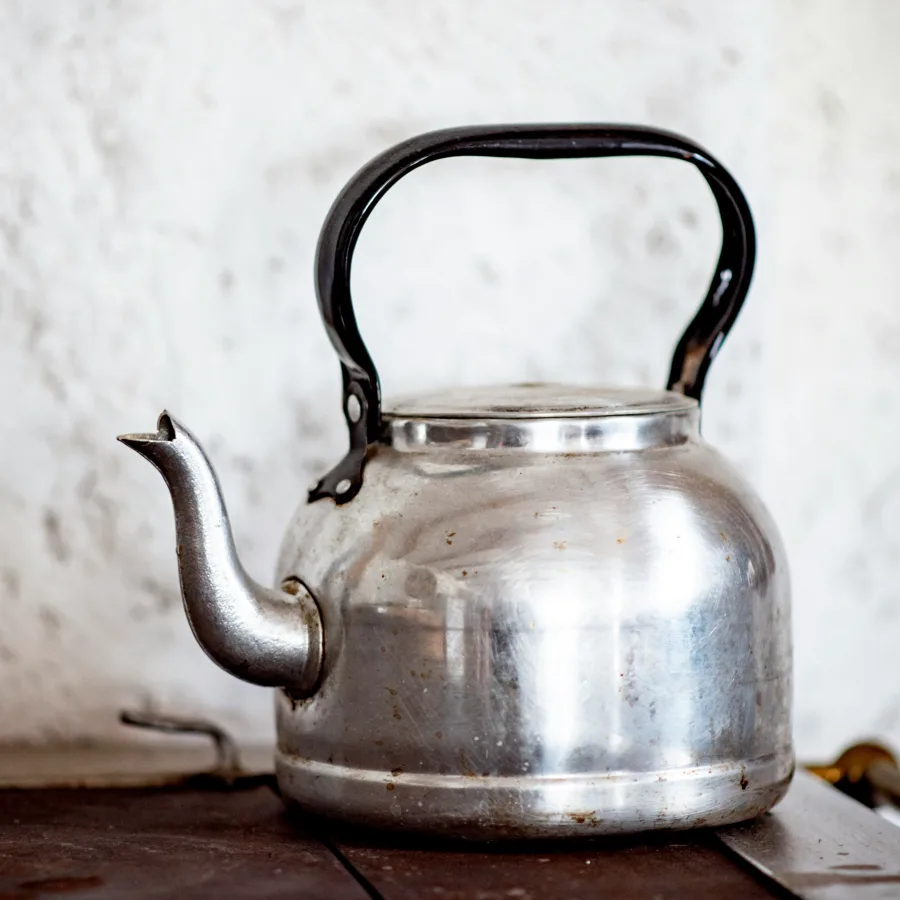
Noé, seven, had been having outbursts almost every evening for several months. His parents had tried everything, including things they regretted, and had reached the point of dreading the end of the afternoon. The first interview was with them alone, and they themselves reported two things: Noé had been sleeping about an hour less since the house move, and his teacher had noted that he was "elsewhere" in class, which was unlike him at all.
We do not look for the cause of a child's anger, that is not our role. We simply suggested they raise it with their doctor, as we do systematically, and they did. Once the appointment was made, and with their agreement, the work with Noé began.
When he was asked what his anger looked like, he answered straight away: his grandmother's kettle, the one that whistles on the stove. First nothing, then a small sound you can barely hear, then the whistle that fills the whole kitchen and cannot be stopped.
Nobody had suggested that image to him. It is his, and it already said the essential thing: there is a moment, before, when the sound is still small.
The work went there. Spotting the first whistle, the one you can barely hear. And finding what he could do at that moment, which he worked out himself: at his grandmother's, you take the kettle off the heat before it screams. He drew it at the end of the session and took it home.
> "Before, I only heard the big noise. Now I hear the small one before it. Sometimes I manage to take it off the heat, sometimes not." > Noé, name changed
His parents describe outbursts that are less frequent and shorter. The drawing is still stuck on the fridge, and all of them sometimes talk about the kettle. Every situation is different, and Noé's course says nothing about what your child will experience.
How a Hypnosis session with a child unfolds
A session lasts about forty-five minutes, so as not to exceed a child's attention span, and it falls into four parts.
The connection, and it is not optional. The first quarter of an hour is for getting to know each other, playing a little, understanding what the child likes. Without trust, nothing happens. It is also when the practitioner checks that the child knows why they are there and agrees to be there.
The story. The child chooses a place they want to visit, and the practitioner goes there with them. That is where the images and resources are built, with them.
The anchoring. A moment to fix the symbol they have found, often through a drawing the child takes home, sometimes through a gesture they can repeat at school.
The handover to the parents. The last minutes are for you, so that you know what image your child has built and how you can refer to it at home, without turning it into an instruction.
The pace. After a first session, two weeks usually pass to see how the child takes up the tool. What follows is decided then, with you and with them. Nobody can announce a number of sessions in advance.
Booking an appointment
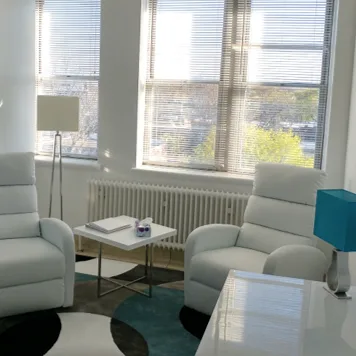
Before choosing, show your child the practitioner's photo and introduction video, and let them say whether they want to meet that person. It is their session, and their agreement counts as much as yours. Our practitioners trained to work with children see clients in Montreal, Sherbrooke, Gatineau, Paris and Lille, and by video anywhere in the world, which on this subject is often an advantage rather than a compromise.
Video works surprisingly well with children, often better than you would expect: they are at home, in their own world, with their things within reach. It does depend on age and temperament, so it is worth discussing with the practitioner first. See video consultations.
A question before you decide? Write to us. If someone else would suit your child's situation better, we will say so.
Where would you like to consult?
All areas
 Annie Mayrand
Gatineau - Cumberland (ON)
👤
🧑🎓
🚭
❤️
💻
Annie Mayrand
Gatineau - Cumberland (ON)
👤
🧑🎓
🚭
❤️
💻
 Christian Rocher
Beloeil
👤
🧑🎓
👶
🚭
❤️
💻
Christian Rocher
Beloeil
👤
🧑🎓
👶
🚭
❤️
💻
 David Veilleux
Montréal - Anjou
👤
🧑🎓
🚭
❤️
🤰
💻
David Veilleux
Montréal - Anjou
👤
🧑🎓
🚭
❤️
🤰
💻
 Florence Aton
Sutton
👤
🚭
❤️
💻
Florence Aton
Sutton
👤
🚭
❤️
💻
 Jessica Reid
Sherbrooke
👤
🚭
💻
Jessica Reid
Sherbrooke
👤
🚭
💻
 Julie Rocque
Montréal - Jean-Talon
👤
🧑🎓
👶
🚭
❤️
🤰
💻
Julie Rocque
Montréal - Jean-Talon
👤
🧑🎓
👶
🚭
❤️
🤰
💻
 Nuria Pérez de León
Montréal - Rosemont - Saint-Lambert
👤
🧑🎓
💻
Nuria Pérez de León
Montréal - Rosemont - Saint-Lambert
👤
🧑🎓
💻
 Romain Rastoin
Bromont
👤
🧑🎓
🚭
❤️
💻
Romain Rastoin
Bromont
👤
🧑🎓
🚭
❤️
💻
 Réjeanne LeBlanc
La Prairie
👤
🧑🎓
👶
💻
Réjeanne LeBlanc
La Prairie
👤
🧑🎓
👶
💻


Frequently asked questions about Hypnosis for Anger in Children
Our practitioners generally work with children from around five, the age at which a child can follow a story and say what they feel. That is a practice habit, not a professional rule. Before that, the work is mostly with the parents. That said, a toddler's tantrums usually belong to ordinary development and do not call for a consultation.
Then they must not be forced, and an imposed session produces nothing. Show them the practitioner's photo and video, explain what will happen, and let them choose. And above all, never present it as a punishment: "if you carry on, we are taking you to see someone" compromises everything before it starts. If the refusal persists, support for the parents alone is possible, and it is often very useful.
No, and the question is legitimate. The hypnotic state is one of focused attention, close to imaginative play, which children know better than we do. The child stays conscious, speaks, moves, and can stop at any moment. Nothing is imposed: in this approach the child invents their own images. You can also ask to sit in on the session, particularly with a young child.
The last minutes of each session are for you, and the practitioner passes on the images and tools your child has built, so that you can refer to them at home. They do respect what the child prefers to keep private, which is the condition of their trust.
That is a question for the doctor who follows your child, and only they can answer it for their situation. What we can say on our side: hypnosis is a non-medicinal approach that is added to their care and never replaces it. We do not change, interrupt or comment on any treatment, and we give no opinion on an assessment in progress. Simply tell us about the follow-up and any assessments under way at the first interview.
Child psychology is a regulated field, practised by professionals whose title is protected, and it is the right contact if the difficulties are significant, long-standing, or linked to a major event. That is a question for your doctor. Hypnosis is a narrower form of support, centred on a concrete tool, and the two combine very well.
Many parents ask themselves this, often with guilt, and the honest answer has nuance. How you react to the crises matters a great deal, and that is good news, because it can be worked on. In children whose behavioural difficulties go beyond what is expected for their age, parenting programmes are indeed the best-documented approach. Looking at what could change at home is not accusing yourself.
Adolescence is another matter, and outbursts at that age deserve to be taken seriously rather than put down to the period. See our page on Hypnosis and Coaching for Teens, and speak to a doctor if the anger comes with violence, withdrawal or sadness.
The number is decided as you go, with you and with the child, often after two weeks of observation. Nobody can announce it in advance.
Where to find help.
In Quebec: your doctor or paediatrician first, and 811, option 1, which offers a priority line to parents of children aged 0 to 17, day and night. Info-Social 811, option 2 for psychosocial advice, day and night. Première Ressource, free and confidential support for parents, on 1 866 329-4223, Monday and Tuesday 8 am to 9 pm, Wednesday to Friday 8 am to 5 pm. For a teenager, Tel-jeunes on 1 800 263-2266, and Tel-jeunes Parents (formerly LigneParents) on 1 800 361-5085, both 8 am to midnight. If a child is in danger, the Director of Youth Protection for your region, day and night, or 911. These services are in French.
In France: your family doctor, and 119, Allô enfance en danger, free and open day and night. For a teenager, Fil Santé Jeunes on 0 800 235 236, for 12 to 25-year-olds, every day from 9 am to 11 pm. In case of distress, 3114, day and night. In French.
Sources and references
Resources
- *Antisocial behaviour and conduct disorders in children and young people*. National Institute for Health and Care Excellence, guideline CG158.
- Reconnaître les signes d'un trouble mental chez l'enfant. Government of Quebec, in French.
- Crises de colère : les comprendre pour mieux intervenir. Naître et grandir, in French. Reviewed by a psychoeducator; a public-information site funded by the Fondation Lucie et André Chagnon, with no advertising.
Scientific references
- Defining the developmental parameters of temper loss in early childhood. Wakschlag, L. S., Choi, S. W., Carter, A. S. et al. (2012). Journal of Child Psychology and Psychiatry, 53(11), 1099-1108. The study behind the frequency benchmarks.
- Your Brain Is Not an Onion With a Tiny Reptile Inside. Cesario, J., Johnson, D. J., & Eisthen, H. L. (2020). Current Directions in Psychological Science, 29(3), 255-260.
- The Brain Is Adaptive Not Triune. Steffen, P. R., Hedges, D., & Matheson, R. (2022). Frontiers in Psychiatry, 13, 802606.
- Language Disorders and Problem Behaviors: A Meta-analysis. Curtis, P. R., Frey, J. R., Watson, C. D. et al. (2018). Pediatrics, 142(2), e20173551.
- Acute sleep restriction effects on emotion responses in 30- to 36-month-old children. Berger, R. H., Miller, A. L., Seifer, R. et al. (2012). Journal of Sleep Research, 21(3), 235-246.
- Association of Screen Time With Internalizing and Externalizing Behavior Problems in Children 12 Years or Younger. Eirich, R., McArthur, B. A., Anhorn, C. et al. (2022). JAMA Psychiatry, 79(5), 393-405.
- Psychosocial Interventions for the Treatment of Functional Abdominal Pain Disorders in Children. Gordon, M., Sinopoulou, V., Tabbers, M. et al. (2022). JAMA Pediatrics, 176(6), 560-568.
- Psychological interventions for needle-related procedural pain and distress in children and adolescents. Birnie, K. A., Noel, M., Chambers, C. T. et al. (2018). Cochrane Database of Systematic Reviews, 10(10), CD005179.
- Kohen, D. P., & Olness, K. (2023). *Hypnosis with Children*, 5th edition. Routledge. The reference work on paediatric hypnosis.
And the neighbouring articles
- The wider subject is covered on Hypnosis for Children.
- For a teenager, see Hypnosis and Coaching for Teens.
- For adults, see Hypnosis for Anger.
Hypnosis as practised by the members of Solutions Hypnose is a complementary support approach. It is neither a medical act, nor a diagnosis, nor psychotherapy in the regulatory sense, and it in no way replaces a consultation, follow-up or treatment prescribed by a health professional.
Our practitioners do not assess and do not treat mental disorders or illnesses. They never ask for an ongoing treatment to be stopped or changed: that decision rests exclusively with your doctor.
No result can be guaranteed. The testimonials and examples presented on this page describe individual experiences and do not predict what you will experience.
In case of significant distress, unexplained physical symptoms or suicidal thoughts, contact a doctor, emergency services or a helpline without delay.

Page written by Sabine Chapuis
hypnotherapist
partner at Solutions Hypnose.
English version reviewed by David Veilleux
Updated .