
Hypnosis for Eco-anxiety (Climate Anxiety)
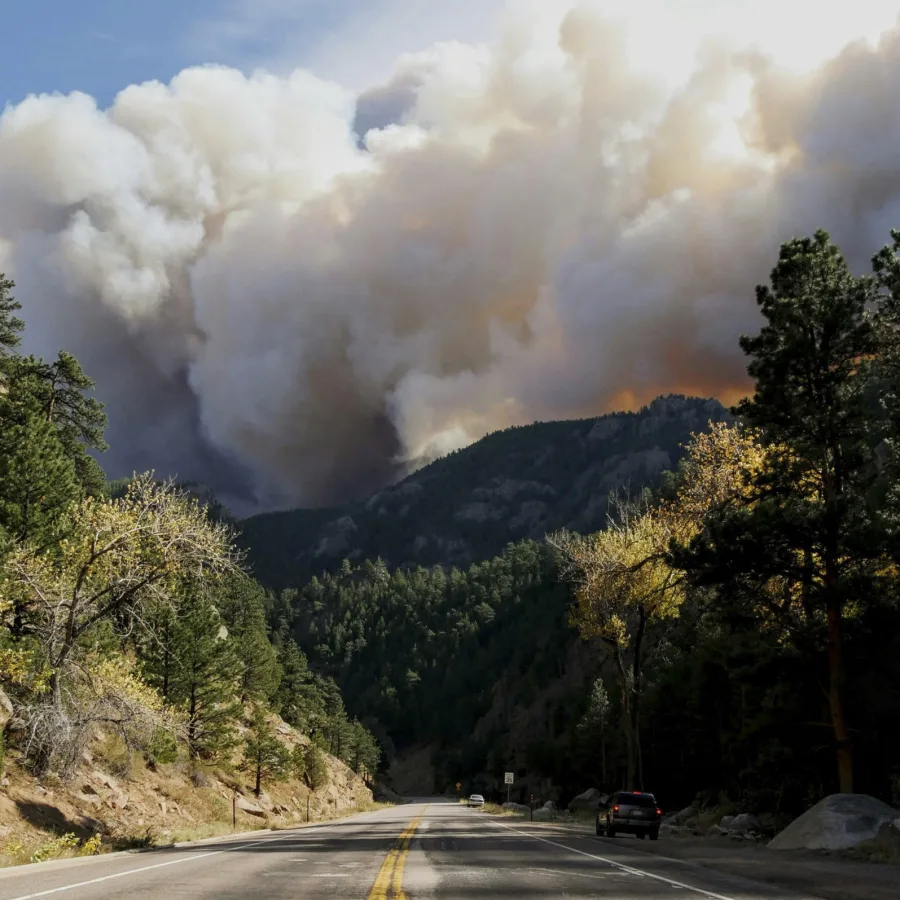
There are summers you do not forget. The sky turning orange in the middle of the afternoon. Air quality alerts on your phone. Weeks of forests burning, streets turned into rivers, families evacuated.
Then autumn comes, the air becomes breathable again, and something stays. A dull worry. A knot in the throat when you open the news. The persistent impression that the world you knew is coming apart, and that there is not much you can do about it.
If you recognise yourself here, know this first: you are not fragile, not exaggerating, not too sensitive. You are clear-sighted. And that clarity has an emotional cost it is legitimate to want to lighten.
What is Eco-anxiety?
Eco-anxiety, also called climate anxiety, is the psychological distress tied to an awareness of environmental disruption and its consequences.
One essential point: it is not a mental illness. It is not a diagnosis, it appears in no medical classification, and there is nothing to correct in the fact of being worried. It is a healthy response to a real situation. Your nervous system is doing exactly what it is built for: detecting a threat and mobilising you.
So the problem is not that you feel worried. It appears when that worry becomes chronic, the alarm sounding continuously without ever switching off; pervasive, when it colonises sleep, meals, conversations and plans; or paralysing, when it cuts you off from action instead of carrying you into it. That is where it meets the ground of our page on stress and anxiety.
Other emotions often mix in, and each has its name. Solastalgia, the grief of seeing a place you love transformed — a lake, a forest, a childhood landscape — close to what our page on grief and sadness describes. Eco-anger. Ecological grief, the sadness at what is already lost. They follow one another, they mix, and there is nothing irrational about them.
Quebec's national public health institute notes that certain factors change the intensity of this experience: having personally suffered the consequences of a climate event, having children, the solidity of those around you, and pre-existing anxiety disorders. When the reaction goes as far as an attack, that is the ground of panic attacks.
What we do not do. Our hypnotherapists make no diagnosis and assess no disorder. Eco-anxiety is not an illness, but it can come with difficulties that do call for follow-up: established insomnia, panic attacks, a depressive episode, isolation, dark thoughts. Speak to your doctor if your sleep, your studies, your work or your relationships have been suffering for several weeks. In Quebec: Info-Social 811, option 2, day and night. In France: your family doctor, or 3114 for suicide prevention, free and available 24/7.
The impact of Eco-anxiety on daily life
In practice, eco-anxiety rarely arrives under that name. People describe something else first.
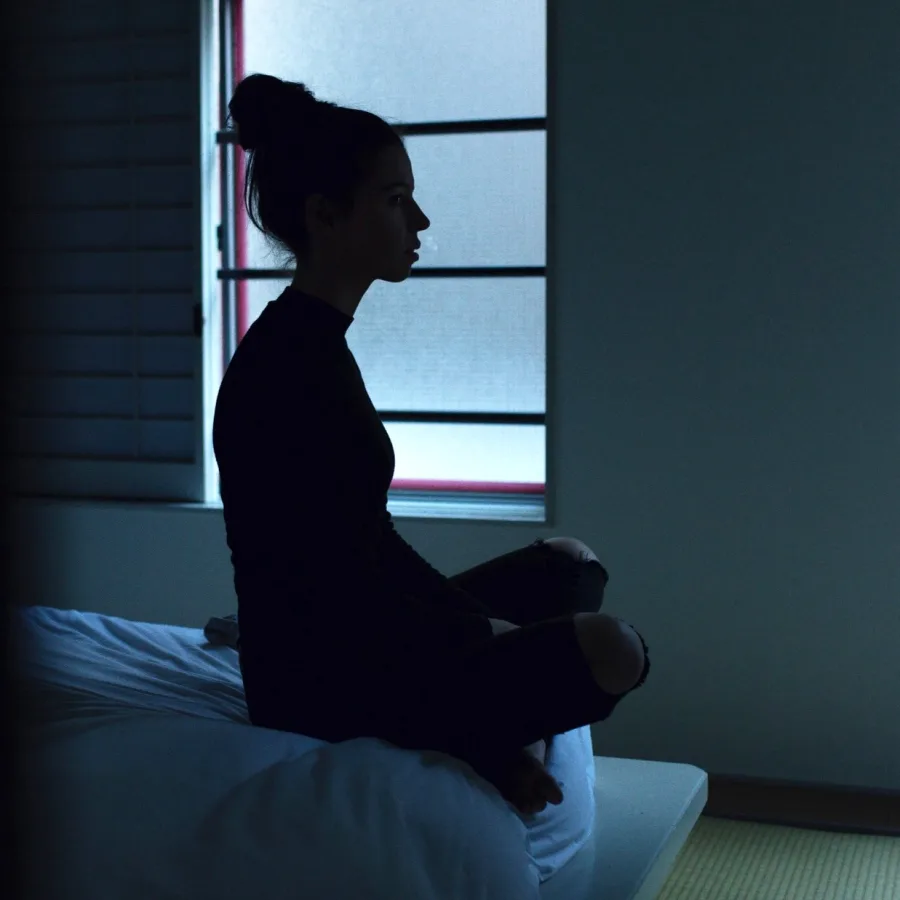
In the body: trouble falling asleep or waking in the night, tension in the neck and jaw, shallow breathing, digestive trouble, sometimes an anxiety attack set off by an image or a news item. Sleep is often the first to go, and that is the subject of our page on sleep problems. In the thoughts: looping rumination, catastrophic scenarios that keep returning, hypervigilance about the weather, and the compulsive consumption of distressing content known as *doomscrolling*, which promises information and delivers only powerlessness.
In the emotions and behaviour: a sense of powerlessness, guilt, often phrased as "what I do is never enough", anger, or a protective cynicism. And in some people, paralysis over the big life choices: long studies, buying a home, a child — for what world?
In teenagers and young adults, the signs are harder to read: irritability, sudden disengagement, dropping out of school, or conversely an intense commitment paired with poorly hidden exhaustion — our page on hypnosis for teens sets out what can be done at that age.
Why young people are particularly exposed
A survey published in 2021 in The Lancet Planetary Health questioned 10,000 young people aged 16 to 25 in ten countries, including France. The results are clear: 59% said they were very or extremely worried about climate change, and 84% at least moderately worried. More than half reported each of the following emotions: sadness, anxiety, anger, powerlessness, helplessness and guilt. More than 45% said these emotions affected their daily life, and 75% found the future frightening.
Two mechanisms partly explain this exposure. Temporal asymmetry first: they are the ones who will live longest with the decisions taken today. Asymmetry of power next, and this is the point that matters most in stress psychology, where a high threat combined with a low sense of control produces the strongest distress.
Added to that is not feeling heard. A study published in 2024 in the same journal, among nearly 16,000 young people in the United States, reports that among those who had tried to talk about it, a majority felt ignored or dismissed. A teenager told "stop worrying about that" is not reassured: they simply learn not to say it again.
Recognised approaches outside Hypnosis
- Psychological follow-up, particularly when eco-anxiety is paired with a depressive state or panic attacks. Some psychologists now specialise in this.
- A medical opinion, as soon as sleep is lastingly affected.
- Work on your relationship with information: limiting when you look, switching off alerts, choosing sources rather than enduring a feed.
- Mindfulness approaches, which teach you to let a thought pass without fighting it.
- Talking groups and climate cafés, where no longer being alone with these emotions often does more than any technique.
- Regular exposure to nature, whose effect on stress is well documented.
- Acting, at whatever scale suits you.
On that last point, an important nuance too rarely said. Quebec's public health institute warns against approaches that bet solely on individual gestures: promoting "small green actions" can, in some people, produce guilt, hypervigilance, or be perceived as a denial of collective responsibility. In other words, being told to sort your rubbish when you are overwhelmed can make things worse rather than lighter.
Hypnosis adds itself to this list. It does not replace it.
Hypnosis for Eco-anxiety: aims and benefits
One clarification first, because it is decisive here: hypnosis is not there to convince you that everything is fine. Support aimed at making you indifferent to the state of the world would be poor support. The aim is not denial, it is to give you back the capacity to carry this reality without being crushed by it.
Nor does it put you to sleep, make you lose control, and you stay conscious from beginning to end — the principle is explained on our page what is therapeutic hypnosis. It guarantees no result.
What the work aims at:
- Bringing the nervous system back to calm. The hypnotic state engages the parasympathetic system: the heart rate slows, the muscles release, breathing deepens. Repeated, the experience teaches the body again that it can come down. For an organism on alert for months, that is new information.
- Working on mental images. The emotional brain reasons in images more than in arguments, and a repeated image ends up working like a repeated experience. It is not about replacing "the future is frightening" with "everything will be fine", but about opening towards "I can cope, and I am not alone".
- Regaining a sense of grip. It is powerlessness that tips worry into distress, far more than the worry itself.
- Recovering sleep. It is often the first change people notice, and it changes the rest: a rested brain ruminates less and absorbs more.
- Taking back control of the triggers. Self-hypnosis gives you a portable tool, usable in thirty seconds after a distressing image or before sleeping.
An exercise to try today
Two minutes are enough. Put your feet flat on the floor. Breathe in for four counts, out for six. The out-breath being longer than the in-breath is what signals to the body that it can lower its guard. Five times.
Then call to mind a place in nature that does you good, real or imagined. Install the five senses in it: what you see, the sounds, the smell of the air, the temperature on your skin, the texture underfoot. Stay there for a minute.
Before opening your eyes, put your hand on your sternum. With repetition, that gesture becomes a shortcut back to this state. It is not a solution: it is a way in, and proof that your nervous system still answers you.
What the research says
There is no study dealing specifically with hypnosis and eco-anxiety. The field is too recent, and it is better to say so than to let it be inferred.
What is better documented is the effect of hypnosis on anxiety in general: a meta-analysis published in 2019 in the International Journal of Clinical and Experimental Hypnosis brought together fifteen studies and reports a large mean effect. The authors note that hypnosis obtained better results as a complement to other psychological interventions than when used on its own.
An example of support: Karine's case
Karine (name changed), 41, came in the autumn, after a summer of smoke. The trigger was not the news but a question from her nine-year-old daughter, one evening at bedtime: would the Earth still be liveable when she was grown up.
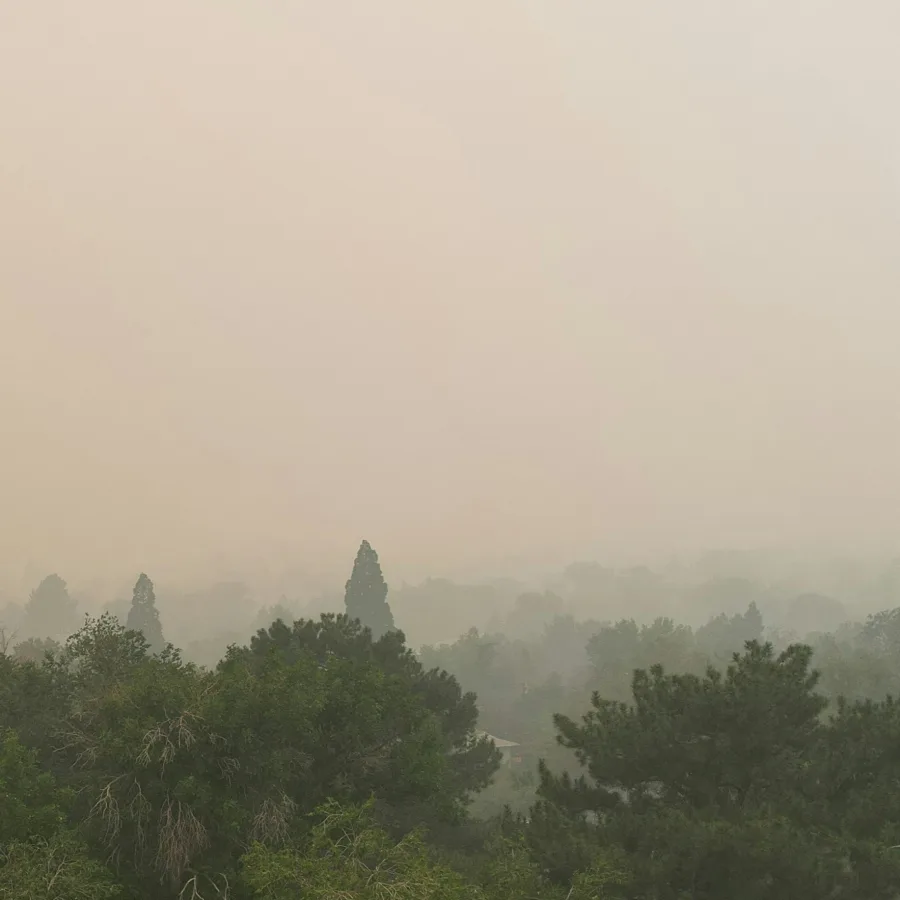
Karine heard herself answer something she did not believe. Since then she had been reading until one in the morning, waking at four, and wondering whether she had been right to have children. Her doctor had ruled out a physical cause for the insomnia. The work did not deal with what she thinks about the climate. It dealt with the evening, where the phone eventually left the bedroom; with the four o'clock waking, with an anchor of calm to draw on there and then; and with her daughter's question, prepared in session until Karine found an answer that neither lies nor crushes.
This case describes one possible course. It does not predict yours. The pace and the outcomes vary from one person to another, and no support can guarantee a result.
How a Hypnosis session on this subject unfolds
The interview, without hypnosis. What you are living through, how long, what sets it off, what you would like to find again. This step also serves to check that hypnosis is relevant for you, and to redirect you if psychological or medical follow-up is the priority.
We set a concrete objective. Not "no longer worrying about the climate", which is neither realistic nor desirable. Rather: getting back to sleep after waking in the night, being able to read the news without losing the evening to it, picking up a project that was put on hold.
The induction. A gradual invitation to let go, eyes closed, comfortably settled. You stay conscious and can speak or stop at any moment.
The work itself, according to your needs: settling the body, transforming an overwhelming image, reconnecting with a place in nature that restores you, strengthening a sense of solidity.
The return and what follows. A time to talk, then an exercise to practise at home. A session generally lasts 60 to 90 minutes. The full sequence is described on our page what to expect in a hypnosis session.
How many sessions? That is discussed at the first interview, once your situation is known. Nobody can know in advance.
Booking an appointment
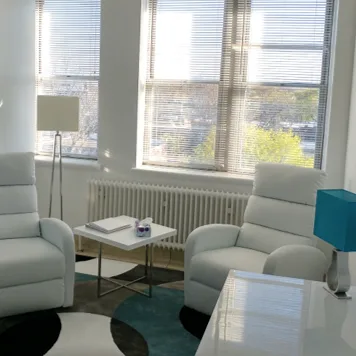
Our hypnotherapists see adults, teenagers and children, in Montreal, Sherbrooke, Gatineau, Paris, Lille and by video anywhere in the world. Hesitating? Write to us describing your situation. We will tell you frankly whether hypnosis seems suited to you, and where to turn if it is not. The first interview is there for exactly that.
Where would you like to consult?
All areas
 Annie Mayrand
Gatineau - Cumberland (ON)
👤
🧑🎓
🚭
❤️
💻
Annie Mayrand
Gatineau - Cumberland (ON)
👤
🧑🎓
🚭
❤️
💻
 Christian Rocher
Beloeil
👤
🧑🎓
👶
🚭
❤️
💻
Christian Rocher
Beloeil
👤
🧑🎓
👶
🚭
❤️
💻
 David Veilleux
Montréal - Anjou
👤
🧑🎓
🚭
❤️
🤰
💻
David Veilleux
Montréal - Anjou
👤
🧑🎓
🚭
❤️
🤰
💻
 Florence Aton
Sutton
👤
🚭
❤️
💻
Florence Aton
Sutton
👤
🚭
❤️
💻
 Jessica Reid
Sherbrooke
👤
🚭
💻
Jessica Reid
Sherbrooke
👤
🚭
💻
 Julie Rocque
Montréal - Jean-Talon
👤
🧑🎓
👶
🚭
❤️
🤰
💻
Julie Rocque
Montréal - Jean-Talon
👤
🧑🎓
👶
🚭
❤️
🤰
💻
 Nuria Pérez de León
Montréal - Rosemont - Saint-Lambert
👤
🧑🎓
💻
Nuria Pérez de León
Montréal - Rosemont - Saint-Lambert
👤
🧑🎓
💻
 Romain Rastoin
Bromont
👤
🧑🎓
🚭
❤️
💻
Romain Rastoin
Bromont
👤
🧑🎓
🚭
❤️
💻
 Réjeanne LeBlanc
La Prairie
👤
🧑🎓
👶
💻
Réjeanne LeBlanc
La Prairie
👤
🧑🎓
👶
💻

Frequently asked questions about Hypnosis for Eco-anxiety (Climate Anxiety)
No. It is not a diagnosis and it appears in no medical classification. It is a coherent response to a real situation. What may call for follow-up are the consequences when they settle in: insomnia, panic attacks, a depressive episode, isolation.
No, and that would be a poor aim. Your sensitivity is not a fault to be corrected. The work deals with what overwhelms you, not with what you think.
That is a legitimate question and it deserves a straight answer. Support whose outcome was your silence or your resignation would have failed. In practice, exhausted people act less, not more. Recovering sleep and stability generally makes people more able to do what matters to them, not less.
That is discussed at the first interview. Nobody can know before having met you.
Open the conversation without minimising. "I understand that it worries you, let's talk about it" opens a door where "don't worry about that" closes one. If disengagement or fatalism persist, or if they repeatedly somatise, talk to your family doctor.
Not necessarily, but choosing rather than enduring changes a great deal: set times, chosen sources, alerts switched off. Evening doomscrolling is the most frequently reported trigger.
Yes, and it is common. Mention it at the interview. We will never ask you to stop or change it: that decision belongs exclusively to the doctor who prescribed it.
That is no longer quite eco-anxiety: it is the direct impact of an event you lived through, which calls first for appropriate support. Say so at the very first contact.
Sources and references
In French
- Écoanxiété : entretien avec Maxime Boivin — Institut national de santé publique du Québec
- Changement climatique et anxiété — Canadian Psychological Association
In English
- Climate anxiety in children and young people: a global survey — Hickman et al., The Lancet Planetary Health, 2021
- What is eco-anxiety? — UNICEF
Hypnosis study cited
- Valentine, K. E., Milling, L. S., Clark, L. J., & Moriarty, C. L. (2019). The Efficacy of Hypnosis as a Treatment for Anxiety: A Meta-Analysis. International Journal of Clinical and Experimental Hypnosis, 67(3), 336-363. doi.org/10.1080/00207144.2019.1613863 — on anxiety in general, not on eco-anxiety.
Need to talk? Quebec: Info-Social 811 option 2 · Crisis line 1 866 APPELLE (277-3553). France: 3114, the national suicide prevention number, free and available 24/7.
Hypnosis as practised by the members of Solutions Hypnose is a complementary support approach. It is neither a medical act, nor a diagnosis, nor psychotherapy in the regulatory sense, and it in no way replaces a consultation, follow-up or treatment prescribed by a health professional.
Our practitioners do not assess and do not treat mental disorders or illnesses. They never ask for an ongoing treatment to be stopped or changed: that decision rests exclusively with your doctor.
No result can be guaranteed. The testimonials and examples presented on this page describe individual experiences and do not predict what you will experience.
In case of significant distress, unexplained physical symptoms or suicidal thoughts, contact a doctor, emergency services or a helpline without delay.

Page written by Patricia Jouannet
hypnotherapist and NLP coach
partner at Solutions Hypnose.
English version reviewed by David Veilleux
Updated .