
Hypnosis and the Fear of Being Sick (Hypochondria)
It is one in the morning. You felt something this afternoon, a twinge in your side, and since then you have read dozens of medical forums… or not.
You found one reassuring page. Then another, less so. You pressed the same spot again to check, and now it hurts slightly more than before. Your doctor has already told you everything is fine: that helped for three days. And you know perfectly well what people think when you book another appointment.
Two things, straight away. Your sensations are real, you are not making anything up. And what you are going through is common, serious, and can be worked on.

What we are talking about
The word "hypochondria" carries a connotation we need to be rid of: it suggests the person is making it up. That is false, and the medical classifications have taken note. The DSM-5 dropped the term in 2013, precisely because of its pejorative overtones, and now distinguishes *somatic symptom disorder*, where physical symptoms are to the fore, from *illness anxiety disorder*, where the worry dominates without marked symptoms.
The WHO's ICD-11 kept the label — but moved it: hypochondriasis no longer sits among the somatoform disorders, it now belongs to the family of obsessive-compulsive and related disorders.
So we will talk about health anxiety, and the first word appears on this page only because it is what people type into a search engine.
You are not alone. Solid figures are scarce on this subject, but the most cited study, drawn from a national Australian survey, estimates that around 5.7 % of the population is affected over a lifetime. There is no Quebec or French equivalent.
What characterises it:
- a persistent fear of having a serious illness;
- a catastrophic reading of ordinary sensations: a tingle, tiredness, a swollen gland;
- repeated checking: appointments, tests, online searches, pressing and prodding;
- and a difficulty staying reassured, even after normal test results.
The loop, and it is the whole subject
A sensation appears. It is read as a danger signal. Anxiety rises. You look for reassurance: you book an appointment, you press the spot, you read, you ask someone close to you.
Relief arrives, and it is real. It lasts a few hours, sometimes a few days.
Then the anxiety comes back, slightly stronger, because the brain has just recorded that the checking was necessary. Next time it will take more.
This kinship with obsessive-compulsive disorder is not a figure of speech. It is precisely why the WHO brought the two together: you find the same mechanics of intrusive thoughts followed by repetitive behaviour. The NHS puts it in one line — health anxiety is related to OCD. Our page on OCD describes those mechanics in detail.
The WHO in fact spells the loop out: the preoccupation comes with repetitive and excessive health-related behaviours — repeatedly checking the body for evidence of illness, spending inordinate amounts of time searching for information about the feared illness, repeatedly seeking reassurance, arranging multiple medical consultations.
Two details that explain a great deal
Body checking is part of the picture, and the medical manuals give the classic examples: examining your skin, taking your pulse again, pressing the same spot. What is often observed in practice is that an area prodded ten times a day ends up tender — and that the tenderness is then read as confirmation. The research stays cautious: a 2025 systematic review concludes that the effects of such checking, short term as well as long term, vary from one study to another. So we present it for what it is, a clinical observation rather than an established fact.
Searching online never reassures for long. Search engines readily connect an ordinary symptom to a serious illness, and an anxious person stops at the worst hypothesis. The phenomenon has a name in the literature: cyberchondria. A 2021 meta-analysis in the *Journal of Medical Internet Research*, covering more than three thousand participants, finds a strong association between cyberchondria and health anxiety, and proposes seeing online searching as one more reassurance behaviour: relieving in the moment, sustained by the relief itself. These are association data, not proof that searching online worsens anxiety — but the fit with the loop described above is striking.
What it costs

Time, first of all. Hours a day, in searching, in checking, in rumination — and it is invisible from the outside, which makes it lonelier still. Sleep, almost always, and the tiredness then amplifies every sensation, which sets the machine going again the next morning. The relationship with healthcare staff: many people feel judged, change doctor, or end up not daring to see anyone at all. Both extremes are costly. People close to you, too: they are asked for reassurance several times a day. They give it out of love, they wear themselves out, and without knowing it they keep the loop going.
And life narrows: plans postponed, trips avoided, the sense of living on borrowed time.
The thing this page has to say plainly: you can also genuinely be ill. Health anxiety protects you from nothing. It exempts you from no follow-up, and it can even lead you to overlook a real sign — either through avoidance, or because you have stopped being taken seriously. What we will never say: that there is nothing wrong with you. We do not know, it is not our role, and saying it would be exactly the kind of reassurance that keeps the problem going. What helps: a single doctor you trust, a rhythm of appointments agreed with them in advance rather than driven by anxiety, and keeping up the screening recommended for your age. And if your situation comes with a lasting low mood or dark thoughts, speak up without waiting: Quebec 811 option 2 or 1 866 APPELLE (277-3553) · France 3114.
What exists outside hypnosis
- A single family doctor, with a framework in place. That is the foundation.
- Cognitive behavioural therapy, the best documented approach for health anxiety — by a wide margin: a meta-analysis of fourteen randomised trials measures a large effect compared with control conditions. It works precisely on the checking and the reassurance.
- Psychological or psychiatric follow-up, particularly if a depressive state is added to the picture.
- Medication, if your doctor judges it relevant.
- And one simple measure: agreeing with those close to you on a way of responding that is not repeated reassurance. That is prepared with the professional following you.
What hypnosis can do, and what it must not do
What we will not do: reassure you
It is counter-intuitive, and it is the most important point on this page.
Reassurance relieves and sustains. A course of work whose mechanism was to repeat that everything is fine, or to have you visualise a perfectly healthy body in order to settle one specific worry, would do you good for two weeks and cost you months.
A serious practitioner will therefore not answer the question "do you think it is serious?". Not out of coldness, but because answering would amount to supplying a dose of what feeds the problem.
The same goes for self-hypnosis: it is practised at a fixed time, not in response to a surge of anxiety. Otherwise it becomes one more ritual.
What a course of work can aim at
- Tolerating uncertainty. That is the heart of it. The problem is not whether you are ill: it is that no certainty is ever enough. Learning to stay with the doubt without resolving it is what changes things — it is the subject of our page on living with uncertainty.
- Letting a sensation pass without interpreting it straight away. A sensation is not information.
- Lowering background anxiety, which is not the fear itself but the ground it grows in.
- Getting sleep back. Often the first change people notice, and it changes the rest.
- Reducing the checking, gradually, working with the discomfort that rises when you do not check.
- Recovering a relationship with the body that is not surveillance. The aim is not to feel in great shape: it is to stop scanning.
- Easing the shame, which often delays people by several years.
What the research says
Let us be clear: no controlled study has evaluated hypnosis specifically for health anxiety. The only reference bearing that title in the indexed literature is an archive article from the *British Journal of Psychiatry*. What is documented concerns anxiety in general, not this particular form of it.
The best documented approach remains cognitive behavioural therapy, and we encourage you to talk to your doctor about it. A course of hypnosis does not replace it, and no more replaces medical advice.
An example: Julie's case
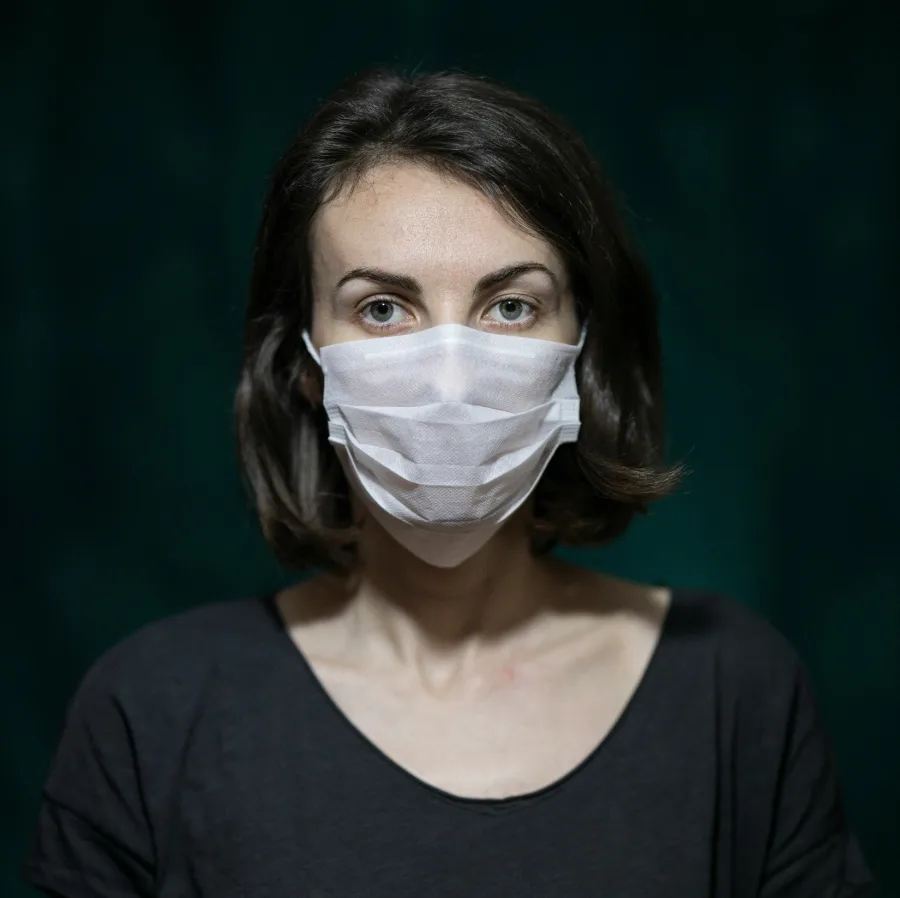
Julie (name changed), 34, had been living since the Covid period with a constant fear of having cancer or a rare disease. She woke at night in panic, watched her body continuously and read medical forums to the point of exhaustion. Her doctor had run the necessary tests, with no abnormality. The work did not consist of convincing her that she was fine: she had already heard that, with no lasting effect. It focused on the precise moment when a sensation appears and the hand goes to check, on the capacity to let the anxiety rise and fall without answering it, and on sleep. She also agreed with her doctor on a rhythm of appointments set in advance, rather than driven by worry.
This case describes one possible path. It predicts nobody else's. Pace and results vary from one person to another, and no course of work can guarantee a result.
How a course of work unfolds
The conversation. How long it has been going on, what the fear is about, what you check and how often, and what medical follow-up you currently have. That last question is asked every time.
A concrete goal. Not "stop being afraid", but: sleep without looking at my phone, not bring my appointment forward, let a day pass without prodding.
The induction, then the work itself: tolerance of discomfort, distance from sensations, settling the background anxiety, sleep.
The follow-through. A short exercise, to be practised at a fixed time. Your practitioner should say so; if they do not, ask them.
How many sessions? That is discussed at the first appointment. Nobody can know in advance.
Book an appointment

Tell us where you are with your medical follow-up. If your situation calls first for specialist care, we will say so. Ask us a question or book an appointment. Wherever you are in the world, video consultations offer the same conversation and the same session as in the office — here is how it works. If the fear is mostly about death itself, see also our page on the fear of dying; and if the surges of anxiety take the form of attacks, the one on panic attacks.
Where would you like to consult?
All areas
 Annie Mayrand
Gatineau - Cumberland (ON)
👤
🧑🎓
🚭
❤️
💻
Annie Mayrand
Gatineau - Cumberland (ON)
👤
🧑🎓
🚭
❤️
💻
 Christian Rocher
Beloeil
👤
🧑🎓
👶
🚭
❤️
💻
Christian Rocher
Beloeil
👤
🧑🎓
👶
🚭
❤️
💻
 David Veilleux
Montréal - Anjou
👤
🧑🎓
🚭
❤️
🤰
💻
David Veilleux
Montréal - Anjou
👤
🧑🎓
🚭
❤️
🤰
💻
 Florence Aton
Sutton
👤
🚭
❤️
💻
Florence Aton
Sutton
👤
🚭
❤️
💻
 Jessica Reid
Sherbrooke
👤
🚭
💻
Jessica Reid
Sherbrooke
👤
🚭
💻
 Julie Rocque
Montréal - Jean-Talon
👤
🧑🎓
👶
🚭
❤️
🤰
💻
Julie Rocque
Montréal - Jean-Talon
👤
🧑🎓
👶
🚭
❤️
🤰
💻
 Nuria Pérez de León
Montréal - Rosemont - Saint-Lambert
👤
🧑🎓
💻
Nuria Pérez de León
Montréal - Rosemont - Saint-Lambert
👤
🧑🎓
💻
 Romain Rastoin
Bromont
👤
🧑🎓
🚭
❤️
💻
Romain Rastoin
Bromont
👤
🧑🎓
🚭
❤️
💻
 Réjeanne LeBlanc
La Prairie
👤
🧑🎓
👶
💻
Réjeanne LeBlanc
La Prairie
👤
🧑🎓
👶
💻

Frequently asked questions about Hypnosis and the Fear of Being Sick
No, and that is deliberate. We do not know, it is not our role, and above all reassurance is precisely what keeps the loop going. What can be worked on is your capacity to live with uncertainty.
That is possible, which is why regular medical follow-up with a single doctor remains essential. Health anxiety protects you from nothing, and it can even lead you to overlook a real sign.
No. Your sensations are real. What goes wrong is the interpretation made of them and the anxious loop that follows.
Absolutely not. What helps is a rhythm agreed with them in advance, rather than appointments dictated by anxiety. Talk to them openly about what you are doing.
It is one of the most useful levers. Search engines readily connect an ordinary symptom to a serious illness, and an anxious person always retains the worst hypothesis.
Answering brings relief in the moment and keeps the loop going; stopping abruptly feels like abandonment. There are ways of being supportive without feeding the problem, and they are prepared with the professional following you.
That is discussed at the first appointment. Nobody can know in advance.
Tell us. We will never ask you to stop or change it: that decision belongs exclusively to your doctor.
Sources and references
On health anxiety and how it is defined
- Illness Anxiety Disorder — MSD Manual, professional edition. On the DSM-5 abandoning the term "hypochondriasis", and on the place of cognitive behavioural therapy.
- Illness Anxiety Disorder — MSD Manual, consumer version. On repeated self-examination and on reassurance that misses its mark.
- Health anxiety — National Health Service, United Kingdom. On the kinship with obsessive-compulsive disorder.
On cognitive behavioural therapy
- Cooper, K., Gregory, J. D., Walker, I., Lambe, S., & Salkovskis, P. M. (2017). *Cognitive Behaviour Therapy for Health Anxiety: A Systematic Review and Meta-Analysis*. Behavioural and Cognitive Psychotherapy, 45(2), 110-123. doi.org/10.1017/S1352465816000527 — fourteen randomised trials, a large effect compared with control conditions.
On cyberchondria
- Schenkel, S. K., Jungmann, S. M., Gropalis, M., & Witthöft, M. (2021). *Conceptualizations of Cyberchondria and Relations to the Anxiety Spectrum: Systematic Review and Meta-analysis*. Journal of Medical Internet Research, 23(11), e27835. doi.org/10.2196/27835
On prevalence
- Sunderland, M., Newby, J. M., & Andrews, G. (2013). *Health anxiety in Australia: prevalence, comorbidity, disability and service use*. The British Journal of Psychiatry, 202(1), 56-61. doi.org/10.1192/bjp.bp.111.103960
Public resources on anxiety disorders
- Anxiety disorders — Government of Quebec.
- Anxiété, phobies et TOC — Psycom, France (in French).
Hypnosis as practised by the members of Solutions Hypnose is a complementary support approach. It is neither a medical act, nor a diagnosis, nor psychotherapy in the regulatory sense, and it in no way replaces a consultation, follow-up or treatment prescribed by a health professional.
Our practitioners do not assess and do not treat mental disorders or illnesses. They never ask for an ongoing treatment to be stopped or changed: that decision rests exclusively with your doctor.
No result can be guaranteed. The testimonials and examples presented on this page describe individual experiences and do not predict what you will experience.
In case of significant distress, unexplained physical symptoms or suicidal thoughts, contact a doctor, emergency services or a helpline without delay.

Page written by Emmanuelle Sardou
hypnotherapist
partner at Solutions Hypnose.
English version reviewed by David Veilleux
Updated .