
Hypnosis for Shame and Guilt
There is one thing you have never told anyone.
It goes back years, perhaps to childhood. You do not think about it every day, and then a word, a smell, an ordinary conversation, and there it is, intact, with the same heat in your chest as on the first day.
You have developed a skill: changing the subject, rounding off a date, letting people believe a simpler version. It takes constant vigilance, and that vigilance costs you more than the event itself.
The hardest part is not the memory. It is what it makes you conclude about yourself: that if people knew, they would see you differently. So you keep your distance, including from the people you love.
This mechanism is well known, it has a name, and it is recognisable from one person to the next. Shame feeds on silence: that is what makes it so hard to get through alone, and it is also the way out.


If your shame comes from what somebody did to you.
Sexual violence, violence in a relationship, childhood abuse, harassment: shame is one of the most constant consequences of these situations, and one of the most unjust. It belongs to the person who acted, not to you, even if that is not at all what you feel today.
Resources exist, free and confidential, and several can be reached in writing if speaking is beyond you.
In Quebec: Info-aide violence sexuelle 1 888 933-9007, for anyone whatever their age or gender identity, with online chat · SOS violence conjugale 1 800 363-9010, 24 hours a day, text 438-601-1211 · Info-Social 811, option 2, 24 hours a day.
In France: 3919, Violences Femmes Info · Viols Femmes Informations 0 800 05 95 95, Monday to Friday 10 a.m. to 7 p.m. · 119, child protection, 24 hours a day, and it appears on no itemised phone bill · 116 006, support for all victims, 7 days a week 9 a.m. to 7 p.m.
In distress or having suicidal thoughts: in Canada, 9-8-8, by call or text, 24 hours a day; in Quebec also 1 866 277-3553 or text 535353; in France, 3114, 24 hours a day, free.
In these situations, support belongs first with trained professionals. Hypnosis can come later, alongside, and never instead.
What is shame?
Shame is a social emotion. It appears when we believe we have been seen, or could be seen, as diminished in other people's eyes. Everybody knows it, and there is nothing abnormal about it.
The distinction from guilt is the key to this subject
- Guilt is about an act: I did something bad. It is uncomfortable and rather useful, because it pushes towards repairing, apologising, changing a behaviour.
- Shame is about the whole person: I am somebody bad. It offers no possible repair, since what is at stake is not an act but the self. So it pushes towards disappearing, hiding, sometimes attacking in self-protection.
That is often why guilt eases when you repair something, while shame settles in. A meta-analysis covering more than a hundred studies and twenty-two thousand participants does find a stronger link between shame and depressive symptoms than between guilt and them.
This distinction is not a law, though. Other work suggests that what pushes people to hide may have less to do with shame itself than with the fear of being rejected, and that some people in shame seek on the contrary to repair. Let us keep what does not vary: guilt leaves a way out, shame offers none as long as it is about the whole person.
An emotion and a state. Shame can be a brief reaction, the awkward moment, or become a lasting state that colours the relationship with oneself for years. It is the second form that brings people to book a session.
Useful distinctions
- Embarrassment is passing, social, and leaves no mark on self-image.
- Humiliation is inflicted by others. The difference matters: in humiliation, people generally feel they did not deserve it, whereas shame carries an agreement with the judgment.
- Remorse is about an act and calls for repair, like guilt.
- Fear of blushing is a fear of being seen going red, not shame itself, even though the two often meet. See Hypnosis for Erythrophobia.
- Impostor syndrome shares with shame the fear of being found out, but it is about competence rather than about the person. See Hypnosis for Impostor Syndrome.
The broader subject of how we relate to our emotions is covered on Hypnosis for Emotional Regulation.
The shame that does not belong to you
A point almost no page makes, and it changes everything for some readers.
You can be ashamed of what you did. You can also be ashamed of what was done to you, of what you are, or of what you inherited: an assault, violence, poverty, an illness, an origin, a body, a parent's drinking, a school record.
In all these cases, the shame was placed in you by something other than yourself. It is entirely real and it is not legitimate. Part of the work consists simply of returning that shame to whom it belongs, which is neither a figure of speech nor an easy exercise, but which is possible.
Overwhelming shame often accompanies a lastingly low mood, and the available research finds an association between intense shame and suicidal thoughts, without allowing anyone to say that one causes the other. That is reason enough to let nothing pass.
If you recognise yourself in what the public health resources describe about depression, in Quebec or through the NHS, talk to a doctor without delay. These things are assessed and treated, and that is neither yours nor ours to do.
Any decision about treatment belongs solely to the doctor who prescribed it. The numbers are listed at the top and bottom of this page.
How shame affects daily life

Secrecy organises a life. This is the central mechanism: shame pushes you to hide, and hiding sustains the shame, since you never find out that the dreaded reaction would not have come. The longer the silence lasts, the more impossible telling anyone seems, and the bigger the shame grows. It is a machine that runs by itself, without anything new happening, and it feeds on exactly what was meant to contain it.
Relationships thin out. You keep your distance, you do not open up, you feel alone among other people. That is often what finally brings someone to book a session, far more than the original event.
Self-esteem collapses, because shame speaks about the person and not the act. See Hypnosis for Confidence and Self-Esteem.
The body answers: heat in the face, a tight throat, eyes that look away, the physical urge to make yourself smaller.
And above all, the loop with behaviour. This is the point that matters most for a site like ours. Shame pushes you to seek relief, and the means of relief produce shame in their turn: alcohol, food, spending, screens. Each turn of the loop tightens the knot. That is why an approach built on blame does not work in these areas, and often makes things worse, and it is why our pages on Eating and Alcohol say so explicitly.
Parental shame deserves naming too: the shame of not feeling up to it, very present after a birth. See Hypnosis for the Postpartum Period.
And the shame of being close to someone, more rarely spoken: that of the child of a parent who drank, the partner of someone convicted, the brother or sister of somebody nobody talks about. It follows the same rules, and it belongs no more to the person carrying it.
Recognised approaches other than Hypnosis
Your starting point is your doctor if your mood has been low for a while, and a specialist resource if the shame is tied to violence.
- Psychotherapy, which is the main approach on this subject. Several schools work specifically on shame: cognitive behavioural therapies, the best documented, and compassion focused approaches, developed precisely for people in deep shame who are very hard on themselves. The latter are more recent and less well evidenced, but the available trials point the right way on self-criticism.
- Specialist trauma care, when the shame follows violence. In France the national resource and resilience centre points people onward, while stating itself that it is not a treatment centre. In Quebec, your doctor or 811 option 2 are the way in.
- Support groups. The idea behind them is simple: shame does not survive well the experience of being heard without being rejected. That is a consistent clinical observation rather than a measured mechanism, but the research on putting words to what you keep to yourself does exist, and its effects, modest, point that way.
- Specialist support if the shame is caught up in an addictive or eating behaviour.
- Telling one trusted person, which is not a method but remains, for many, the first break in the silence.
Hypnosis sits alongside these approaches.
Hypnosis for shame: aims and benefits
Let us start with what hypnosis does not do.
It does not erase what happened. It does not remove shame, which is a normal human emotion with a place of its own. It replaces neither medical care if your mood has deteriorated, nor specialist support in the aftermath of violence. It grants no forgiveness, from yourself or from anyone. And it does not settle a situation in one session, whatever certain accounts suggest, including the one this page used to carry.
What a session aims for
- Separating the act from the person. This is the central move: bringing an "I am" back to an "I did" or "it happened to me". That shift cannot be decreed intellectually, and that is precisely why work in hypnosis can help.
- Loosening the emotional charge attached to a specific memory, without having to recount it in detail if you would rather not. Symbolic or metaphorical work is possible, and often easier to bear.
- Breaking the silence at your pace, starting with one person and a level of detail that you choose.
- Returning the shame to whom it belongs, when it was placed in you by somebody else.
- Softening the inner commentary, which is almost always harsher than anything anyone else would say to you.
- Telling apart what calls for repair, where there is cause, from what amounts to self-punishment, which repairs nothing and never ends.
What we will not do: go looking for memories
This is a point we want to state plainly, because it is rarely said and it engages the responsibility of the whole field.
We do not use hypnosis to recover forgotten memories. The reason has been documented for a long time, and the consensus reaches far beyond the hypnosis world: hypnosis increases the confidence a person places in what they recall, without increasing the accuracy of that recollection. In other words, it makes you more certain, not more correct.
The phenomenon has a name, memory hardening. The Supreme Court of Canada describes it as "the most consistent finding in all studies of the various effects of hypnosis", adding that the process is neither detectable nor reversible. The British Psychological Society writes for its part that hypnosis should not be used in therapy on the assumption that it can recover memories a person has no recollection of. So this is not a house precaution: it is the established professional position.
On a subject like shame, where the past is almost always involved, that confusion could do considerable damage, in a family as in a life.
A practical consequence, if legal proceedings are possible
It needs to be known by anyone affected by violence, and the rule is not the same everywhere.
In Canada and Quebec, the Supreme Court ruled in 2007, in R. v. Trochym, that until a party has rebutted the presumption, testimony gathered after a hypnosis session should not be admitted in evidence. It adds that the judge must not admit evidence on subjects covered during the hypnosis session, even if the witness does not change their testimony. That decision concerned hypnosis requested by investigators, and no court has yet ruled on hypnosis done in a therapy practice. So the risk is not certain, but it is serious, and it cannot be undone afterwards.
In France, there is no equivalent rule. The Court of Cassation has annulled hypnosis interviews conducted as part of an investigation, but it has said nothing about a session in a private practice. The risk there is of another kind, that of induced false memories, which can be raised against your account in court.
In both cases the course of action is the same: speak to a lawyer or a victim support organisation before undertaking anything. We would rather lose a booking than compromise a case.
What we work on is what you already know and what you do with it today. Not the excavation of what is missing.
What the research says
Two findings, stated as they are.
On shame itself, the landmark work is the research distinguishing shame from guilt and documenting their opposite effects: guilt is associated with reparative behaviour, shame with avoidance, with a defensive aggressiveness, and with more psychological difficulty. This literature underpins everything on this page.
On hypnosis and shame, there is no clinical trial that takes shame as its target. We do not know of a single one, and we will not hide it. What is documented sits nearby, at varying distances: a 2019 meta-analysis on hypnosis and anxiety, reporting a markedly greater fall among people supported with hypnosis than in control groups, across seventeen trials, and better results when hypnosis accompanies another approach rather than being used alone; a 2023 randomised trial in which a form of hypnotherapy improved self-compassion in women with depression, which bears closely on the inner commentary this page is about; and a 2026 randomised trial in which hypnotherapy did as well as trauma-focused cognitive behavioural therapy on post-traumatic stress symptoms. None of that says hypnosis treats shame. It says it works on neighbouring ground.
So we offer a support, on a subject where psychotherapy remains the main approach, and where the first step is often simply telling somebody.
An example of a session
*Illustrative example. The first name has been changed and the path described commits only the person who lived it.*
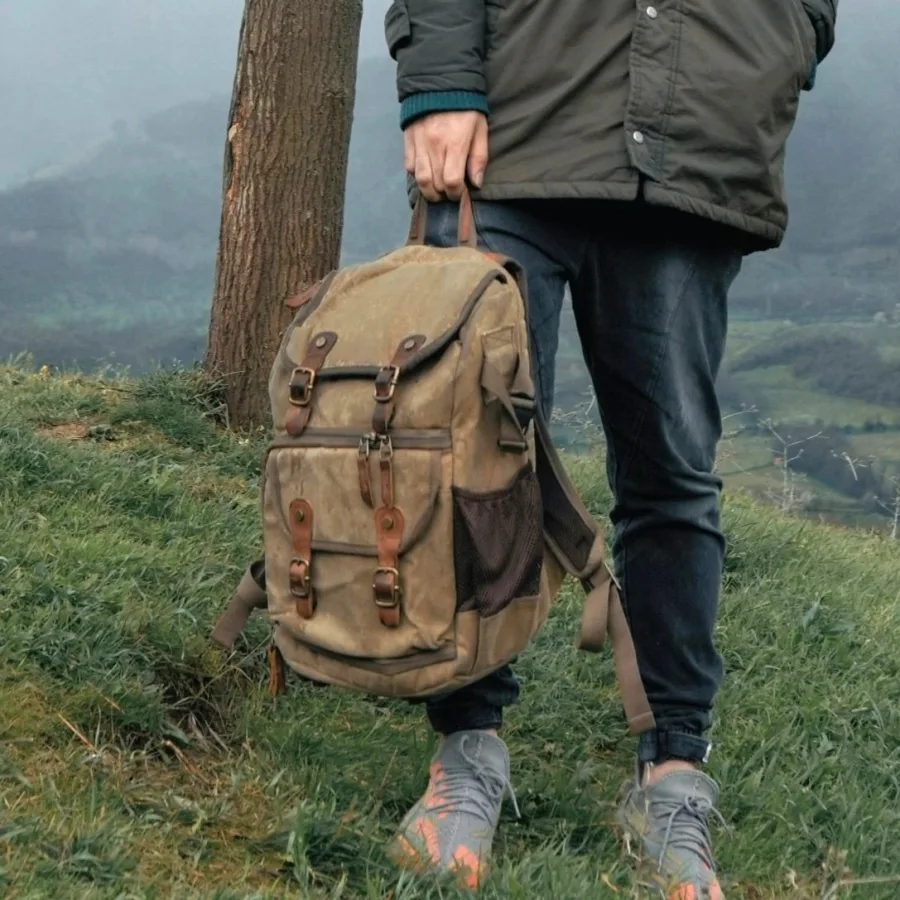
Bernard came for his anxiety and for his drinking, which had increased over several years. What emerged across the meetings, and which he had never said, was an old professional setback known to two people only. To everybody else he had presented a simpler version of his life, and he had been holding that version ever since. He avoided certain family gatherings so as not to have to talk about it, and had done so for years without anyone asking why.
He was the one who found the image, and we kept it throughout: a backpack he had been carrying for ten years, into which he had put a stone every time he had had to round off his version of events. He could no longer set it down, since nobody knew he was carrying it.
The work went in several stages, over several months. First on the inner commentary, which had stopped talking about a failure and was talking about what he was. Then on the bag, stone by stone: which ones were really his, which ones he had picked up for other people. Finally, on his own initiative and much later, on telling somebody close to him. His drinking was monitored in parallel by his doctor, which we had asked for at the first meeting.
> "I thought I was ashamed of having failed. In fact I was ashamed of having lied for ten years to hide it. The bag was not the bankruptcy. It was the ten years." > Bernard, name changed
He did not set the bag down all at once, and he says he still carries it some days. He simply finds it lighter, and he now knows what is inside. Every situation is different, and Bernard's path tells you nothing about what yours will be.
How a Hypnosis session works on this subject
The conversation. Whatever you are willing to say, and no more. On this subject in particular, you do not have to recount the facts to be supported: it is enough that we know in which situations it shows up and what it makes you conclude about yourself. We will also cover your mood, your sleep, and whether you have medical or psychological care in place.
The goal. Set together, modest and concrete. Rarely "stop feeling ashamed", more often: being able to go to Sunday's family meal, or stopping treating myself the way I do when I think back on it.
The induction. A natural state of focused attention that you already know without naming it. You stay aware, you hear everything, you can speak and stop whenever you wish. You are never required to say or to relive anything.
The work. Most often it focuses on separating the act from the person, on the inner commentary, and on the emotional charge attached to a situation. It can be done symbolically, without the facts being named, which suits many people on this subject. If the charge goes beyond what this setting allows, we stop and point you onward: that is planned for, and it is not a failure.
The debrief and the exercise. A conversation about what you experienced, and a self-hypnosis exercise to take away. The following sessions are set by what you notice in between.
The number of sessions is agreed at the first meeting. On this subject the length depends a great deal on how far back the matter goes, and nobody can announce it in advance.
One limit, which we would rather set out in advance. What you tell us stays between us. One single exception exists, and it is not ours to decide: when a child is currently in danger, the law requires anyone who learns of it to report it, in Quebec as in France.
This does not concern what you went through as a child. It concerns a child who, today, would be in that situation. If that is your case, we will talk it through with you rather than over your head.
Booking an appointment

The first meeting is partly there to check that hypnosis is the right resource for your situation. If another professional seems better suited, we will tell you, and we will do it gladly: on this subject that happens fairly often, and it costs you nothing. Nothing stops you coming back afterwards, and many people take exactly that route: one professional, then another, in whatever order suits their situation rather than the one they had imagined.
In the practice, our practitioners see clients in Montreal, Sherbrooke, Gatineau, Paris and Lille. By video call, wherever you are in the world, which also means you can start without travelling. The how-to is here.
A question before you decide? Write to us saying only what you are willing to say.
Where would you like to consult?
All areas
 Annie Mayrand
Gatineau - Cumberland (ON)
👤
🧑🎓
🚭
❤️
💻
Annie Mayrand
Gatineau - Cumberland (ON)
👤
🧑🎓
🚭
❤️
💻
 Christian Rocher
Beloeil
👤
🧑🎓
👶
🚭
❤️
💻
Christian Rocher
Beloeil
👤
🧑🎓
👶
🚭
❤️
💻
 David Veilleux
Montréal - Anjou
👤
🧑🎓
🚭
❤️
🤰
💻
David Veilleux
Montréal - Anjou
👤
🧑🎓
🚭
❤️
🤰
💻
 Florence Aton
Sutton
👤
🚭
❤️
💻
Florence Aton
Sutton
👤
🚭
❤️
💻
 Jessica Reid
Sherbrooke
👤
🚭
💻
Jessica Reid
Sherbrooke
👤
🚭
💻
 Julie Rocque
Montréal - Jean-Talon
👤
🧑🎓
👶
🚭
❤️
🤰
💻
Julie Rocque
Montréal - Jean-Talon
👤
🧑🎓
👶
🚭
❤️
🤰
💻
 Nuria Pérez de León
Montréal - Rosemont - Saint-Lambert
👤
🧑🎓
💻
Nuria Pérez de León
Montréal - Rosemont - Saint-Lambert
👤
🧑🎓
💻
 Romain Rastoin
Bromont
👤
🧑🎓
🚭
❤️
💻
Romain Rastoin
Bromont
👤
🧑🎓
🚭
❤️
💻
 Réjeanne LeBlanc
La Prairie
👤
🧑🎓
👶
💻
Réjeanne LeBlanc
La Prairie
👤
🧑🎓
👶
💻


Frequently asked questions about Hypnosis for Shame and Guilt
No. It is the most common worry on this subject, and the answer is clear: you decide what you say. The work can be done symbolically, without the facts ever being named. Many people start that way and say more later, or never.
We do not use it for that, and we advise against it. Hypnosis increases confidence in a memory without increasing its accuracy: it makes you more certain, not more correct. That is also what the British Psychological Society advises therapists. And if legal proceedings are a possibility, speak to a lawyer or a victim support organisation first: in Canada, testimony gathered after a hypnosis session is presumed inadmissible on the subjects covered during that session.
No. The hypnotic state is one of focused attention, not sleep and not being placed under anyone's influence. You stay aware, you hear everything, and you keep the ability to refuse a suggestion, to stay silent, or to stop the session. Let us be precise, because the nuance matters here: what dulls under hypnosis is not your will, it is critical distance. That is exactly why we ask no questions about the facts, and it is on us not to take advantage of it.
Generally yes, and many people under medical care are supported with hypnosis alongside it. Hypnosis is a non-medicinal approach that adds to your care without replacing it. Just tell us what you are taking, so that we know what to adjust to, and mention this to your doctor. Any decision about your treatment belongs solely to the doctor who prescribed it, and it is for them to say what fits with what they have prescribed.
Psychotherapy is a regulated activity, practised by professionals whose title is protected, and it is the main approach on this subject. Some schools were developed specifically for people in deep shame who are very hard on themselves. Hypnosis is a narrower form of support that combines well with ongoing care.
It is for you, and it is not enough on its own. In the aftermath of violence, support belongs first with professionals trained in psychological trauma, and free resources are listed at the top and bottom of this page. One thing bears repeating: this shame belongs to the person who acted.
One question often helps: am I telling myself I did something bad, or that I am somebody bad? The first sounds like guilt, and it may call for repair. The second sounds like shame, and repair does not settle it, since it is not an act that is at stake. Many people recognise both in themselves, and there is nothing to decide: this distinction is a bearing for the work, not a box to put yourself in.
That is common, and it is precisely the difference between repairing and punishing. Repairing has an end, produces something, and concerns the person who was harmed. Punishing has no end, produces nothing, and concerns nobody but you. Telling the two apart is often the first piece of work.
Yes, and one single exception exists, which is not ours to decide: when a child is currently in danger, the law requires anyone who learns of it to report it, in Quebec as in France. This does not concern what you went through as a child. It concerns a child who, today, would be in that situation. If that is your case, we will talk it through with you rather than over your head.
The number of sessions is agreed at the first meeting. Be wary of anyone who tells you one will be enough on this subject.
Where to find help.
In Quebec: Info-Social 811, option 2, free and confidential, 24 hours a day · Info-aide violence sexuelle 1 888 933-9007 · SOS violence conjugale 1 800 363-9010, text 438-601-1211.
In France: 3919, Violences Femmes Info · Viols Femmes Informations 0 800 05 95 95, Monday to Friday 10 a.m. to 7 p.m. · 119, child protection · 116 006, support for all victims, 7 days a week 9 a.m. to 7 p.m.
In distress or having suicidal thoughts: in Canada 9-8-8, by call or text; in Quebec 1 866 277-3553 or text 535353; in France 3114, 24 hours a day.
Sources and references
On shame and guilt
- Moral emotions and moral behavior. Tangney, J. P., Stuewig, J., & Mashek, D. J. (2007). Annual Review of Psychology, 58, 345-372. Full text, open access. The reference that distinguishes shame from guilt by their effects.
- Shame, guilt, and depressive symptoms: a meta-analytic review. Kim, S., Thibodeau, R., & Jorgensen, R. S. (2011). Psychological Bulletin, 137(1), 68-96. 108 studies, 22,411 participants.
- Defend or repair? Explaining responses to in-group moral failure. Gausel, N., Leach, C. W., Vignoles, V. L., & Brown, R. (2012). Journal of Personality and Social Psychology, 102(5), 941-960. The work that qualifies the dichotomy.
- Associations between humiliation, shame, self-harm and suicidality among adolescents and young adults: A systematic review. Sadath, A. et al. (2024). PLoS One, 19(2), e0292691.
On treatment approaches
- The effectiveness of compassion focused therapy with clinical populations. Millard, L. A. et al. (2023). Journal of Affective Disorders, 326, 168-192.
- Experimental disclosure and its moderators: a meta-analysis. Frattaroli, J. (2006). Psychological Bulletin, 132(6), 823-865. 146 studies on putting words to what you keep to yourself.
On hypnosis
- The Efficacy of Hypnosis as a Treatment for Anxiety: A Meta-Analysis. Valentine, K. E., Milling, L. S., Clark, L. J., & Moriarty, C. L. (2019). International Journal of Clinical and Experimental Hypnosis, 67(3), 336-363. On anxiety in general.
- The Effectiveness of Mindful Hypnotherapy on Depression, Self-Compassion, and Psychological Inflexibility in Females with Major Depressive Disorder. Khazraee, H. et al. (2023). International Journal of Clinical and Experimental Hypnosis, 71(1), 63-78.
- Ericksonian hypnotherapy versus cognitive behavioral therapy for post-traumatic stress disorder. Çınaroğlu, M. et al. (2026). American Journal of Clinical Hypnosis, 68(2), 97-118.
On memory and the legal setting
- R. v. Trochym, 2007 SCC 6. Supreme Court of Canada. The passages cited are at paragraphs 44 and 61.
- *The Nature of Hypnosis*. British Psychological Society (2001), report of a working party of the Division of Clinical Psychology. The source of the recommendation not to use hypnosis to recover memories.
Institutional resources
- Depression. Government of Quebec.
- Get help with low mood, sadness or depression. NHS.
- Troubles dépressifs. Psycom, France, in French.
- Centre national de ressources et de résilience. France, psychological trauma, in French.
And the neighbouring articles
- If the fear is about being seen going red, see Hypnosis for Erythrophobia.
- If the fear is about being found out on your competence, see Hypnosis for Impostor Syndrome.
- If the shame is caught up in a behaviour, see Hypnosis for Eating and Weight and Hypnosis for Alcohol.
- For how we relate to emotions in general, see Hypnosis for Emotional Regulation.
Hypnosis as practised by the members of Solutions Hypnose is a complementary support approach. It is neither a medical act, nor a diagnosis, nor psychotherapy in the regulatory sense, and it in no way replaces a consultation, follow-up or treatment prescribed by a health professional.
Our practitioners do not assess and do not treat mental disorders or illnesses. They never ask for an ongoing treatment to be stopped or changed: that decision rests exclusively with your doctor.
No result can be guaranteed. The testimonials and examples presented on this page describe individual experiences and do not predict what you will experience.
In case of significant distress, unexplained physical symptoms or suicidal thoughts, contact a doctor, emergency services or a helpline without delay.
Page written by Annie Mayrand
hypnotherapist and NLP coach
partner at Solutions Hypnose.
English version reviewed by David Veilleux
Updated .