
Hypnosis for Bruxism (Teeth Grinding)
You wake with a heavy jaw, as though after a workout you never did. Some mornings it is a headache starting at the temples. Sometimes a sensitive tooth, with nothing broken.
Or your dentist told you, at a routine check-up, mentioning wear. You had noticed nothing. Or it is the person sleeping beside you who describes a noise you will never hear.
There is also the daytime version, the one people talk about less: in front of a screen, in traffic, reading an email, you notice your teeth are touching and your shoulders are up. You let go. Three minutes later it has started again.
This is not a habit of nervousness, and willpower alone will not solve it: it is muscle activity that escapes conscious control almost entirely.
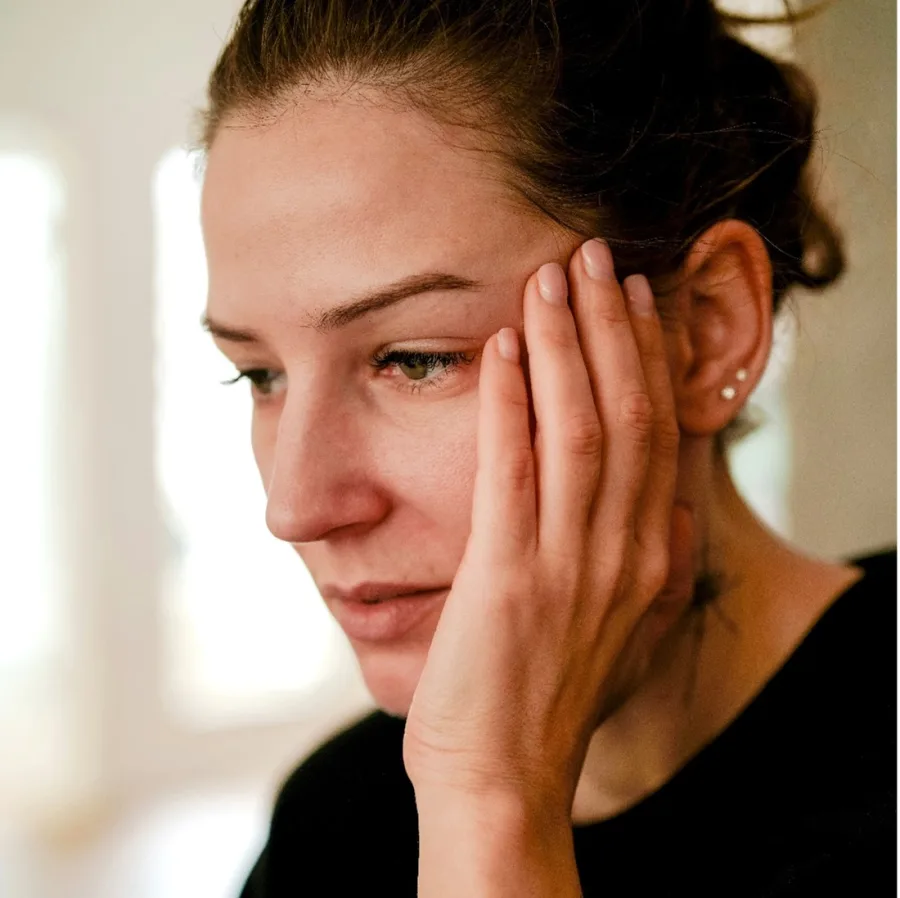

The dentist comes first. Bruxism shows in tooth wear and in the state of the jaw muscles: it is a dental examination, not a hypnosis session, that confirms it, assesses what it has already damaged, and offers suitable protection. Hypnosis comes afterwards, and alongside.
Speak to a doctor too if you snore heavily, if those around you have noticed pauses in your breathing during sleep, if you have morning headaches or daytime drowsiness: these signs deserve to be assessed in their own right, whatever the bruxism is doing. The same goes for persistent pain in the jaw, face or ears, or difficulty opening your mouth.
And if your clenching appeared or worsened after starting a medication, mention it to the doctor who prescribed it: some treatments can contribute. Never change a treatment on your own.
If it is your child who grinds their teeth, it is common and often eases with age; a dental opinion is still worth having if there is visible wear, pain or headaches.
What is Bruxism?
Bruxism means activity in the jaw muscles: clenching, grinding, or bracing the jaw. It is very common: an international meta-analysis published in 2024 puts awake bruxism at around 23% and sleep bruxism at around 21% of the population, children and adults together.
The most important point, and the least known: it is not one phenomenon but two. An international consensus published in 2018 in the *Journal of Oral Rehabilitation*, and revised in 2025, replaced the single definition with two distinct ones.
- Awake bruxism is muscle activity during wakefulness, characterised by prolonged or repeated tooth contact, or by bracing of the jaw. It arises in identifiable contexts: concentration, screens, driving, irritation.
- Sleep bruxism is muscle activity during sleep, rhythmic or not. Its mechanisms are different: research ties it to micro-arousals, those brief reactivations of the heart and brain that punctuate the night and in whose wake the jaw muscle activity is triggered. So it is not simply the daytime tensions carrying on through the night.
This distinction is not theoretical. It determines what can act, and we return to it below.
A second point, this one reassuring. The same consensus, in its 2025 revision, specifies that bruxism is neither a disease, nor a movement disorder, nor a sleep disorder. It is a muscle behaviour, which depending on the case may have no consequences at all, may be a risk factor (particularly for tooth wear and muscle pain), or may even play a protective role. So you do not have a disease to fight: you have an activity to reduce and teeth to protect.
What is known about associated factors
They combine, and they vary from person to person. One word matters here: these are associations, observed, not demonstrated causes. The origin of bruxism is described as complex and unsettled by the very people who write its definition.
- Stress and emotions, well established for awake bruxism, more debated for the sleep kind.
- Sleep-related breathing disorders, including apnoea, sometimes found in people who brux. The link between the two, however, is debated and not established: the reference review published in the journal *Sleep* in 2022 concludes that it cannot be confirmed in adults.
- Tobacco, caffeine, alcohol, certain substances.
- Some medications.
- A familial component, described for sleep bruxism.
One received idea to set aside: occlusion, that is, the way the teeth fit together, was long presented as the main cause. Recent work gives it a far more limited role: the international consensus specifies that bruxism is regulated centrally, not by anatomical factors such as the way the teeth meet. It is your dentist who judges that.
Seek advice without delay in case of jaw joint pain, locking on opening or closing, painful clicking, a tooth that cracks, or frequent headaches. These deserve to be assessed by a dentist or a doctor.
If a medication you are taking is involved, that decision belongs exclusively to the doctor who prescribed it. Mention the bruxism to them, without changing anything yourself.
The impact of Bruxism on daily life
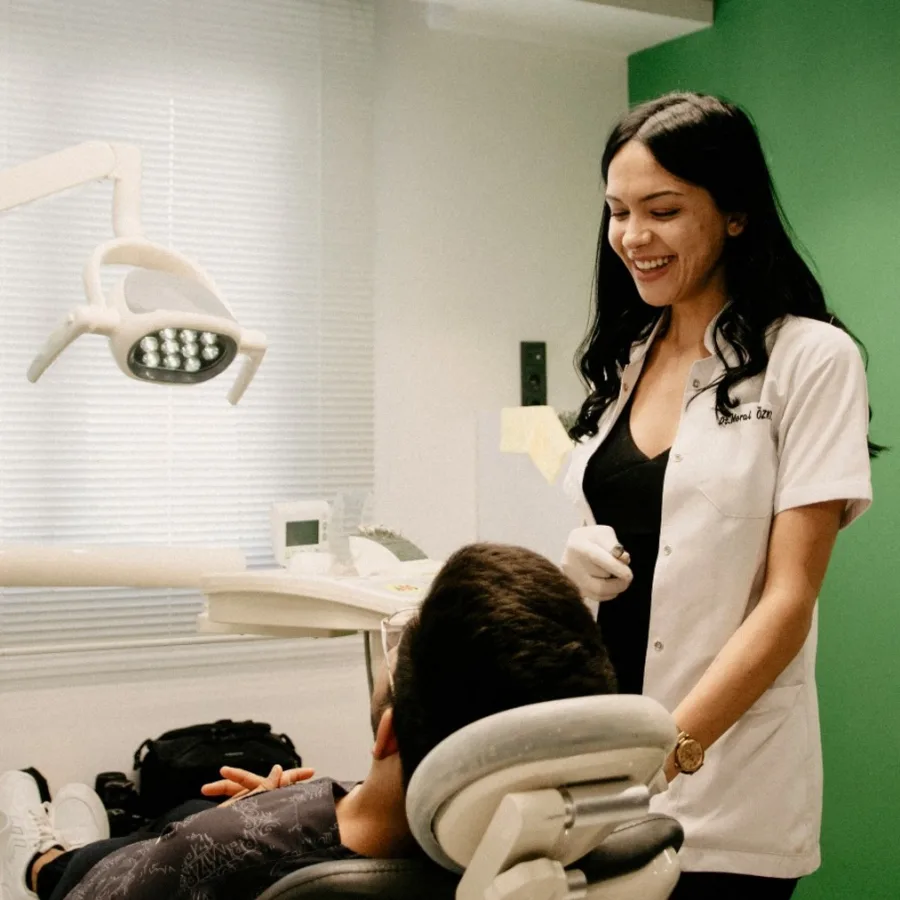
The teeth first, and that is most often what prompts the consultation: enamel wear, sensitivity to hot and cold, restorations coming loose, cracks. The consequences are gradual and, on this front, irreversible, which is why the dental examination cannot be put off, even when nothing hurts. The muscles and the joint follow: a tired jaw on waking, pain radiating to the temples, the ears and the neck, sometimes limited opening. See Hypnosis for Pain Management.
Headaches, often in the morning, put down to something else for years.
Sleep, your own and that of those around you, with waking that does not rest. See Hypnosis for Sleep and Insomnia.
And self-monitoring, specific to awake bruxism: once you have noticed it, you check yourself all day long, which adds tension to the tension.
The recognised approaches outside Hypnosis
The point of entry is your dentist, and possibly a doctor for anything touching on sleep and medication.
- The occlusal splint or night guard, prescribed and fitted by the dentist. It protects the teeth from wear, which is what it is prescribed for, and that is already considerable. Its effect on the muscle activity itself remains debated: a 2024 meta-analysis finds no change in that activity, at a level of evidence its own authors describe as low. So it does not make bruxism go away, it limits the damage to the teeth. Whether it is indicated, how long it is worn and how it is followed up are your dentist's call.
- A sleep assessment, where there is heavy snoring, breathing pauses noticed by others, or daytime drowsiness. Those signs are worth attending to in their own right.
- Physiotherapy of the jaw and face, for muscle and joint pain.
- Cognitive and behavioural therapies, including habit-reversal techniques, particularly suited to awake bruxism: these are the most studied approaches on this ground, which means nine studies and one hundred and sixty-five participants in total in the most recent systematic review.
- Reviewing current medication, with the prescribing doctor, where a drug is suspected.
- Cutting down on caffeine, alcohol and tobacco, which are among the best-identified associated factors. See Hypnosis to Quit Smoking.
- Botulinum toxin injections into the masticatory muscles, offered in certain situations and outside officially approved indications. The available studies are few and their authors describe the results as preliminary; other work has reported a loss of jaw bone density after these injections, which the people concerned should be told about beforehand. It is a decision that belongs to the doctor or dentist who offers it.
Hypnosis places itself alongside these approaches, on the side of tension, of the daytime habit and of sleep.
Hypnosis for Bruxism: aims and benefits
Let us start with what hypnosis does not do.
It does not repair teeth and does not replace the night guard. It does not look after sleep apnoea. It does not act on a dental or medication-related cause. And it does not make bruxism disappear, any more than any other approach does to date.
What support aims at
- Noticing the tension before it sets in. Most people who clench during the day only realise once the jaw hurts. Spotting the movement earlier is the first step, and it already changes things.
- Setting up a release signal, that is, an opposite reflex, tied to a specific situation: the screen, the steering wheel, the end of the day.
- Reducing the background tension of which clenching is one expression. See Hypnosis for Stress and Anxiety and Hypnosis for Letting Go.
- Improving getting to sleep and perceived sleep quality, which benefits the whole even though the link with night-time activity stays indirect.
- Supporting muscle pain in the jaw and neck, once any cause requiring medical care has been ruled out.
What hypnosis can act on, and what is less clear
This is the point we want to put plainly, because it determines what you can expect.
For awake bruxism, the reasoning holds. It is a habit, triggered by identifiable situations, occurring while you are conscious. That is exactly the kind of automatic behaviour on which work in hypnosis and self-hypnosis is relevant: spotting the trigger, tying a release to the moment it happens, and repeating until that becomes the new reflex. It is also what behavioural habit-reversal techniques aim at, and the two combine well.
For sleep bruxism, more caution is needed. You are asleep, the activity is triggered in the wake of micro-arousals, and no suggestion addresses a muscle directly during the night. What support can aim at stays indirect: less tension at bedtime, more stable sleep, less rumination before falling asleep. It may contribute; it does not steer the phenomenon, and nobody should tell you otherwise.
In other words: if you clench during the day, hypnosis is a coherent resource. If you grind at night, the priority remains the dentist and the sleep assessment, and hypnosis comes in support.
What the research says
On hypnosis and bruxism, the literature amounts to very little, and that is better described than implied. A systematic review published in 2022 in the *Japanese Dental Science Review*, covering the management of sleep bruxism in adults, lists suggestive hypnotherapy among the psychological approaches on record. It rests for this on a single study: work published in 1991 involving eight people, whose jaw muscle activity was measured by electromyography during sleep, and in whom that activity had fallen after the sessions, with follow-up ranging from four to thirty-six months. A few isolated cases, described one by one, are added to that.
It is little, and it is old. The authors of the 1991 study were already noting the scarcity of scientific work on the subject, and no large trial has appeared since. We say it as it is: we support people who brux, many draw a benefit from it, and that benefit has not been measured on a scale that would make it a demonstration. Any page announcing proven effectiveness on this particular subject goes beyond what is known.
What is documented lies elsewhere. On anxiety, a meta-analysis published in 2019 in the *International Journal of Clinical and Experimental Hypnosis*, covering fifteen studies and seventeen trials, reports a greater reduction among people supported with hypnosis than in control groups, with better results when hypnosis accompanies other interventions rather than being used on its own. A wider review published in 2024 reaches a comparable conclusion across all indications: real effects, highly variable between fields, and methodological quality that is often poor.
That is why we present hypnosis as support for tension and for habit, within a course of care in which the dentist remains the pivot.
An example of support
*An illustrative example. The name is changed and the path described belongs only to the person who lived it.*
Damien came about jaw pain that spread into headaches. It had been going on for two years. His dentist had found the wear and fitted a night guard; his doctor had ruled out the other causes, one after another. The pain remained, and he arrived telling himself there was probably nothing left to do: the guard protected his teeth, which was already something, but it changed nothing about the mornings when he woke with his jaw locked.
The work bore first on noticing: at what moments was he clenching, during the day, without realising. The answer surprised everyone, him included: almost exclusively at work, and above all in exchanges where he disagreed.
One sentence came back several times across the sessions, one of those he had heard as a child: a man does not complain, he grits his teeth. We do not claim that sentence explains his bruxism, and the link cannot be demonstrated. But it gave him a concrete angle, and the work went there, on what he did with disagreement.
> "I did not know I was clenching. Now I feel it coming, and most of the time I let go. Not always." > Damien, name changed
He kept his night guard, which remains his dentist's recommendation. Every situation is different, and Damien's path says nothing about what you will experience.
How a Hypnosis session on this subject unfolds
The conversation. What your dentist found, whether you have a guard, whether a sleep assessment has been done, your current treatments, your intake of coffee, alcohol and tobacco. And above all: do you clench during the day, at night, or both. If the dental assessment has not yet been done, we will send you there before starting.
The aim, framed together and deliberately modest. For example: noticing the clenching in meetings, or waking with a less painful jaw.
The induction. A natural state of attention you already know without naming it. You stay conscious, you hear everything, you can speak and you can stop whenever you wish.
The work. On this subject it most often bears on the fine perception of tension in the jaw, on tying a release to specific situations, on the bodily metaphors that help release, and on background tension.
The return and the exercise. A conversation about what you experienced, and a short self-hypnosis exercise to use several times a day. On this subject in particular, it is the daily repetition that counts, more than the session.
The number of sessions is settled at the first conversation.
Book an appointment

Hypnosis comes alongside your dentist's care, never in its place, and the first conversation serves partly to check that care exists: if the dental assessment has not yet been done, we will send you there before starting anything, and that is not a formality, and enamel wear does not come back. It is also where the question that changes everything on this subject gets asked: do you clench during the day, at night, or both.
In person, our practitioners see English-speaking clients in Quebec, in Montreal, Sherbrooke and Gatineau, and in France in Paris and Lille. By video, wherever you are: work on this subject rests largely on a daily exercise, which is learned just as well at a distance. Here is how it works.
A question before you decide? Write to us describing your situation.
Where would you like to consult?
All areas
 Annie Mayrand
Gatineau - Cumberland (ON)
👤
🧑🎓
🚭
❤️
💻
Annie Mayrand
Gatineau - Cumberland (ON)
👤
🧑🎓
🚭
❤️
💻
 Christian Rocher
Beloeil
👤
🧑🎓
👶
🚭
❤️
💻
Christian Rocher
Beloeil
👤
🧑🎓
👶
🚭
❤️
💻
 David Veilleux
Montréal - Anjou
👤
🧑🎓
🚭
❤️
🤰
💻
David Veilleux
Montréal - Anjou
👤
🧑🎓
🚭
❤️
🤰
💻
 Florence Aton
Sutton
👤
🚭
❤️
💻
Florence Aton
Sutton
👤
🚭
❤️
💻
 Jessica Reid
Sherbrooke
👤
🚭
💻
Jessica Reid
Sherbrooke
👤
🚭
💻
 Julie Rocque
Montréal - Jean-Talon
👤
🧑🎓
👶
🚭
❤️
🤰
💻
Julie Rocque
Montréal - Jean-Talon
👤
🧑🎓
👶
🚭
❤️
🤰
💻
 Nuria Pérez de León
Montréal - Rosemont - Saint-Lambert
👤
🧑🎓
💻
Nuria Pérez de León
Montréal - Rosemont - Saint-Lambert
👤
🧑🎓
💻
 Romain Rastoin
Bromont
👤
🧑🎓
🚭
❤️
💻
Romain Rastoin
Bromont
👤
🧑🎓
🚭
❤️
💻
 Réjeanne LeBlanc
La Prairie
👤
🧑🎓
👶
💻
Réjeanne LeBlanc
La Prairie
👤
🧑🎓
👶
💻


Frequently asked questions about Hypnosis for Bruxism (Teeth Grinding)
Nobody can promise that. The literature on this particular subject amounts to very little: a systematic review published in 2022 lists suggestive hypnotherapy among the approaches recorded for sleep bruxism, on the strength of a single study, published in 1991 and involving eight people. What support can aim at is daytime clenching, which is a noticeable habit, and background tension. For night-time grinding, the contribution is more indirect.
That question belongs to your dentist, not to us: whether it is indicated, how long it should be worn and how it is followed up are all theirs to decide. What we can say: hypnosis does not replace a night guard, and nothing we do justifies stopping wearing it. If you are wondering about its usefulness, that is a question for your dentist.
No. The hypnotic state is a state of focused attention, not sleep and not being placed under someone's influence. You stay conscious, you hear everything, and you keep the ability to refuse a suggestion, to speak or to stop the session. Hypnosis in itself cannot make someone act against their will.
Yes, and your medical care continues exactly as before: hypnosis as we practise it is a non-medicinal form of support, we replace no treatment and we modify none. Never change a treatment on your own initiative. Simply mention your care at the first conversation. And if your clenching appeared or worsened after starting a medication, raise it with the doctor who prescribed it: some medications can contribute to bruxism.
Psychotherapy is a regulated framework, practised by professionals whose title is protected, and it can cover the whole of psychological functioning and established disorders. Hypnosis as we practise it is a more circumscribed form of support, focused on a specific aim. For bruxism, behavioural therapies are also indicated, particularly for daytime clenching, and they combine well with hypnosis.
Partly, and not in the same way in every case. The association is well established for daytime clenching. For sleep bruxism it is more debated, and other mechanisms come into play, including micro-arousals, certain substances and a familial component. One point that matters: the international consensus describes an association between bruxism, stress and anxiety, not a cause. The origin of bruxism is described there as complex and unsettled. Reducing it to a matter of nerves leads to missing what can actually be looked after.
The honest answer is that nobody knows: the reference review published in the journal Sleep in 2022 concludes that it is not possible to confirm a relationship between sleep bruxism and sleep apnoea in adults. What is true is that heavy snoring, breathing pauses noticed by those around you, or daytime drowsiness deserve to be assessed by a doctor in their own right, whatever the bruxism is doing.
It is common in children (studies record between 13% and 49% depending on the population) and it often eases from around nine or ten years old. Mention it to the dentist at the next check-up, and sooner if there is visible wear, pain or headaches. Our page Hypnosis for Children describes what we can offer younger ones, always alongside medical advice.
The number of sessions is settled at the first conversation. On this subject, what matters most is the daily repetition of the exercise, more than the number of appointments.
Sources and references
Definitions and figures
- Updating the Bruxism Definitions: Report of an International Consensus Meeting. Verhoeff, M. C., Lobbezoo, F. et al. (2025). Journal of Oral Rehabilitation, 52(9), 1335-1342. The current version of the definitions, which specifies that bruxism is neither a movement disorder nor a sleep disorder.
- International consensus on the assessment of bruxism: Report of a work in progress. Lobbezoo, F., Ahlberg, J., Raphael, K. G. et al. (2018). Journal of Oral Rehabilitation, 45(11), 837-844. The founding text, which separates awake bruxism from sleep bruxism.
- Global Prevalence of Sleep Bruxism and Awake Bruxism in Pediatric and Adult Populations. Zieliński, G., Pająk, A., & Wójcicki, M. (2024). Journal of Clinical Medicine, 13(14), 4259.
- Teeth grinding (bruxism). NHS.
Bruxism and sleep apnoea
- Sleep bruxism and obstructive sleep apnea: association, causality or spurious finding? A scoping review. Pauletto, P., Polmann, H., Réus, J. C. et al. (2022). Sleep, 45(7), zsac073. The authors conclude that, as the literature stands, a relationship between the two cannot be confirmed in adults.
Management
- Managements of sleep bruxism in adult: A systematic review. Minakuchi, H., Fujisawa, M., Abe, Y. et al. (2022). Japanese Dental Science Review, 58, 124-136. This is the review that lists suggestive hypnotherapy among the psychological approaches, on the strength of the 1991 study cited above.
- Clarke, J. H., & Reynolds, P. J. (1991). Suggestive hypnotherapy for nocturnal bruxism: a pilot study. American Journal of Clinical Hypnosis, 33(4), 248-253 (PMID 2024617): eight participants, follow-up of 4 to 36 months; abstract freely available, full article paywalled.
- Management of awake bruxism: a systematic review. Graham, D. A., Lövgren, A., Häggman-Henrikson, B. et al. (2026). BMC Oral Health, 26, 559. Nine studies, 165 participants in total.
- Efficacy and Safety of Botulinum Toxin in the Management of Temporomandibular Symptoms Associated with Sleep Bruxism. Buzatu, R., Luca, M. M., Castiglione, L., & Sinescu, C. (2024). Dentistry Journal, 12(6), 156.
- Mandibular Bone Loss after Masticatory Muscles Intervention with Botulinum Toxin. Balanta-Melo, J., Toro-Ibacache, V., Kupczik, K., & Buvinic, S. (2019). Toxins, 11(2), 84.
In children
- Sleep Bruxism in Children: Etiology, Diagnosis, and Treatment — A Literature Review. Bulanda, S. et al. (2021). International Journal of Environmental Research and Public Health, 18(18), 9544.
On hypnosis
- Valentine, K. E., Milling, L. S., Clark, L. J., & Moriarty, C. L. (2019). The Efficacy of Hypnosis as a Treatment for Anxiety: A Meta-Analysis. International Journal of Clinical and Experimental Hypnosis, 67(3), 336-363. doi.org/10.1080/00207144.2019.1613863: abstract freely available, full article paywalled.
- Meta-analytic evidence on the efficacy of hypnosis for mental and somatic health issues: a 20-year perspective. Rosendahl, J., Alldredge, C. T., & Haddenhorst, A. (2024). Frontiers in Psychology, 14, 1330238.
And the neighbouring article
- If it is your child who grinds their teeth, our page Hypnosis for Children describes what we can offer younger ones, always alongside medical advice.
Hypnosis as practised by the members of Solutions Hypnose is a complementary support approach. It is neither a medical act, nor a diagnosis, nor psychotherapy in the regulatory sense, and it in no way replaces a consultation, follow-up or treatment prescribed by a health professional.
Our practitioners do not assess and do not treat mental disorders or illnesses. They never ask for an ongoing treatment to be stopped or changed: that decision rests exclusively with your doctor.
No result can be guaranteed. The testimonials and examples presented on this page describe individual experiences and do not predict what you will experience.
In case of significant distress, unexplained physical symptoms or suicidal thoughts, contact a doctor, emergency services or a helpline without delay.

Page written by Daby Touré
hypnotherapist
partner at Solutions Hypnose.
English version reviewed by David Veilleux
Updated .