
Hypnosis and Anger Management
What is cruel about anger is that it makes you pay twice.
First the damage: the words that go too far, the slammed door, the children's faces closing over… Then the regret, that next-day shame which promises "never again"… until the next time. If you are reading this, you probably know that cycle. Or its opposite: anger held in, swallowed for years, eating away from the inside.
Good news: in both cases, the problem is not your anger. It is how it is handled, and handling it can be learned. This page explains the mechanics of an outburst, what hides underneath anger, how hypnosis "lengthens the fuse", and where the line runs between anger that can be worked on here and violence that calls for specialist help.


Anger is a messenger
The problem is not the anger, it is the messenger who breaks everything
Anger is a normal and useful emotion: it signals a limit crossed, an injustice, a need trampled on, and it supplies the energy to respond.
That is exactly what the main references in the field point out: an emotion healthy in itself, which only becomes a problem when it escapes control and damages relationships, work or family life (American Psychological Association).
So the aim is never to remove anger, because a human being without anger would no longer defend any limit at all. The aim is to regulate it: hear its message, and choose your response.
Two opposite malfunctions are tied to anger:
- The outburst: the short fuse, the disproportionate rages, the damage and then the regret.
- Anger held in: the kind you were never allowed to express. It turns into rumination, stubborn resentment, sarcasm, or tension held in the body.
Both can be present in the same person: you explode where it is supposedly "allowed" or socially invisible (at home) and swallow it where it is riskier (at work).
The iceberg: what your anger is protecting
Here is the idea that most often changes things in session: anger is frequently a surface emotion, the visible part of an iceberg whose mass lies elsewhere.
Underneath the outburst there is almost always something else:
- fear (of losing control, of being abandoned),
- hurt (feeling ignored, looked down on, unfairly treated),
- powerlessness (in the face of a situation you cannot control),
- shame,
- or simply exhaustion.
Anger is also often the "acceptable" emotion that comes to the front when the others have no right of entry. That is particularly true for men who were taught that sadness was forbidden but anger tolerated. One major practical consequence: as long as only the lid is worked on (control techniques), the pot goes on heating.
Effective work addresses both: managing the surface AND hearing what the iceberg protects.
Understanding the outburst
The mechanics of an outburst: the rise, the point of no return, the regret
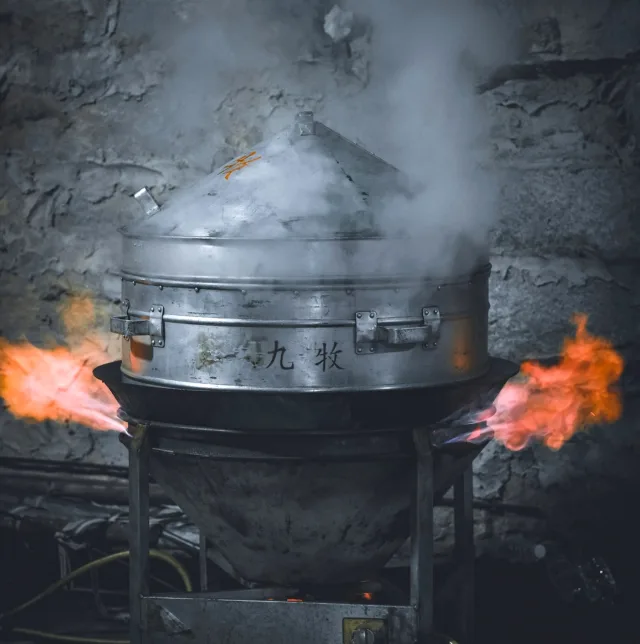
An outburst always follows the same film, in fast forward.
- The rise: heat, jaw tightening, voice going up, thoughts racing…
The body gives warning, but you are not listening to it yet. - The point of no return: beyond a certain physiological threshold, the rational brain is unplugged.
That is why "be reasonable" never works mid-rise, and why you say things "you do not mean" (in reality: things you would not have chosen to say).
- The damage, then the come-down, and its faithful guest: shame.
But shame is not a safety rail, it is fuel: it raises the background tension, which lowers the threshold for the next outburst.
The circle is complete.
And that is the circle we set out to break in therapeutic hypnosis.
Video available in French
Video transcript
Bonjour, L’hypnose est un outil bien intéressant pour mieux gérer ses émotions et notamment la colère. En fait peu de clients viennent directement au sujet de leur colère. On pourra d’ailleurs se demander pourquoi les gens colériques ne viennent pas forcément consulter. En revanche, de nombreux clients ou clientes viennent pour des troubles du sommeil, des troubles anxieux et pendant le travail en hypnose, des émotions surgissent et notamment de la colère.
C’est à dire que l’état d’hypnose, utilisé pour un autre sujet, amène la personne à prendre du recul sur elle-même, sur sa vie, à faire des liens entre son mal-être et des situations présentes ou passées. Voici quelques cas typiques de colères rentrées : - Des familles où la gentille fille ou le gentil garçon a subi des frustrations, des humiliations, ou bien a fait des efforts pendant des années pour arrondir les angles dans les conflits familiaux, en s’oubliant au passage.
- Des environnements de travail où là aussi à force de bien faire mon travail sans broncher, ou même à aider les autres, je me fais piquer mes idées, ou je sers de faire-valoir à un collègue ou un chef plus ambitieux. - Des séparations de couple mal digérées où je réalise que j’ai été bien bon, bien bonne pour quelqu’un qui en a profité… Les cas sont multiples et assez fréquents. Oh sans doute que cette colère serait ressortie à un autre moment et avec quelqu’un d’autre.
Mais l’ouverture que procure l’état d’hypnose favorise certainement cela. Je dis favorise car pour moi c’est positif que les émotions surgissent, et notamment la colère qui est un signal d’alarme face à des agressions, un manque de respect, de l’injustice ou pour révéler mes frustrations. Alors maintenant que cette colère est là, comme l’hypnose peut-elle aider à la gérer ? Il y a plusieurs intérêts à l’hypnose dans la gestion des émotions : Tout d’abord c’est une technique délicate où on travaille avec des symboles, des histoires, des métaphores.
Et dans la plupart des cas cela suffit. Car sous hypnose notre cerveau comprend remarquablement les 2ème ou 3ème degrés, et les messages dans nos histoires. Donc pas besoin d’aller ressasser le passé. Parfois je ne connais même pas vraiment le pourquoi de la colère du client. Mais le travail se fait et le client est soulagé. En état d’hypnose, on peut aussi aider notre client à se dissocier de ses émotions, comme s’il se regardait au cinéma, ou s’il regardait sa colère de l’extérieur, en la transformant en objet.
Là aussi on évite de retourner dans le passé ou dans un stress trop important. Il y a notamment une technique classique où le client visualise son problème comme un rocher au milieu de son chemin, et il va choisir sa manière de s’en débarrasser. Alors on peut être septique : en quoi détruire mentalement un rocher aide à solutionner un problème ? Et bien sans doute que notre esprit est beaucoup plus intelligent qu’on ne le croit.
En tout cas, ce qui est fascinant, c’est que la personne ressort souvent allégée et apaisée. Parfois, quand cela fonctionne, il faut accepter ne pas tout comprendre... Alors je reviens à la colère. Surtout pour des gens qui ont nié ou refoulé leur colère pendant des années – et encore plus si pour eux être en colère c’est « mal » - la sentir qui remonte peut être perturbant. Avec le risque de revisser le couvercle de la cocotte-minute pour un nouveau tour de piste, et avoir un problème encore plus gros à gérer quelques mois ou années plus tard.
D’où l’intérêt de l’hypnose où c’est la personne qui gère elle-même le rythme du travail, de manière « écologique » pour elle. Tiens la cocotte-minute, c’est un symbole bien intéressant pour la colère : quel est le feu qui est en dessous, quelle est la taille de la cocotte, l’épaisseur des parois… C’est typiquement le genre d’image avec lesquelles nous pouvons travailler, et sous hypnose, notre esprit comprend très très bien les métaphores.
L’hypnose est encore souvent méconnue ou limitée au spectacle ou aux arrêts de fumer mais en fait elle est utile dans des tas de domaines. Et la gestion des émotions en est un particulièrement fascinant. Si vous avez des colères, des tristesses, des peurs… qui vous gênent dans votre vie, l’équipe d’hypnothérapeutes de Solutions Hypnose est là pour vous accompagner. En présentiel près de chez vous ou par vidéo, cela fonctionne aussi très bien.
Prenez rendez-vous dès maintenant pour créer la vie que vous souhaitez grâce à l’hypnose ! A bientôt.
Hypnotherapy is a complementary form of support and does not replace medical advice, diagnosis, or treatment. If you have any concerns about your health, please consult a physician first.
What Hypnosis offers for Anger Management
What hypnosis does, concretely
- Lengthening the fuse.
The work starts with detection: learning to recognise your signals of a rise earlier and earlier.
Because the whole strategy fits in one sentence: act before the point of no return, while the choice still exists.
Hypnosis sharpens that bodily perception until it becomes automatic. - Installing the airlock.
The safeguard reflex recommended by every reference in the field: stepping away for a few minutes before answering (Mayo Clinic).
It is simple to understand and hard to carry out mid-rise.
That is exactly what the hypnotic anchor installs: a come-down protocol (lengthened breathing, a gesture, a key phrase) rehearsed in imagination in your real conflict scenes, until it becomes faster than the outburst. - Defusing your buttons.
Everyone has their disproportionate triggers: disrespect, being ignored, injustice, being controlled...
These buttons are rarely born in the present situation: they are often wired to the person's history, like the child nobody listened to who becomes an adult who explodes when interrupted.
In hypnosis, we revisit that wiring with today's resources, and the button loses its current. - Emptying what has built up and hearing the iceberg.
Safely releasing the stored pressure, then giving a voice to whatever the anger was protecting (the fear, the hurt, the exhaustion…) which, once heard, no longer needs to shout. - Learning effective anger.
Because that is the final paradox.
Anger expressed calmly, "what you have just done goes past my limit", achieves infinitely more than shouting, which hands the other person the good role and buries your message under the volume (see Self-confidence).
Anger held in: the other side, just as costly
Never getting angry is not a virtue when it is a prohibition.
Anger that gets swallowed turns into night-time rumination, resentment that slowly poisons relationships, sarcasm, the "yeses" you regret, and tension in the body (jaw, back, stomach; any persistent symptom deserves a medical opinion).
The work for anger held in is symmetrical: recovering the right to be angry, then its settled expression. Many people discover that between exploding and staying silent there is a third path, and that it is the only one that works.
The red line: when anger becomes violence
Let us say it plainly, because it is a matter of safety. If your anger turns into actions (hitting, pushing, breaking, threatening…) or if the people close to you are afraid of you, the situation goes beyond well-being hypnotherapy: it calls for specialist help first.
Organisations and programmes for people who want to stop their violent behaviour exist in every country. Taking that step is difficult and deeply respectable. Our support can then work on regulation alongside it.
And if you are reading this page because you are afraid of someone else's anger: your safety comes first. Confidential helplines exist, and it is not your job to "manage" someone else's anger.
When to see a doctor or a psychologist first
Some kinds of anger have other causes to explore as a priority:
- anger that has become uncontrollable in every context,
- a recent and marked change of character (with new unexplained irritability, speak to a doctor, since physical or medication-related factors exist),
- alcohol or substance use that feeds the outbursts,
- or anger tied to a traumatic experience.
We do that sorting at the first meeting and will point you elsewhere frankly.
What our clients say

« The virtual session helped me a lot with my anger and sadness management. Nassim is wonderful, she's gentle and calm, I highly recommend her. Thank you!! »
Odette, client of Nassim Zafar
Find Hypnosis for Anger Management near you
All areas
 Annie Mayrand
Gatineau - Cumberland (ON)
👤
🧑🎓
🚭
❤️
💻
Annie Mayrand
Gatineau - Cumberland (ON)
👤
🧑🎓
🚭
❤️
💻
 Christian Rocher
Beloeil
👤
🧑🎓
👶
🚭
❤️
💻
Christian Rocher
Beloeil
👤
🧑🎓
👶
🚭
❤️
💻
 David Veilleux
Montréal - Anjou
👤
🧑🎓
🚭
❤️
🤰
💻
David Veilleux
Montréal - Anjou
👤
🧑🎓
🚭
❤️
🤰
💻
 Florence Aton
Sutton
👤
🚭
❤️
💻
Florence Aton
Sutton
👤
🚭
❤️
💻
 Jessica Reid
Sherbrooke
👤
🚭
💻
Jessica Reid
Sherbrooke
👤
🚭
💻
 Julie Rocque
Montréal - Jean-Talon
👤
🧑🎓
👶
🚭
❤️
🤰
💻
Julie Rocque
Montréal - Jean-Talon
👤
🧑🎓
👶
🚭
❤️
🤰
💻
 Nuria Pérez de León
Montréal - Rosemont - Saint-Lambert
👤
🧑🎓
💻
Nuria Pérez de León
Montréal - Rosemont - Saint-Lambert
👤
🧑🎓
💻
 Romain Rastoin
Bromont
👤
🧑🎓
🚭
❤️
💻
Romain Rastoin
Bromont
👤
🧑🎓
🚭
❤️
💻
 Réjeanne LeBlanc
La Prairie
👤
🧑🎓
👶
💻
Réjeanne LeBlanc
La Prairie
👤
🧑🎓
👶
💻


Frequently asked questions about Hypnosis for Anger Management
Yes, because "quick-tempered" is not an identity.
It is a mechanism: triggers wired to your history, a short fuse never lengthened, a shame-tension circle never broken. That mechanism can be taken apart piece by piece. How long it has been running does not make it any truer, only more automatic, and the automatic is precisely the territory of hypnosis.
Because the regret arrives after the point of no return, when your rational brain plugs back in.
During the rise it was unplugged: that is physiology, not a lack of willpower.
So the answer is not to regret harder, but to act earlier: spot the rise from the first signals and trigger the airlock while the choice still exists. That is exactly what we train in therapeutic hypnosis.
It is a transmission, not a genetics of fate.
As a child you learned that anger was the answer to frustration (and probably swore never to repeat it…), which makes every outburst doubly painful.
The work undoes that learning and often, along the way, settles the relationship with that father. Breaking a family chain is one of the finest reasons to come.
Raising your voice is not in itself violence, but it is a signal to take seriously.
First for you, when the voice becomes an assault: shouting is the symptom of a full pot (tiredness, load, accumulation) spilling over onto the smallest people because they are there. It can be worked on very well, and fast.
But if you get as far as threats, blackmail or physical gestures, specialist help comes first. Taking that step is respectable, not shameful.
Driving brings together every ingredient: powerlessness (you do not control the others), anonymity (the other is not a person but "that idiot"), being shut in, and often a pot already full when you got into the car.
But for that very reason it is also excellent daily training ground: spotting your typical triggers, working on self-control… Progress there is quick to measure.
No, it is the other side of the same problem.
Swallowed anger does not disappear: it becomes rumination, resentment, sarcasm, tension. And it costs you your limits: someone who never voices their anger lets everything through.
The work is symmetrical: recovering the right to be angry, then settled expression, stating the limit calmly. Which achieves more than silence AND more than shouting.
Quite the opposite: it gives you back the choice.
Regulated anger stays available: it defends your limits, with the added effectiveness of calm. A settled "no" carries more weight than an outburst.
What you lose is the outbursts you endure and the regret; what you gain is a quiet authority.
You cannot do the work in their place, since willingness is the condition of any support.
What you can do: calmly name the impact of their anger on you, outside a crisis, and set your limits.
And one important thing: if their anger frightens you or has gone beyond words, your safety comes before their process. Confidential helplines exist for you.
Generally three to six, with self-hypnosis between meetings, because the fuse lengthens in real situations, not only in session.
The first wins (a rise spotted, an airlock that worked) often arrive in the first two weeks, and they break the shame circle: that is where lasting change begins.
Same logic, adapted form.
With a child, the "storm coming in" is tamed through games and stories (see Hypnosis for Children).
With a teenager whose brain feels more strongly than it regulates, it is neurological. A space to speak and the right tools do the work (see Hypnosis for Teens).
And working on the parent's anger often settles the child's, because storms answer one another. If your child or teenager does not want to come, try it yourself: it can shift the whole dynamic.
Hypnotherapy is complementary support and does not replace medical or psychological care. If your anger turns into violent acts or frightens the people close to you, specialist help comes first; if you are afraid of someone else's anger, your safety comes before anything else.

Page written by Jimmy Gaudreault
hypnotherapist and NLP coach
partner at Solutions Hypnose.
English version reviewed by David Veilleux
Updated .