
Hypnosis Consultations by Video: Benefits, limits, how it works
Hypnosis by video works very well.
It simply calls for a particular environment, and that is what this page is about: who it suits, what it genuinely brings, its limits, and how to prepare it properly.


Hypnosis by video: the framework
Who are video consultations for?

- You live far from a qualified hypnotherapist. This is the most common reason: the skill is not available everywhere, and a two-hour drive for a one-hour session puts people off quickly.
- Your schedule does not allow you to travel. A session at midday between two meetings, or in the evening once the children are in bed, becomes possible when there is no journey and no parking.
- You prefer the privacy of your own home. On certain subjects (intimacy, a substance use, a difficulty you have told no one about…), not passing other clients in a waiting room removes a genuine barrier.
- You are an expatriate, travelling, or often on the move. Your support does not stop because you change country: this is particularly useful for students living abroad and professionals on the move.
- Getting around is difficult for you. Reduced mobility, illness, fatigue linked to treatment, a young child at home, no means of transport.
- Or simply: you have started a course of support and you are moving house. Continuing with the same practitioner rather than starting over elsewhere has real value.
The benefits of hypnosis consultations by video
- Equivalent effectiveness. This is the question everyone asks, so let us answer it straight away: hypnosis rests on the voice, on attention and on the relationship, not on physical presence. What matters is that you can hear the practitioner clearly and that they can see you. Our clients who have done both report no difference in outcome.
- You work in your real environment. This is an underrated advantage: the anchor you install, you install at home, where you will need it. For sleep in particular, learning self-hypnosis in the bed you sleep in has an obvious benefit.
- Comfort. Your armchair, your blanket, your temperature. Many people let go more easily at home than in an office.
- No journey, no time lost, and often more flexibility on timing, evenings included.
- Continuity is possible despite travel, moving house or busy stretches.
- And complete discretion: nobody sees you arrive or leave.
The limits, to read before booking
Let us be straightforward: video does not suit every situation, or everyone.
- You need a genuinely private space. This is limit number one, and by far the most common. If someone can walk in, if the walls are thin, if you share a home without being able to shut yourself away for an hour, the session will lose a great deal. You do not let go while watching the door. Better then to find a solution (a time when the home is empty) or to opt for an in-person session.
- An unstable connection really does get in the way. A cut-out mid-session is not dangerous at all, and we explain below what happens, but repeated interruptions break the work.
- Home is not always a neutral place. For some people, it is precisely where what weighs on them is concentrated: the desk that takes over, the traces of a separation, a family load. Leaving the house is then part of the benefit.
- Some situations call for being there in person. Spiritual and regressive hypnosis is practised in person only, because the session lasts two hours and the depth of the work requires physical presence. For young children, video is possible but often less comfortable: they move, they lose focus, and the connection builds better in person. And if you are going through a period of real fragility, an in-person setting is preferable — and sometimes it is a doctor or a psychologist you need first.
- A minimum of technical ease is needed. Nothing complicated: opening a link, allowing the camera and microphone. But if that worries you, do a test run with someone close to you first. Or ask someone to set you up the first few times.
- Finally, video is not an emergency channel. If you are in serious distress, do not book and wait: contact a doctor, emergency services, or a helpline.
The three non-negotiable conditions
If you take only three things from this page:
- A quiet, private place, where nobody will come in for an hour.
- A comfortable, stable position: sitting or lying down, with your head supported.
- A safe place. This deserves to be written in black and white: never a session while driving, while walking, on public transport, or anywhere you need to stay alert. The hypnotic state reduces attention to your surroundings — that is precisely the point of it — and that is why the setting must be safe. A serious practitioner will stop the session if they see that it is not.
Video Consultations: How It Works
Preparing the session
The connection.
A decent internet connection is the only technical prerequisite. We use Zoom, WhatsApp or a secure platform depending on the practitioner; you will receive the link in advance, or 5 to 10 minutes before the session as we connect.
The place.
Choose somewhere quiet, with:
- A sofa, a bed or a comfortable armchair, reclining if possible. What matters is being able to rest your head;
- A blanket, because body temperature drops slightly in a hypnotic state;
- A door you can close.
The equipment.
Your phone or computer resting on a stand — never held in your hand:
- Plugged in, to avoid the battery cutting out;
- Positioned first for the face-to-face conversation, at the start of the session;
- Then positioned so that we can see your upper body and your face during the hypnosis phase: that is how we follow your breathing and your work;
- Headphones if possible: they help a great deal in focusing on the voice, and improve comfort.
Interruptions.
Put your phone on silent, turn off notifications, let the people around you know.
A few minutes beforehand, connect to the platform using the link you received, so you can set up sound and picture without rushing.
During the session
We start by talking face to face: taking stock, answering your questions, setting your goal for the session.
At the first session we also note where you are and a number on which to reach you: a simple precaution, standard in remote consultation, almost never needed but one a serious practitioner takes.
Then comes the hypnosis session, conducted exactly as it would be in person, tailored to you. Cameras stay on so that we can follow your work. If the connection weakens we may turn ours off, but we will ask you to keep yours on.
At the end, we take the time to talk it through, as we would in person: what happened, what you take from it, and what you will practise before next time.
What our clients say
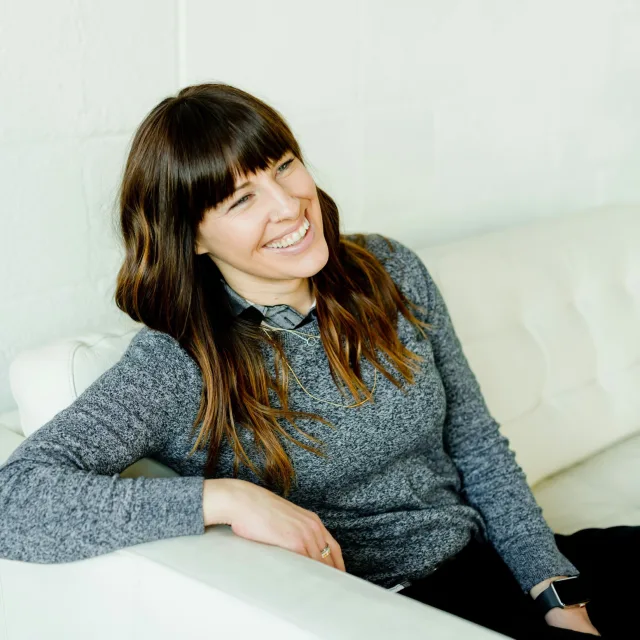
« I had my first appointment with Sandra over Zoom. I was a little sceptical about doing it that way, but in the end I loved it! She is professional, caring, and the connection is really there, as they say! »
Evelyne, client of Sandra Djina Ravalia
« Florence is very professional and inspires great confidence. My session took place on Zoom and it was a real revelation. I felt good, and I can tell that hypnosis can gently help me reach my goals. Thank you »
Cherhine, client of Florence Aton
« This goes far beyond hypnosis!! I came across Sandra a few months ago, when I was looking for a hypnotherapist willing to work in sessions by video call. Sandra offers a very gentle, non-judgemental approach that lets you open up fully to this wonderful experience of hypnosis! I can already feel the positive effects on my life and I am truly grateful! »
Gina, client of Sandra Djina Ravalia
« Jean-Marie Balestrat is an excellent professional. I did the session on Zoom because I live far from his office, and it all went very well. It felt just like being there in person. This is my first experience with hypnosis and it has been a very good one so far. French is not my first language but that was no obstacle at all. Jean-Marie speaks very clearly and he understood my not-so-French accent very well! »
Andrezza, client of Jean-Marie Balestrat
« I have had 6 hypnosis sessions with Sandra Djina Ravalia since April 2023. Every meeting took place by video call. This format is ideal, because I was able to go through the experience in the comfort of my own home, without having to travel. I felt just as comfortable opening up as I would have in person. I was able to build a bond of trust thanks to her listening, her gentleness and her soothing voice. I felt understood, respected and very much at ease thanks to her warm, professional approach. I recommend this hypnotherapist to everyone — she has helped me move forward and feel better day to day. »
Véronique, client of Sandra Djina Ravalia
« The hypnosis sessions at home with Sandra are a moment I enjoy enormously. I much prefer being in the comfort of my own home to sitting in an office that is unfamiliar to me. Communication on Zoom is excellent and Sandra is careful to stay attentive to my reactions. I love these sessions, they are so relaxing and productive. Thank you Sandra! »
Lucie-Anne, client of Sandra Djina Ravalia
Our hypnotherapists consulting by video
All areas
 Annie Mayrand
Gatineau - Cumberland (ON)
👤
🧑🎓
🚭
❤️
💻
Annie Mayrand
Gatineau - Cumberland (ON)
👤
🧑🎓
🚭
❤️
💻
 Christian Rocher
Beloeil
👤
🧑🎓
👶
🚭
❤️
💻
Christian Rocher
Beloeil
👤
🧑🎓
👶
🚭
❤️
💻
 David Veilleux
Montréal - Anjou
👤
🧑🎓
🚭
❤️
🤰
💻
David Veilleux
Montréal - Anjou
👤
🧑🎓
🚭
❤️
🤰
💻
 Florence Aton
Sutton
👤
🚭
❤️
💻
Florence Aton
Sutton
👤
🚭
❤️
💻
 Jessica Reid
Sherbrooke
👤
🚭
💻
Jessica Reid
Sherbrooke
👤
🚭
💻
 Julie Rocque
Montréal - Jean-Talon
👤
🧑🎓
👶
🚭
❤️
🤰
💻
Julie Rocque
Montréal - Jean-Talon
👤
🧑🎓
👶
🚭
❤️
🤰
💻
 Nuria Pérez de León
Montréal - Rosemont - Saint-Lambert
👤
🧑🎓
💻
Nuria Pérez de León
Montréal - Rosemont - Saint-Lambert
👤
🧑🎓
💻
 Romain Rastoin
Bromont
👤
🧑🎓
🚭
❤️
💻
Romain Rastoin
Bromont
👤
🧑🎓
🚭
❤️
💻
 Réjeanne LeBlanc
La Prairie
👤
🧑🎓
👶
💻
Réjeanne LeBlanc
La Prairie
👤
🧑🎓
👶
💻
Frequently asked questions about hypnosis by video
Yes. Hypnosis rests on the voice, on attention and on the relationship, not on physical presence. One nuance only: if this is your first experience of hypnosis, you may take a little longer to enter the state the first few times. After that, there is no difference. Our clients who have done both formats report no gap in results.
Nothing serious, and it is worth knowing so you do not worry about it in advance. You will notice after a while, and you will come out of the hypnotic state naturally — nobody "gets stuck". You simply reconnect and pick up again. It is not comfortable, but it is not dangerous.
Only if you have a room with a door that closes where nobody will come in for an hour, and if you can settle in comfortably. A session done in an open-plan office, in a glass-walled meeting room or squeezed between two appointments will probably not achieve much: the hypnotic state requires letting your guard down, which is impossible when you can be interrupted.
Not advisable, and it is a request we receive regularly.
Even parked, a car is neither comfortable for resting your head, nor safe, nor free from interruptions. And it goes without saying that a session is never done while driving. If you have no suitable place at home, let us talk about it: there is usually a solution.
Very few: opening a link, allowing the camera and microphone. If that worries you, do a test run with someone close to you before the session, or ask someone to set you up the first time. We also allow a few minutes at the start of the appointment to sort out sound and picture without rushing.
As much as in person, and sometimes more: nobody sees you arrive or leave.
The platforms we use are secure, and sessions are not recorded unless you explicitly agree, for instance so that you can listen again.
Do make sure on your side that you are somewhere you cannot be overheard.
Yes for teenagers, who often adapt to it very well, with a parent's consent and an adult present in the home.
For young children it is possible but generally less comfortable: they move, they lose focus, and the connection builds better in person. We discuss it at first contact.
Yes, and we will tell you. Spiritual and regressive hypnosis is practised in person only, young children are less suited to it, and a period of real fragility calls for an in-person setting or, first of all, a doctor or a psychologist. If you have no private space available, that is also a genuine limit.
Payment is made remotely, according to each practitioner's arrangements. Receipts and invoices are issued exactly as they would be in person. Whether your private insurance reimburses does not depend on the session format, but do check your policy.
Hypnotherapy is complementary well-being support: it constitutes neither a diagnosis nor a treatment, and it replaces neither advice nor medical or psychological follow-up. Video consultations are not suitable for emergencies: in case of distress, contact a doctor, emergency services or a helpline — our country pages list local resources.

Page written by Sandra Djina Ravalia
hypnotherapist and art therapist
partner at Solutions Hypnose.
English version reviewed by David Veilleux
Updated .