

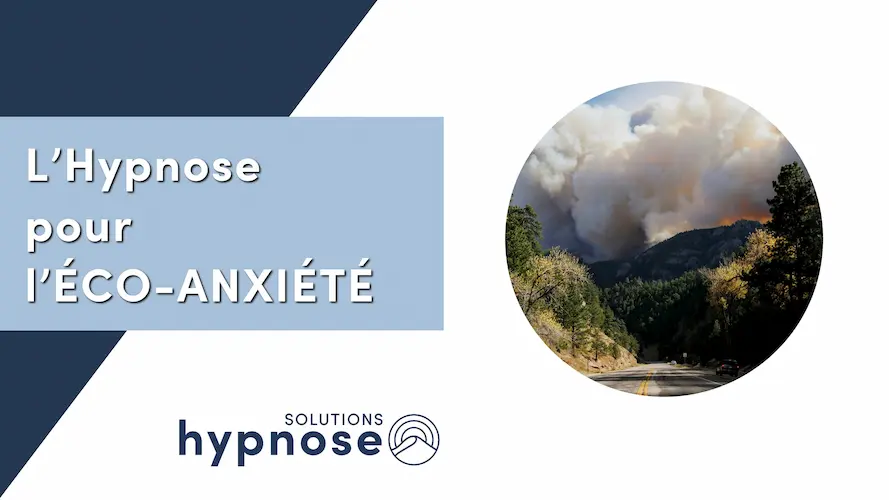
Eco-anxiety: When Worry About the Planet Takes Over (and How Hypnosis Can Help)
There are some summers you never forget.
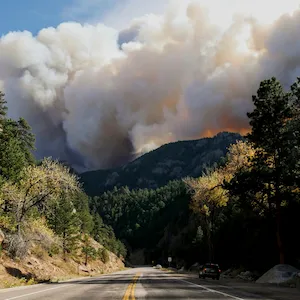
The sky turning orange in the middle of the afternoon. Air quality alerts on your phone. Images of forests burning for weeks on end, or streets turned into rivers, families being evacuated…
Then fall arrives, and the air becomes breathable again—but something remains.
A nagging worry. A lump in your throat when you open the news.
That persistent feeling that the world as we knew it is falling apart, and that there's not much we can do about it.
If this sounds like you, know this first of all: you are neither fragile, nor overreacting, nor «too sensitive.».
You're clear-headed. And this clarity comes at an emotional cost that it is only natural to want to alleviate.
What exactly is eco-anxiety?
Treatment for a Panic Fear of Flying
Eco-anxiety—also known as climate anxiety—refers to the psychological distress associated with an awareness of environmental disruptions and their present and future consequences.
A key point—and one on which there is consensus in the scientific literature: Eco-anxiety is not a mental illness. This isn't a diagnosis. It's a fundamentally healthy—even rational—response to a real threat. Your nervous system is doing exactly what it was designed to do: detect danger and get you ready to act.
So the problem isn't that you're feeling anxious.
The problem arises when this concern:
- becomes column — the alarm sounds continuously, without ever stopping; ;
- becomes invasive — it takes over sleep, meals, conversations, and plans; ;
- becomes paralyzing — It cuts you off from the action instead of drawing you into it.
Eco-anxiety can sometimes be combined with other emotions such as solastalgia (the sadness of seeing a place you love change—a lake, a forest, a landscape from your childhood), the'eco-anger (directed at those who pollute or hold decision-making power) and the ecological mourning (sadness over what has already been lost). These emotions intertwine, follow one another, and are by no means irrational.
If your anxiety is debilitating or if you experience panic attacks, we recommend that you consult a healthcare professional for appropriate support.Hypnosis for a Fear of Flying
Signs That Should Catch Your Attention
In therapy, eco-anxiety is rarely referred to by that name.
Our clients generally come to us with fairly «typical» symptoms of stress:
- At the body level: difficulty falling asleep or waking up during the night, tension in the neck or jaws, shallow or laboured breathing, digestive problems, and sometimes anxiety attacks triggered by a piece of news or an image.
- On the level of thoughts: endless rumination, repetitive worst-case scenarios, hypervigilance about the weather, and sometimes also what is known in English as the « »doomscrolling" — this compulsive consumption of anxiety-inducing content that promises information but delivers only a sense of helplessness.
- In terms of emotions and behavior: a feeling of helplessness, of guilt (« What I do is never enough »), anger, or a protective cynicism… And for some, an inability to make major life decisions: pursuing a long course of study, buying a house, having children—«for what kind of world?».
Among adolescents and young adults, the signs often take forms that are harder to interpret: irritability, dropping out of school, sudden disengagement (« Anyway, it's pointless. ») or, conversely, intense activism coupled with exhaustion that is poorly concealed.

Why are young people on the front lines?
The numbers speak for themselves.
A large-scale study published in The Lancet Planetary Health in 2021 surveyed 10,000 young people aged 16 to 25 in ten countries.
The results:
- 59 % said they were very or extremely concerned about climate change, and more than half reported feelings of sadness, anxiety, anger, helplessness, and guilt
- More than 45 % participants reported that these emotions interfered with their daily functioning, and 75 % found the future frightening.
Link to the study: https://www.thelancet.com/journals/lanplh/article/PIIS2542-5196(21)00278-3/fulltext
Three factors account for this particular vulnerability.
- Temporal asymmetry. They are the ones who will have to live the longest with the consequences of the decisions made today. They have a longer time horizon and are more exposed.
- Power asymmetry. Many still do not have the right to vote, no economic clout, and no platform. Yet in the psychology of stress, there is a simple and inexorable equation: High threat + perceived low control = maximum distress. This is precisely the situation many young people find themselves in.
- The feeling of not being heard. A more recent study shows that a majority of young people who have tried to talk about their climate concerns felt ignored or dismissed. A teenager who is told, «Stop worrying about that,» isn’t reassured: they’re left alone with their fear, and they learn not to talk about it anymore.
Eco-anxiety: What Happens in the Brain and Body
Understanding the mechanism changes a lot of things, because you stop thinking of yourself as «defective.».
When faced with a threat, the amygdala—the brain’s alarm system—triggers the survival response: increased heart rate, muscle tension, shallow breathing, and the release of cortisol. This system is remarkably effective against danger one-time and traceable. We take action, the threat passes, and the body returns to a state of calm.
But the climate crisis is by no means a one-time event. It is widespread, global, and ongoing, with no end in sight.
The alarm goes off… and never finds a moment to turn off. The nervous system remains in a state of prolonged alert, fueled by a daily stream of information that reignites the signal every time it begins to subside.
Another crucial point: The emotional brain doesn't distinguish very well between reality and imagination. When you repeatedly picture a future of heat waves and collapse in your mind, your body reacts almost as if you were actually there. A repeated mental image becomes a repeated experience.
And that's exactly where hypnosis becomes a useful tool.

How Hypnosis Can Help
First, let's clear up any misunderstandings
Therapeutic hypnosis has nothing to do with what you see on TV. You do not lose consciousness, control, or your memory. You will not reveal anything against your will. The hypnotic state is a natural state of altered consciousness—the same one you experience several times a day when you’re absorbed in a book, lost in thought while driving, or captivated by music.
And most importantly: Hypnosis isn't meant to convince you that everything is fine. Any therapy that aims to make you indifferent to the state of the world would be bad therapy—and, honestly, a form of betrayal. The goal isn’t denial. It’s to restore your ability to bear this reality without it crushing you.
What Hypnotherapy Actually Addresses
- Regulate the nervous system. The hypnotic state activates the parasympathetic nervous system—the system associated with rest and recovery. Specifically: the heart rate slows, the muscles relax, and breathing deepens. When repeated, this experience teaches the body that it may return to normal. For a system that has been on alert for months, this is new information.
- Transforming mental images. Since the emotional brain processes information through images, hypnosis works in this realm using its own tools: to defuse automatic worst-case scenarios and rebuild mental images that do not deny the difficulty but leave room for something else. We do not replace « The future is scary » by « Everything will be okay ». Open it to « I can handle it, and I'm not alone ».
- Restore the sense of taking action. It is the feeling of helplessness that turns anxiety into distress. Hypnotherapy helps you tap into your inner resources—often past experiences in which you’ve gone through something difficult—and reestablish the sense that your actions matter, on your own terms.
- Get a better night's sleep. This is often the first benefit people mention, and it changes everything: a well-rested brain ruminates less, puts things into perspective better, and is more resilient.
- Regain control over your triggers. Learning self-hypnosis gives you a portable tool that you can use in thirty seconds before an exam, on the subway, or after seeing a disturbing image.
What is a hypnosis session for climate anxiety like?
A first session always begins with a conversation, without hypnosis: What you’re going through, how long it’s been going on, what triggers it, and what you’d like to achieve. This will help us fully understand your situation and work together to identify which symptoms you’d like to address.
Next comes the induction—a gradual invitation to relax, with your eyes closed, while sitting comfortably.
You remain conscious and can speak or stop at any time.
The process then proceeds according to your needs: calming the body, transforming an intrusive image, reconnecting with a natural setting that recharges you, and strengthening a sense of inner strength.
The return trip is a smooth one, followed by a discussion.
A session typically lasts 60 to 90 minutes, and the counseling process often spans three to six sessions, depending on the situation.
An exercise to try today
Take two minutes.
Place your feet flat on the floor. Breathe in for four counts, breathe out for six—the exhalation should be longer than the inhalation; this signals to your body that it can relax. Do this five times.
Then think of a place in nature that makes you feel good—whether real or imagined.
Engage all five senses: what you see, the sounds, the smell in the air, the temperature on your skin, and the texture beneath your feet.
Stay there for a minute.
Before opening your eyes, place your hand on your sternum: with practice, this gesture will become a shortcut to that state.
That's not a solution.
It's a gateway—and tangible proof that your nervous system is still responding to you.
So what about the action?
Hypnosis is not an alternative to commitment; it is often the starting point for it.
People who are exhausted, overwhelmed, or paralyzed by anxiety don’t take action—they withdraw. Regaining inner stability means regaining the energy to do something: a simple act, a project, joining a group, or having a conversation.
And collective action remains one of the best-documented antidotes to powerlessness.
Not because one person can reverse the climate crisis, but because being part of a shared effort restores precisely what eco-anxiety undermines: a sense of belonging and a sense of mattering.
When to Seek Medical Attention
It's time to seek help if your anxiety is interfering with your sleep, your studies, your work, or your relationships; if you're experiencing panic attacks; if you're isolating yourself; or if you're feeling a persistent sense of despair.
For Parents: If your teenager talks about the future with a persistent sense of fatalism, loses interest in the things that used to inspire them, or repeatedly experiences physical symptoms, start a conversation without downplaying the issue. « I understand that this worries you; let's talk about it. »opens a door while «" Don't worry about that »risks shutting down the dialogue.".
Hypnotherapy is intended as a complementary treatment and is not a substitute for medical or psychological care. If you are experiencing severe distress or suicidal thoughts, contact a healthcare professional immediately, or in Quebec, call the Info-Social service at 811 (Option 2), available day and night.
You don't have to go through this alone.
Your concern for the world says something beautiful about you: that you’re connected to your surroundings, and that it matters. This sensitivity isn’t a flaw that needs to be corrected. But it deserves to be nurtured, so that it stops consuming you and becomes what it was in the beginning: a life force.

Are you experiencing eco-anxiety and looking for support?
Schedule an appointment for an initial meeting, either in person or remotely.
Support for adults, teens, and children.
The entire Solutions Hypnose team—in Quebec, France, Morocco, and via video—is here to support you.
Schedule an appointment now to create the life you want through hypnosis!
See you soon.
The Hypnosis Solutions Team
Meet the Solutions Hypnose team working on stress and anxiety management
Our team has offices in Quebec, France, and Morocco.
If you can't find a hypnotherapist near you, most of our team members offer video sessions 💻 and theVideo consultations are working very well.
We suggest that you contact the hypnotherapist you are interested in to make sure that all the conditions are in place for an effective session.
Schedule an appointment now to create the life you want through hypnosis!
Click on the photos to view each partner's profile.


Paris - Brunoy 91 - Lille 59 - Strasbourg 67 - Saverne - Voiron 38 - Montpellier 34 - Saint-Gilles 30...


